



Thank you dear subscribers, we are overwhelmed with your response.
Your Turn is a unique section from ThePrint featuring points of view from its subscribers. If you are a subscriber, have a point of view, please send it to us. If not, do subscribe here: https://theprint.in/subscribe/
There was a time when I opened The Statesman and turned first to Sudhir Dar’s cartoon. The day’s politics could wait until I had seen what Dar had made of it.
In 1937, Jawaharlal Nehru wrote of K. Shankar Pillai: “How many of us have waited from day to day for Shankar’s cartoon?”
In 1948, Shankar gave that irreverence an institution of its own — Shankar’s Weekly, a “fundamentally anti-establishment” publication modelled on Britain’s Punch. It was launched by Prime Minister Nehru, with an injunction that would outlive both men: “Don’t spare me, Shankar.”
Shankar did not. Nor did the post-Independence generation of political cartoonists — R.K. Laxman, Abu Abraham, Sudhir Dar, Rajinder Puri, O.V. Vijayan, P.K.S. Kutty, Bal Thackeray. Political caricature occupied a recognised place in the young Republic’s public conversation.
For decades, the political cartoon was part of the ritual of reading an Indian newspaper. Laxman’s Common Man silently witnessed the promises and absurdities of successive governments; Sudhir Dar found comedy in pompous ministers, bureaucracy and the daily exasperations of being Indian.
Before becoming a political leader, Bal Thackeray launched Marmik with his brother Shrikant in 1960, using satire to help build the constituency from which the Shiv Sena emerged. Yet the movement he subsequently led reacted fiercely when satire was turned against it — a reminder that satire is easiest to appreciate when the joke is about somebody else.
Nor should the past be romanticised. The Emergency of 1975 brought severe press censorship. Shankar’s Weekly closed that year with the final editorial: “Dictatorship cannot afford laughter because people may laugh at the dictator and that wouldn’t do.”
Abu Abraham continued satirising the regime. In December 1975, he got a memorable cartoon past the censors: President Fakhruddin Ali Ahmed signing executive decrees from a bathtub, telling his aide, “If there are any more ordinances, just ask them to wait.”
There was another cartoonist at the Indian breakfast table, although she was selling butter. Since the 1960s, the Amul Girl has compressed politics, scandals, wars, cricket and cinema into a picture, a pun and a topical slogan.
During the Emergency, Amul produced one of its most audacious lines: “We have always practised compulsory sterilization.” Four decades later, in 2016, demonetisation produced another: “Not-a-problem! Amul accepts old, new, and butter currency!”
A well-crafted joke, it seems, can sometimes outlive the political regime it mocks.
But political humour has changed with the internet. The morning pocket cartoon now competes with memes, reels and stand-up clips that travel instantly, often stripped of context. Politicians, too, can broadcast carefully curated images directly. The politician and the satirist have both escaped the editor. But there is a difference between using humour and being its target.
Perhaps the political cartoon did not disappear. It escaped from the newspaper.
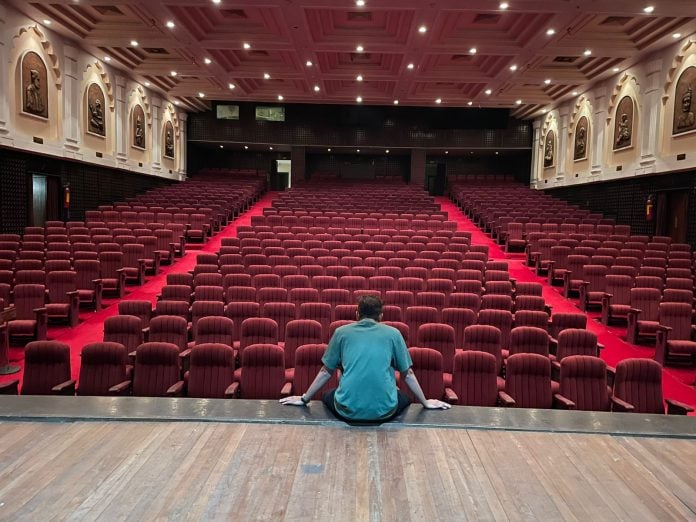
And once the joke escaped from the newspaper, it began running into the police station, the courtroom and the cancelled auditorium.
Stand-up made the encounter more combustible. The cartoonist could hide behind a drawing; the comedian said the words himself. Then the smartphone gave the stage an audience without walls.
Vir Das discovered this with his 2021 “Two Indias” monologue in Washington, contrasting an India that worshipped women with one in which women were gang-raped. Political complaints followed, accusing him of maligning India abroad. A year later, his Bengaluru show was cancelled after protests by the Hindu Janajagruti Samiti.
In November 2021, Bengaluru police denied permission for Munawar Faruqui’s show, citing law-and-order issues amid protests by right-wing groups.
In 2025, an FIR was filed against Kunal Kamra after he mocked Maharashtra Deputy Chief Minister Eknath Shinde during a performance; party workers subsequently vandalised the venue.
In September 2026, comedian Pulkit Mani faced BJP backlash after mimicking Prime Minister Narendra Modi. Days later, he said shows in Lucknow and Kanpur had been cancelled following “repeated threats from goon activists”.
The routes are different: a complaint is not a conviction, police action is not a judicial finding, and a venue withdrawing after threats is different again. But for performer and audience, the practical result can be remarkably similar: nobody hears the joke.
There is an irony here for a country that inherited so much from Britain. We kept the railways, parliamentary procedure, the bureaucracy and a language in which we continue to complain about all three. Yet ridicule of authority remains embedded in British culture: monarchs, prime ministers and governments are routinely savaged by Private Eye, Spitting Image and generations of comedians. India, too, had Shankar and Laxman, Dar and Abu Abraham, the Amul Girl and countless political jokes exchanged over tea.
Nor have Indians suddenly lost their capacity for humour. The internet demonstrates the opposite every hour.
What may have changed is the relationship between power and the joke it cannot control.
A politician can make a joke, deploy a meme or ridicule an opponent. Political parties themselves have become accomplished practitioners of digital mockery. Being funny is useful. Being laughed at is something else.
Satire has always performed a small but valuable democratic service. It punctures grandeur. It reduces the carefully manufactured image to human proportions. It reminds the governed that those who govern them are neither infallible nor beyond ridicule.
Nehru’s invitation to Shankar was memorable not because every joke about him was necessarily fair or funny. It was memorable because of what the invitation conceded: that political authority could survive being laughed at.
Nearly eighty years later, perhaps the more revealing question is not whether India still knows how to make a joke.
It is whether those in power still know how to take one.
These pieces are being published as they have been received – they have not been edited/fact-checked by ThePrint.