



Thank you dear subscribers, we are overwhelmed with your response.
Your Turn is a unique section from ThePrint featuring points of view from its subscribers. If you are a subscriber, have a point of view, please send it to us. If not, do subscribe here: https://theprint.in/subscribe/
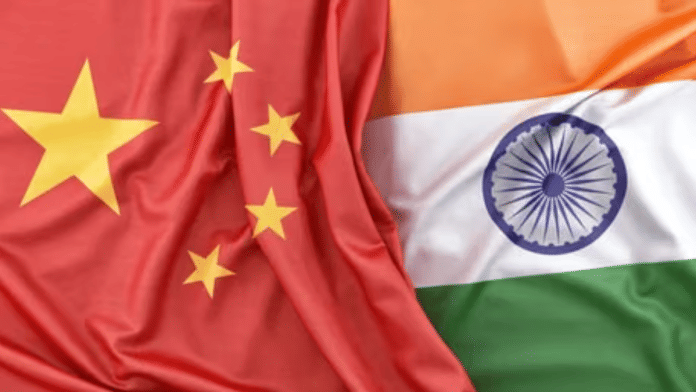
The handshake between Prime Minister Narendra Modi and Chinese President Xi Jinping in New Delhi on September 12, 2026, marked another step in the gradual normalisation of India-China relations. This was Xi’s first visit to India in seven years; last time he visited Mamallapuram in 2019. The two leaders discussed border issues, trade, supply chains, and people-to-people exchanges. The meeting was seen as part of an effort to revive ties strained by the 2020 Galwan military clash.
The question today, is therefore not simply whether India and China are talking again. It is whether the two countries can rebuild the trust that their earlier engagement failed to protect.
The thaw is real.
There is little doubt that relations have improved from their post-2020 clash. The October 2024 agreement on patrolling arrangements in Depsang and Demchok led to disengagement from the remaining friction points of the 2020 crisis. Since then, direct flights have resumed, the Kailash Mansarovar Yatra has returned, visa restrictions have eased, and diplomatic exchanges have increased. These steps have produced a gradual stabilisation of the relationship.
The September 2026 Modi-Xi meeting adds another layer to this process. Both leaders have signalled that differences should not become disputes and have reiterated the importance of resolving the boundary question.
So the thaw is real. But it would be premature to call it reset.
The border is quieter. But the problem is deeper than disengagement
The most difficult issue remains the boundary. The disengagement process has reduced the immediate military tensions that followed the 2020 Galwan clash. But there is a crucial distinction between disengagement and resolution.
The two sides are still negotiating the larger boundary question. In August 2026, Indian National Security Adviser Ajit Doval and Chinese Foreign Minister Wang Yi, acting as Special Representatives, held their 25th round of talks. The two sides agreed to continue efforts towards a framework for a fair, reasonable and mutually acceptable settlement while strengthening mechanisms to prevent misunderstandings along the Line of Actual Control.
In other words, the military confrontation may have eased, but the territorial dispute has not disappeared.
This distinction is important. Former Indian ambassador to China Vijay Gokhale argued that India-China relations were moving towards a model of “competitive coexistence”, rather than returning to the earlier assumption that greater economic engagement would steadily overcome strategic differences. For India, the distinction between border stability and border settlement is particularly important. New Delhi has consistently maintained that peace and tranquillity along the border are a prerequisite for the development of the broader relationship.
The border may therefore be quieter today. But the border question is not solved.
Trade can grow without strategic trust
The economic relationship presents another contradiction. India and China continue to trade heavily despite their political differences. In fact, bilateral goods trade reached about $151 billion in 2025-26, making China, India’s largest trading partner for that year. But the headline figure hides a more difficult reality. India’s exports to China were around $ 19.5 billion, while imports reached approximately $131.6 billion, leaving India with a trade deficit of more than $112 billion. This creates a difficult policy problem for New Delhi. India wants stronger domestic manufacturing, more resilient supply chains and reduced vulnerabilities in critical sectors. Yet Chinese components, machinery and industrial inputs remain deeply embedded in several parts of the Indian economy. This means the question is not simply whether India should trade with China. The more important question is: how can India deepen economic engagement without allowing economic dependence to become a strategic vulnerability?
That is why trade was an important part of the Modi-Xi conversation. Both leaders discussed structural trade imbalances, supply-chain issues, and the need for predictable market access.
India therefore faces a difficult balancing act. It needs economic engagement with China in several areas, but it also needs diversification and stronger domestic capabilities.
Conclusion: Cooperation and competition will coexist
A complete “reset” is unlikely. India and China can cooperate through BRICS, the SCO and other multilateral platforms while competing over regional influence, technology, connectivity and security. New Delhi is moving towards “competitive coexistence”, restoring practical engagement while accepting that strategic rivalry with China will endure.
For India, the choice is therefore not between engagement and competition. It will have to do both. A stable relationship creates space for trade and diplomacy, while stronger domestic capabilities and diversified supply chains can reduce strategic vulnerabilities.
The objective is straightforward: prevent competition from becoming confrontation, without allowing engagement to become dependence.
The current thaw is significant, but it is not a return to the pre-2020 relationship. India and China are learning to manage rivalry rather than eliminate it.
The thaw is real. The reset is not.
These pieces are being published as they have been received – they have not been edited/fact-checked by ThePrint.