





Thank you dear subscribers, we are overwhelmed with your response.
Your Turn is a unique section from ThePrint featuring points of view from its subscribers. If you are a subscriber, have a point of view, please send it to us. If not, do subscribe here: https://theprint.in/subscribe/
The failure of peace talks between the United States and Iran marks a significant turning point, with repercussions unfolding across military, political, economic and ecological domains. This breakdown opens up multiple and equally consequential possibilities. It could lead to a resumption of war with even greater intensity, or result in renewed rounds of negotiations that may yet succeed in preventing a wider escalation.
Added to this volatile situation is a grim certainty that challenges something very critical to the existence of this world. Regardless of whether war resumes or diplomacy prevails, the devastation of nature has already begun and will continue to unfold. Attacks on Iran’s petrochemical hubs in Mahshahr and Asaluyeh exemplify this reality. As toxic gases spread through the atmosphere, residents have reportedly complained of respiratory distress, and chemical waste is seeping into the waters of the Persian Gulf. This visible destruction is alarming—but the invisible and long term consequences may be far more devastating.
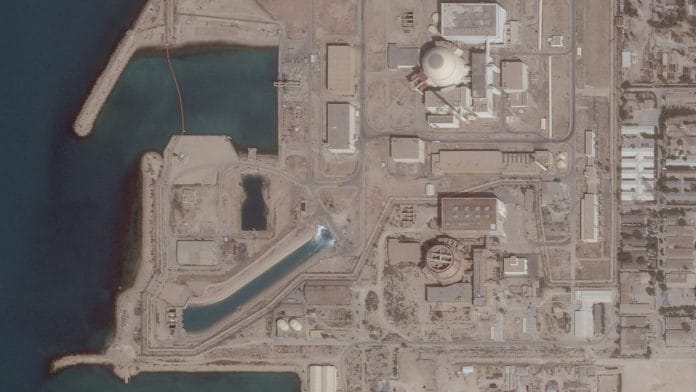
Particularly troubling are attacks near the Bushehr nuclear power plant, which have not only taken human lives but also raised the risk of radioactive contamination far beyond Iran’s borders. Any further escalation could have potentially catastrophic global consequences. A major accident here would not remain confined to national borders; it would reverberate across regions and generations.
The Gulf’s geography compounds this danger. Its shallow, enclosed waters are especially vulnerable to long-term contamination. Countries along its shores—Kuwait, Saudi Arabia, Bahrain, Qatar, the United Arab Emirates, and Oman—cannot remain insulated from such fallout. Poisoned waters and contaminated air do not respect international borders; they return through the very systems that sustain life. War, in this sense, becomes borderless—spreading through air, water, and food chains.
History offers sobering reminders. The atomic bombings of Hiroshima and Nagasaki left radiation that scarred generations. In Vietnam, the use of Agent Orange rendered vast tracts of land barren, with dioxin (TCDD) causing cancers, birth defects, and chronic illnesses that persist to this day. The 1991 Gulf War turned skies black with burning oil wells and left the Persian Gulf heavily polluted.
Contemporary conflicts are no less perilous. Explosions around Ukraine’s Zaporizhzhia nuclear power plant have revived global fears of nuclear disaster. In Gaza, the rubble is not merely debris—it is a toxic amalgam of dust, heavy metals, and chemicals that quietly undermines the foundations of life.
Yet such environmental devastation is routinely dismissed as “collateral damage.” This language is dangerously inadequate to explain the reality. Can poisoned soil, contaminated water, and unbreathable air truly be reduced to side effects? What we are witnessing is not incidental harm, but a systematic form of violence against nature itself.
Importantly, war does not unfold only in moments of spectacle; it also operates gradually. The scholar Rob Nixon describes this as “slow violence”—a form of destruction that is dispersed across time and space, often invisible yet profoundly damaging. It disproportionately affects the poor and marginalized, who lack both the resources to protect themselves and the platforms to make their suffering visible. This violence seeps into ecosystems, settles into bodies, and endures long after the headlines fade.
Recent scholarship in international relations has begun to capture this broader reality through what is termed “more-than-human” war studies. Scholars such as Janine Natalya Clark argue that the impacts of war extend beyond human societies to encompass animals, ecosystems, and the intricate relationships that sustain life. War, in this sense, does not merely destroy lives—it fractures the very bonds between humans and the natural world.
The irony is stark. At a time when humanity confronts an escalating climate crisis, war acts as a force multiplier. Bombs do not only demolish cities; they also intensify environmental degradation and contribute to planetary warming. Yet environmental concerns remain conspicuously absent from most peace negotiations and reconstruction agendas. Infrastructure may be rebuilt, but poisoned ecosystems are often left to recover on their own—if they recover at all.
This omission is not merely an oversight; it is a fundamental flaw. Without clean water, fertile soil, and breathable air, peace cannot be sustained.
To write about war today, therefore, is not simply to analyze geopolitics or human suffering. It is to confront the ongoing injury to the Earth itself. From Hiroshima and Nagasaki to Vietnam, and now from Ukraine to Gaza and Iran, we are reminded that wars fought against people are, inevitably, conflicts against the planet.
Nature does not forget. Wars may end, but their toxins linger—in soil, in water, and in the air we breathe. Future generations will inherit not only the memory of these conflicts, but also their material consequences.
These pieces are being published as they have been received – they have not been edited/fact-checked by ThePrint.