





Thank you dear subscribers, we are overwhelmed with your response.
Your Turn is a unique section from ThePrint featuring points of view from its subscribers. If you are a subscriber, have a point of view, please send it to us. If not, do subscribe here: https://theprint.in/subscribe/
South Asian cities are growing at a frightening and dangerous rate. From Delhi and Karachi to Dhaka, Lahore, and Kolkata, urban growth is accompanied by a quieter but far more destabilizing transformation: water stress. Rivers, monsoons, and abundant groundwater once characterized these cities, but water’s future here is uncertain, unevenly shared, and increasingly politicized. Water scarcity in South Asian cities is more than an environmental problem. It is an urban condition that is changing the way cities function, the way citizens live, and the way people experience inequality in their everyday lives. The dilemma is not usually framed around catastrophic shortages; rather, it is framed around tanker economies, erratic supply, polluted groundwater, and chronically water-insecure regions.
The Paradox of City Water
In South Asia, cities are often located close to significant rivers or historically important aquifers. But being near water does not mean being water secure. Instead, urbanization is exploding ahead of infrastructure, governance, and environmental planning. In cities like Delhi and Lahore, groundwater is now the invisible lifeblood. Yet decades of over-pumping have brought aquifers to a critical decline. Dhaka’s hydrological balance is being disturbed by saline intrusion and uncontrolled pumping. Chronic water scarcity in Karachi has led to parallel access systems, with informal markets increasingly enabling water delivery. The paradox is stark. Towns surrounded by water systems are becoming water-stressed not because water is scarce, but because it is mismanaged, abused, and unequally distributed.
The evolution of the informal water economy
One of the most visible results of urban water scarcity is the growth of informal water businesses. In many South Asian cities, water distribution is increasingly in the hands of tanker mafias, unregulated sellers, and private borewell operators. In Karachi, large neighborhoods are dependent on water tankers operating outside the legitimate regulatory structure. In peri-urban areas of Delhi, groundwater extraction is handled by private companies who provide water to both residential and commercial users. The result is a system where water is a commodity transaction, not a public guarantee.
This has serious consequences. Water is divided by economic status, with the richer homes able to ensure a steady supply and the poorer suffering chronic instability. Urban water stress tends to exacerbate existing inequalities, rather than distributing scarcity evenly.
Urban exposure and climate stressors
These stresses are being compounded by climate change. Erratic monsoons, longer heatwaves, and altered rainfall patterns are disrupting traditional water cycles that cities have relied on for years. Reservoirs have been depleted, and cities such as Chennai and Bengaluru have experienced major water emergencies recently as a result of variability in the rainfall pattern. Meanwhile, flash floods in cities like Mumbai and Karachi underscore another part of the crisis: too much water in too little time, inundating already vulnerable infrastructure.
This co-existence of drought and flood in the same metropolitan system indicates the structural vulnerability of South Asian cities. They are not only water-stressed but hydrologically unstable as well.
Water below ground: The city’s invisible crisis
Surface water systems attract regulatory attention, but the real challenge is below the surface. Groundwater depletion is accelerating across urban areas of South Asia due to unregulated exploitation and weak governance. Many cities think groundwater is an infinite resource. No it’s not. When water tables fall, it takes more energy and money to extract water, worsening inequality in access. In some areas, groundwater is contaminated by industrial waste and sewage intrusion, making it unsafe to drink and requiring costly alternatives.
This is a hidden crisis that is lethal, partly because it is slow-moving and largely undetectable until it reaches a point of no return.
Shared responsibility and urban management
Water control in cities in South Asia is fragmented. Different agencies are responsible for different aspects of water supply, drainage, and infrastructure, often with little coordination. Urban planning hardly considers hydrological reality, and climate adaptation remains patchy. The fragmentation of institutions results in reactive rather than proactive governance. Cities react to crises—droughts, floods, and shortages—rather than build long-term resilience. This causes cyclical water stress, which is increasing in severity.
Inequality in the everyday experience of water
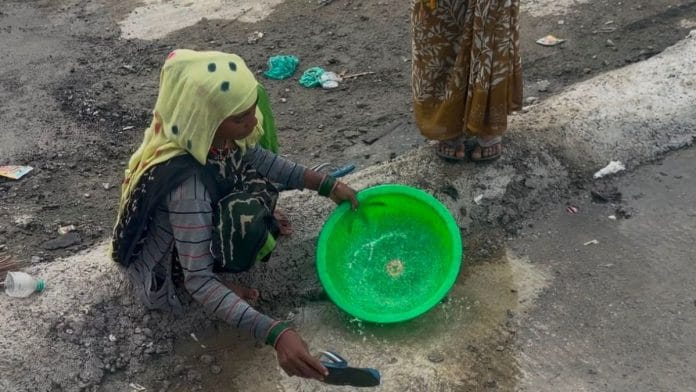
Perhaps the most important aspect is the social impact of urban water stress. Water insecurity is not felt equally everywhere. It’s determined by class, geography, and access to infrastructure. Water shortages in affluent communities may be inconvenient but can be managed through storage systems or private supply. In informal settlements and low-income communities, however, water shortage is a daily challenge that impacts health, education, and livelihoods.
Women and children often bear the burden of water collection, while informal workers lose productivity due to unreliable access. Water stress is consequently an issue of environmental and social concern.
Rethinking Water: Urbanization’s Future
South Asian cities need more than infrastructure improvements for water stress. It implies a major rethink of urban water governance. Cities need to develop comprehensive water management systems that consider surface water, ground water and climate variability. Decentralized water harvesting, recycling of wastewater, and ecosystem restoration should be part of urban planning and not peripheral activities.
The other is the need to see water as a public good, not a commodity. Without regulation, informal water markets would be left to grow, increasing inequities and threatening long-term sustainability.
Conclusions: Cities at a Hydrologic Crossroads
South Asia’s cities are at a tipping point. Water stress is not a problem of the future but a reality that is drastically changing urban life. The question is not whether cities will run out of water but how they will respond—and who will pay for that response. Faced with the pressures of intensifying climate change and growing urban populations, the challenge will be to design urban centers that are economically active and hydrologically resilient. In many ways, the future of South Asia’s urbanization will depend on how the region manages its most basic resource, water.
——————————————————————————————————————-
About the author:
Anusreeta Dutta is a columnist and climate researcher with experience in political
research analysis, ESG research, and energy policy.
These pieces are being published as they have been received – they have not been edited/fact-checked by ThePrint.