




Thank you dear subscribers, we are overwhelmed with your response.Your Turn is a unique section from ThePrint featuring points of view from its subscribers. If you are a subscriber, have a point of view, please send it to us. If not, do subscribe here: https://theprint.in/subscribe/
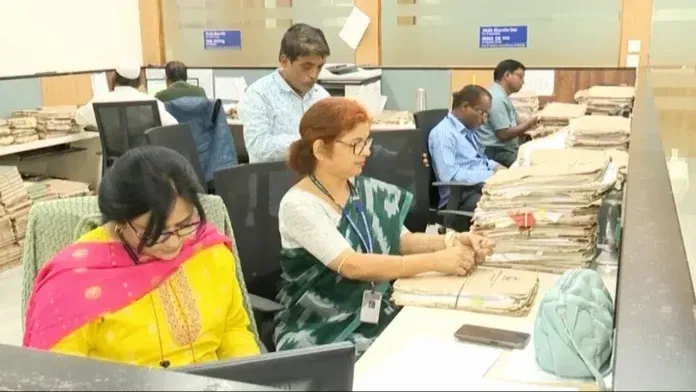
The car is merely an accessory. The real journey begins when the Government demands proof that you, your car, your Aadhaar, your PAN, your Registration Certificate, your mobile phone, your address and even the spelling of your own name all recognise each other.
Nothing matches. The Aadhaar says one thing. The PAN says another. The passport has its own opinion. The voter ID has a creative interpretation. The Registration Certificate faithfully preserves history. Every correction demands an OTP. Every OTP expires before it arrives. Every failed OTP requires another OTP. Somewhere in a government data centre, thousands of computers appear to exist for the sacred purpose of sending six-digit numbers to increasingly exhausted citizens.
Welcome to the OTP Raj. Identity itself has become a government-sponsored guessing game. My Aadhaar photograph deserves a national award for abstract photography. I have looked at it countless times and can say with complete honesty that I cannot recognise my own face. Yet the bureaucracy insists that every database must agree perfectly before it can certify that I am indeed myself.
The irony is delicious. When I once arrived at a polling booth to cast my vote, the election officer calmly informed me that my vote had already been cast. The State could not establish that I was me, but somebody else had absolutely no difficulty becoming me for five minutes. Outside the government office, another India flourishes with magnificent indifference to every rule lovingly drafted by generations of bureaucrats.
Cars, scooters and auto-rickshaws occupy public roads as permanent parking spaces. Footpaths are treated as private garages. Pedestrians are an inconvenience who may, if necessary, be run over. Culpable homicide by dangerous driving has become so commonplace that one occasionally wonders whether it has quietly evolved into a licence to kill.
Private buses thunder through towns like monsters fitted with rocket boosters. One-way streets are merely alternative two-way streets. Traffic lights are polite suggestions. Lane markings are abstract art. Indicators are optional accessories. Drivers lean continuously on their horns as though participating in a national carnival of cacophony.
Then comes the Pollution Under Control Certificate. The authorities anxiously measure the emissions from your ageing hatchback while, a few metres away, plastic, tyres, leaves and hazardous waste are happily burnt in the open, producing enough smoke to qualify as weather. Nobody seems remotely disturbed. The pollution inspector remains heroically focused on your exhaust pipe.
Sir Isaac Newton gave humanity three laws of motion. India has quietly perfected a Fourth.Newton’s Fourth Law of Indian Governance: “Thou shalt not be caught.” Everything else is negotiable.
And yet, despite Babudom, the OTP Raj, potholes, paperwork, rocket-powered buses, creative parking, one-way traffic flowing confidently in both directions and the occasional encounter with administrative genius, life somehow continues.
Traffic squeezes through impossible gaps. Tempers cool. People reach home. Nobody can explain how. Not the traffic police. Not the Transport Department. Not artificial intelligence.
Somewhere above this daily theatre of horns, paperwork, potholes, smoke, buses, bureaucracy and digital authentication, one imagines God observing the spectacle with quiet amusement. Having watched this civilisation endure empires, invasions, famines, partition, coalition governments and now the Age of the OTP, He merely smiles. Life, after all, has always found a way through Indian traffic.
Submitted by: Mohan Murti
These pieces are being published as they have been received – they have not been edited/fact-checked by ThePrint.