





Thank you dear subscribers, we are overwhelmed with your response.
Your Turn is a unique section from ThePrint featuring points of view from its subscribers. If you are a subscriber, have a point of view, please send it to us. If not, do subscribe here: https://theprint.in/subscribe/
Born – 15 -11 -1885
Passed on – 23 – 06 -1939
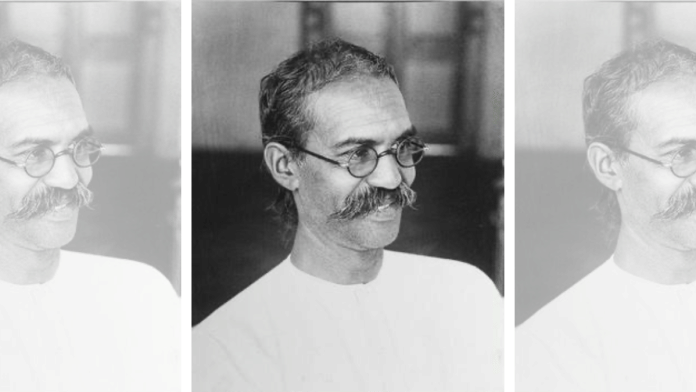
This month marks the passing away of an Indian Star who tried making an impact on the education systems of India. A lawyer by profession Gijubhai’s interest in the education system piqued when it dawned upon him that his son would undergo the same “small terror” experiences that he underwent during schooling. He had experienced corporal punishment, fear, punishment, excessive control, and rote memorization during his own schooling.
Not wanting his child to undergo similar schooling, Gijubhai set his heart and mind to finding alternates to the ‘established’ education practices, a specific freedom in itself. He had realised that the “small terror” experiences destroyed creativity and the inherent learning desires in most children.
Gijubhai abandoned his career path and immersed himself into finding the right pedagogy that could support mind development, that could work for humanity. He believed that children would happily go to school and learn well if they are treated with respect and have the freedom to explore. He also believed that fear should have no role to play in educating a child.
His readings and research led him to Maria Montessori. Gijubhai’s dedication helped establish the Montessori Education System in India. He established a school, called it Bal Mandir, to put his thoughts and plans into action. Along the way he learnt about another microcosm wherein teaching was done in the ‘play-way’ method. He adopted and incorporated this method of teaching and learning too.
Gijubhai’s path to educating children was entirely rooted in behavioural psychology. Storytelling, games, music, crafts, conversation, and hands-on activities are not distractions from learning but powerful ways of achieving it. He emphasizes that discipline should evolve from self-regulation and engagement rather than coercion. Parents and teachers must respect children’s dignity, encourage independence, and avoid constant comparison with others. Education should cultivate curiosity, imagination, empathy, character, and a lifelong love for learning. Schools should create joyful environments where children feel safe to explore, question, and make mistakes. Learning should connect with the child’s culture, experiences, and interests rather than remain confined to textbooks. Gijubhai also stresses the importance of reading habits and rich language experiences in shaping young minds.
Teaching infants (early childhood learners) in an integrated way, means, helping them learn concepts as a whole experience, not as separate subjects like language, math, or science. The option of combining all learning, cross subject learning help connect real-life experiences, emotions, language, and thinking together. For example, when children are taking nature walk; they can observe plants and insects (science), describe what they see (language), collect leaves and sort them (math – grouping) and experience joy and curiosity (emotional development). Another example can be making lemonade. In that, squeezing lemons (motor skills), counting spoons of sugar (math), talking about taste (language) and understanding change (science), is an excellent example of integrated learning. No purpose is correctly served by compartmentalising and differentiating between science, maths and language . Children learn by doing, feeling, and experiencing everything together, more easily and more happily.
Gijubhai advocated education that develops thoughtful, confident, compassionate, and self-reliant human beings rather than simply producing successful examination candidates. His ideas remain remarkably relevant to modern child-centered, competency-based education approaches.
Gijubhai wrote many books, educational works, parenting guides, teacher manuals, and children’s stories. ‘Divaswapna’ is an imaginary story of a teacher who brings in innovative methods in his class, despite the opposition in the school. His other books are Montessori Padhati, Shikshak Ho To, Kem Sikhavvu, and Vaarta Nu Shastra.
His numerous children’s story collections, including adaptations of folk tales and classics, reflect his belief that literature is one of the most powerful tools for education. Through stories, children encounter moral dilemmas, develop imagination, absorb cultural values, and thinking evolves.
In conclusion, a striking feature of Gijubhai’s work is that although it was written nearly a century ago, many of its core ideas closely resemble today’s modern approaches to experiential learning, competency-based education, social-emotional learning, constructivist pedagogy, and child-centered schooling. Reading Divaswapna alongside Shikshak Ho To and Vaarta Nu Shastra provides perhaps the clearest and most practical introduction to his vision of transforming education through trust in children and faith in their natural capacity to learn.
One does hope that his efforts enlighten us to change and adopt the ‘age-old’ yet modern teaching methods to prepare the coming generation for the challenging times ahead.
Author – Dr. Pradeep Waychal –
– Founder and Managing Trustee – Guruji Education Foundation.
-B Tech – COEP- Pune , M-Tech – IIT, Double PhD – IIT Mumbai and Delhi,
MA –Phycology –IGNOU.
These pieces are being published as they have been received – they have not been edited/fact-checked by ThePrint.