




Your Turn is a unique section from ThePrint featuring points of view from its subscribers. If you are a subscriber, have a point of view, please send it to us. If not, do subscribe here: https://theprint.in/subscribe/
Perennial elections in India are often celebrated as a vibrant expression of democracy seen as an ongoing opportunity for people to exercise their choice through the year. Yet, there is a question worth asking: do these frequent elections sometimes create a false front?
First, they risk projecting elections as the end-all of democracy. Voting becomes the headline, while governance – the quieter, more demanding task – recedes into the background. Second, a system constantly in election mode risks being perpetually in campaign mode. Attention shifts, priorities blur, and governance can suffer.
Development as a plank
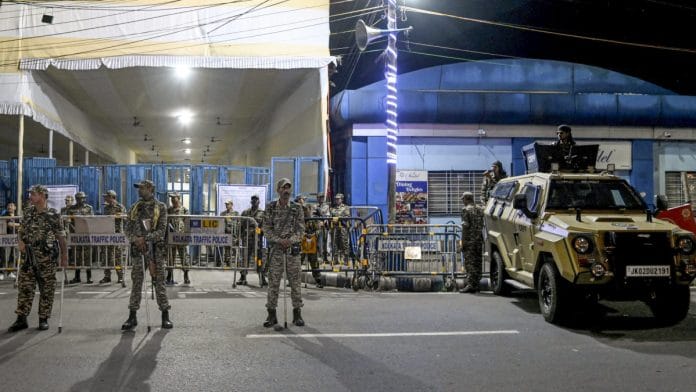
India has just concluded regional elections across multiple states and a Union Territory, Assam, West Bengal, Tamil Nadu, Kerala, and Puducherry. One may well ask: why should the rest of India be deeply invested in these outcomes? And yet, that is the fascinating part. Elections in India have always had the ability to animate the entire nation. Wherever they occur, they create a sense of collective engagement.
It is, in many ways, a journey. But somewhere along the way, that journey is reduced to numbers, margins, and a winner. The process, the debates, the aspirations, they fade quickly once results are declared. And before reflection can take root, the cycle begins again, in another state, another season.
The interest lies not so much in the result, but in the journey of India itself.
What is often overlooked in the journey is the unevenness beneath the surface. In per capita income terms, states like West Bengal and Punjab remain in the lower brackets, while others such as Telangana, Karnataka, and Tamil Nadu present a very different picture of development and progress. The variation within India is striking, differences between states can be as high as six times.
Placed in a broader context, this disparity becomes even more significant. In the United States, the gap between the richest and poorest states is typically around two to three times. In countries like Brazil, it may range between three to four times. India’s spread is wider, more complex and perhaps more telling.
And yet, this very diversity creates another political reality: there is no single electoral narrative that fits all of India. What wins votes in one state may be irrelevant in another. Development, therefore, becomes fragmented, not just in execution, but in political messaging.
In any healthy democracy, political competition must remain alive. But in electoral politics in India, development rarely becomes the decisive factor. Beyond visible works like roads, certainly in some states, there is limited sustained focus on development as a vote-winning narrative.
Even among the young and educated, discussions tend to drift towards ideologies, left, right, or the latest variant of “wokeism.” Ideology, however, cannot be served for supper.
There seems to be a growing belief that political competition itself is the central objective, while development is just one of many factors, and not the most important, in determining electoral outcomes.
Freebies and welfare
Alongside this, another trend is becoming increasingly pronounced: the scale of spending on welfare schemes, and the ever-expanding promises of more to come. The justification is straightforward—it is for the “have-nots.” To be fair, delivery has improved significantly. Leakages have reduced due to digitisation and direct benefit transfers. That is a positive shift.
But there is a second-order effect that often goes unspoken: as welfare becomes more efficient, it also becomes more politically attractive, and therefore more difficult to moderate.
Viewed through an economic lens, the picture becomes more complex.
A common question is often asked: why can’t India grow like China? Or like South Korea and Taiwan?
These East Asian economies achieved sustained high growth – 8% and above, with China touching nearly 10% for extended periods. But that growth was underpinned by a hard, disciplined, and at times harsh form of capitalism. Welfare, in the sense we understand it today, came much later, after reaching certain income thresholds. In the early stages, the focus was relentless: infrastructure, manufacturing, exports, and investment.
Take China in the 1990s. Tens of millions were laid off from bloated state-owned enterprises, with little in the way of a social safety net. What followed was one of the largest internal migrations in history, as people moved from inland regions to the rapidly expanding coastal economies in search of work.
That model came at a cost.
For development, you cannot have it both ways. And in a democracy like India, we cannot and should not, attempt to replicate the Chinese path.
Which brings us back to the central dilemma.
A democracy must respond to its people. Welfare has its place, and in a country of India’s scale and diversity, it cannot be wished away. But growth demands discipline, prioritisation, and, at times, difficult choices.
There is also a third dimension often missed: time. Development is slow, cumulative, and often politically unrewarding in the short term. Welfare, by contrast, is immediate, visible, and electorally potent. Democracies, by their nature, lean toward the immediate.
Balancing the two is not easy.
In elections, development may not win votes, but without it, there will eventually be little left to distribute.
These pieces are being published as they have been received – they have not been edited/fact-checked by ThePrint.