




Thank you dear subscribers, we are overwhelmed with your response.
Your Turn is a unique section from ThePrint featuring points of view from its subscribers. If you are a subscriber, have a point of view, please send it to us. If not, do subscribe here: https://theprint.in/subscribe/
Bureaucrats have a peculiar habit.
During their careers, they preside over the creation of problems. After retirement, they discover PowerPoint presentations. Then they begin writing op-eds explaining how India can become Singapore, Switzerland, Dubai, Thailand, Saudi Arabia and Disneyland simultaneously—provided only that the government spends a few hundred million dollars on marketing.
Apparently, the world is waiting to visit India.
If only we organized another roadshow.
Another tourism summit.
Another “Incredible India” launch.
Or yet another, “God’s Own Country “ propaganda.
Another delegation of bureaucrats to Europe.
Another week of five-star conferences.
Another round of chai, samosas, cheese-and-wine receptions and taxpayer-funded shopping expeditions.
Then the tourists will surely arrive.
This is classic bureaucratic thinking.
When reality refuses to cooperate, print another glossy brochure.
When that fails, commission another consultancy.
And en-cash kickbacks.
When that fails, ask for a bigger budget.
Marketing has become the aspirin prescribed for every governance headache.
Unfortunately, tourism does not work like that.
Nobody flies halfway across the world because a government brochure was printed on glossy paper.
People travel because other travellers return home saying,
“You must go.”
That recommendation cannot be manufactured in Delhi.
It must be earned.
Tourism is not a branding exercise.
It is an audit of a country.
Every visitor becomes an international inspector.
If the experience disappoints, no advertising campaign can repair the damage.
Foreign tourists today have endless choices.
Why should they choose India?
The answer cannot be, “Because we spent another ₹500 crore advertising ourselves.”
The answer must be, “Because your experience will be unforgettable—for the right reasons.
Too often, it is unforgettable for the wrong ones.
India remains one of the world’s most fascinating civilizations. It is not yet one of the world’s easiest countries to visit.
That distinction matters.
Visitors spend hours escaping traffic, dodge open drains, hop, step, jump around garbage, are exposed to deafening horns, discover organized chaos.
Safety is yet another issue. Parents think twice before allowing daughters to backpack across India.
Solo women travellers plan routes with unusual caution.
International travel advisories carry warnings that damage years of promotional campaigns.
One horrific crime can erase a hundred glossy advertisements.
Trust is tourism’s most valuable currency.
Trust cannot be purchased through marketing contracts.
Then comes cleanliness.
No amount of clever branding can hide overflowing garbage bins. Plastic-choked rivers. Public urination.
Open spitting. Smoke from burning hazardous waste. Dust. Mosquitoes. Broken pavements.
The visitor notices them within minutes.
We have simply become accustomed to them.
Traffic deserves its own ministry of absurdity.
Red lights are treated as polite suggestions.
Lane discipline is regarded as an assault on personal freedom.
Honking has become India’s unofficial national anthem.
Pedestrians survive by negotiation rather than law.
Crossing a busy Indian road often feels less like walking and more like participating in a reality television survival contest.
Then comes bureaucracy.
Egypt built three pyramids.
India built a fourth.
The Indian bureaucracy.
It may be the largest man-made obstacle on earth.
By the time an investor receives the final approval, his grandchildren are old enough to apply for the renewal.
And then retired bureaucrats write thoughtful articles explaining that regulations should be simplified.
One wonders where this remarkable wisdom spent its working life.
Every year, delegations travel abroad to “promote India.”
The taxpayer pays.
The bureaucrats collect frequent-flyer miles.
Photographs appear in newspapers.
The tourist numbers barely notice.
Perhaps the world does not need another presentation.
Perhaps it needs cleaner railway stations.
The uncomfortable truth is that India’s greatest tourism success story is not foreign tourism.
It is domestic tourism.
Indians understand India.
Foreign tourists do not.
What we dismiss as “adjustment” often appears to them as dysfunction.
What we call “Indian style” may simply look like administrative failure.
That perception matters because tourism is built on confidence.
The obsession with marketing misunderstands the problem.
India does not primarily suffer from inadequate promotion.
India suffers from inconsistent execution.
Tourism follows good governance.
It follows safety.
It follows cleanliness.
It follows efficiency.
It follows trust.
It follows reputation.
Marketing comes last.
Not first.
Countries that dominate tourism rarely do so because they shout the loudest.
They succeed because the product speaks for itself.
Switzerland does not need to explain punctuality.
Japan does not advertise cleanliness.
Singapore does not market law and order.
Their citizens do it every single day.
India possesses almost everything nature and history can offer.
Few nations are so richly endowed.
Our greatest obstacle is not a shortage of attractions.
It is a shortage of governance.
Stop selling India.
Start fixing India.
The tourists will do the advertising free of charge. That has always been the most powerful marketing campaign in the world.
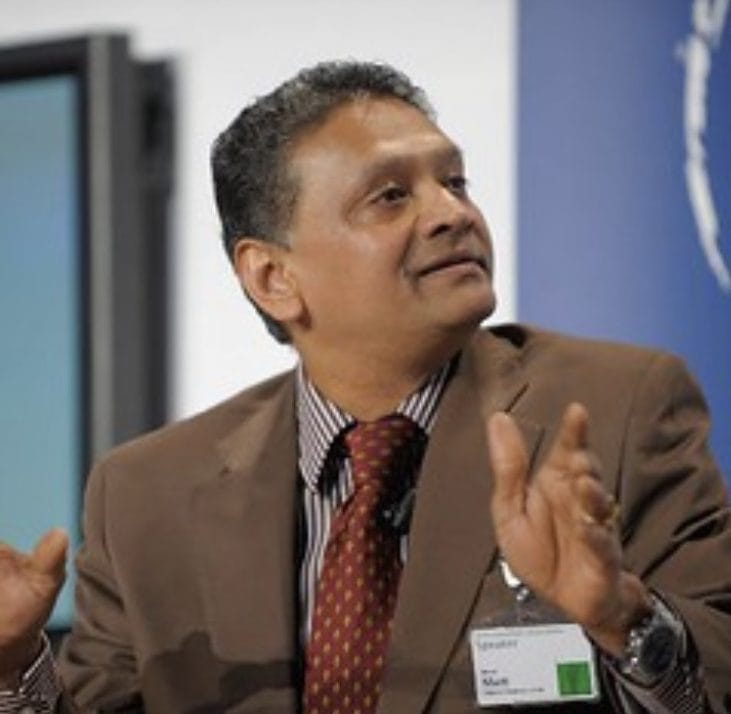
Mohan MURTI, FICA
Advocate & International Industry Arbitrator
Former Managing Director-Europe
Reliance Industries Ltd. Germany
These pieces are being published as they have been received – they have not been edited/fact-checked by ThePrint.