




Thank you dear subscribers, we are overwhelmed with your response.
Your Turn is a unique section from ThePrint featuring points of view from its subscribers. If you are a subscriber, have a point of view, please send it to us. If not, do subscribe here: https://theprint.in/subscribe/
The profound connection between road connectivity and public well-being is vividly demonstrated in Maharashtra, India’s most economically significant state. By examining key indicators such as child mortality, poverty reduction, employment, and GDP contribution, we can clearly trace how strategic road infrastructure acts as a catalyst for holistic development.
Driving Down Child Mortality
Roads are lifelines for healthcare access. Maharashtra’s achievement of 100% all-weather road connectivity to its villages has directly and indirectly contributed to superior health outcomes. The state’s Infant Mortality Rate (IMR) of 18 per 1,000 live births is significantly better than the national average of 27. This improvement is most pronounced in recently connected tribal districts like Palghar and Gadchiroli, where upgraded roads under rural connectivity schemes have slashed ambulance response times by 25%. The correlation is clear: reliable roads ensure timely access to emergency obstetric care, institutional deliveries (94% in Maharashtra), and neonatal services, directly reducing preventable child deaths. The physical road enables the delivery of critical healthcare, making it a foundational determinant of child survival.
Paving the Way Out of Poverty
Road connectivity is a powerful engine for poverty alleviation. By integrating isolated rural economies with mainstream markets, roads break cycles of deprivation. The Samruddhi Mahamarg (Mumbai-Nagpur Expressway) exemplifies this, having boosted agro-exports from the agrarian Vidarbha region by 22% by providing farmers swift access to urban markets and ports. This enhanced market access increases farm incomes, reduces post-harvest losses, and creates non-farm employment opportunities in logistics and roadside services. The resulting economic mobility lifts households above poverty lines, demonstrating that road investment is, in essence, an investment in economic inclusion and social equity.
Fuelling Employment and Economic Contribution
The correlation between dense road networks, job creation, and GDP growth is robust. Maharashtra’s extensive network, including premier expressways, supports a highly efficient logistics sector, reducing costs to just 11% of GDP compared to 13% nationally. This efficiency makes the state a magnet for manufacturing, warehousing, and services, generating massive formal and informal employment. The state’s road infrastructure is a key reason it contributes over 15% to India’s national GDP—the largest share of any state. High road density facilitates just-in-time supply chains, boosts tourism, and enables seamless commutes, collectively sustaining the economic ecosystem that employs millions.
The Critical Corollary: Quality and Equity Matter
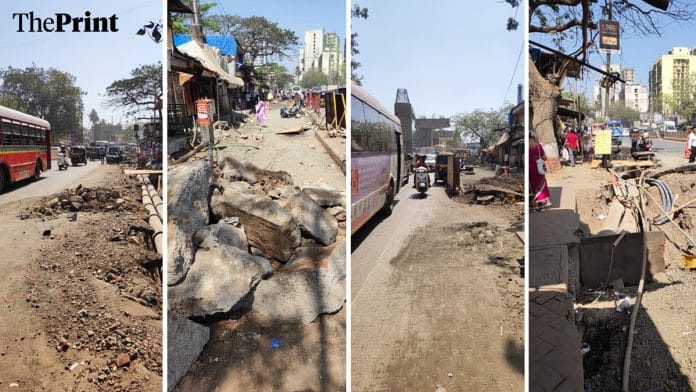
However, the correlation is not automatic; it depends on the quality and equity of connectivity. While Maharashtra’s overall metrics are strong, intra-state disparities persist. Congested urban roads in Mumbai and Pune impose massive productivity losses (₹18,000 crore annually), showing that unmanaged density can undermine well-being. Similarly, mere physical connectivity in rural areas must be supplemented with last-mile services to fully unlock benefits. The contrast with Kerala, which has a far higher road density (517 km/100 sq km) and the best IMR (10) in India, underscores that a dense, capillary-like network combined with strong human development investments yields the greatest well-being dividends.
Conclusion
Maharashtra’s experience offers an irrefutable lesson: strategic road connectivity is inextricably linked to improving public well-being. It correlates strongly with lower child mortality by enabling healthcare access, reduces poverty by connecting people to markets, and fuels employment and GDP growth by creating an efficient economic landscape. The policy imperative is to build with intention—prioritizing equitable rural access, integrating infrastructure with social services, and managing urban congestion. By viewing roads not merely as strips of asphalt but as vectors of health, opportunity, and equity, states can replicate Maharashtra’s success and drive meaningful, measurable improvements in the lives of their citizens.
These pieces are being published as they have been received – they have not been edited/fact-checked by ThePrint.