





Thank you dear subscribers, we are overwhelmed with response.
Your Turn is a unique section from ThePrint featuring points of view from its subscribers. If you are a subscriber, have a point of view, please send it to us. If not, do subscribe here: https://theprint.in/subscribe/
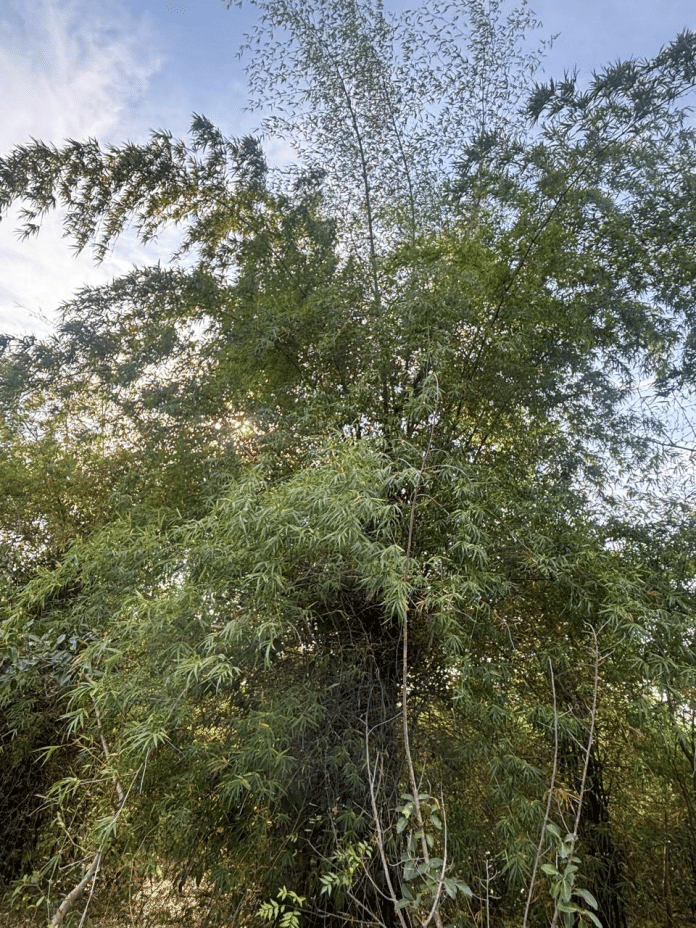
Bamboo is one of the most spectacular species of the plant world, often referred to as “poor man’s gold”. It’s woven into daily life, fuelling rural economies as a key material for building, making paper, and crafting all sorts of traditional goods. In a world where we keep hearing about climate change and disappearing forests, bamboo has quietly stepped up as a one of the fastest species to absorb the atmospheric carbon.
Apart from these facts, some other exceptional qualities of bamboo lie in its extremely fast growth rate, even reaching up to 90 cm in a single day under ideal conditions. Additionally, its remarkable tensile strength—which can exceed that of steel in some cases—has earned it the nickname “Vegetative Steel.”
There are more than 136 species of bamboo in India across 22-23 genera.. The major ones widely recognized for commercial and ecological importance are.
- Bambusa bambos: Called as Kanta bans (Hindi/Orissa), Behor bans (West Bengal), Mula (Malayalam), Mungil (Tamil), and Saneibo (Manipur).
- Bambusa balcooa: Called Bhaluka (Assam/WB), Baruwa (Manipur), Beru (Meghalaya), and Barak (Tripura).
- Dendrocalamus strictus: Called Male bamboo or Vilayati bans (Hindi), Nanvel (Marathi), and Salia bhanso (Oriya).
- Dendrocalamus hamiltonii: Called Kako (Assam), Pecha (WB), Unep (Manipur), and Pao (Sikkim).
- Bambusa tulda: Called Jati bahn (Assam), Mritinga (Tripura), and spineless Indian bamboo.
Among Indian states, Madhya Pradesh and Arunachal Pradesh possess the maximum stock of bamboo. As per the latest FSI 2023 report, nearly 150,000 sq km of area is under bamboo or mixed forest where bamboo is the dominant species. India remains the world’s second-largest producer of “green gold,” with the North Eastern states contributing significantly to the national density.
The Carbon Sink Powerhouse
Thanks to its rapid growth and massive, interconnected root systems, bamboo is a superior carbon sponge. A single bamboo culm (pole) can sequester roughly 10-25 kg of CO2 over its lifetime , depending on the species, size and environment. Beyond its ecological services, bamboo’s always been more than just a plant—it’s fed people, fuelled fires, helped make farm equipment, and shaped entire livelihoods of forest dependent communities.
The “Big Bang” of the Plant Kingdom
Perhaps the most fascinating—and mysterious—trait of bamboo is its flowering behaviour. Unlike most plants that flower annually, many bamboo species exhibit gregarious flowering. This occurs at long, species-dependent intervals of roughly 30 to 50 years, when entire forests of the same bamboo species flower simultaneously across vast geographic areas
Why does it die after flowering?
Scientists have proposed two primary hypotheses for this “suicidal” reproductive strategy:
The Energy Depletion Theory: The plant directs virtually all of its stored nutrients, including carbohydrates, into producing a massive quantity of seeds to ensure the survival of the next generation. This exhaustive effort leaves the parent plant with no resources to maintain its own life. This strategy—characterized by a single, massive reproductive event followed by death—is known as semelparity, or “big bang” reproduction wherein the species prioritizes offspring quantity over parental survival.
The Ecological/Parental Gap Theory: This hypothesis suggests the parent plant dies intentionally to “make room.” By collapsing and decaying, the parent creates a gap in the canopy for sunlight and provides a nutrient-rich mulch of organic debris, giving the seedlings the best possible start in a competitive environment.
Forest to Fear : The Bamboo Famine
In parts of Northeast India (particularly Mizoram), Japan, and China, bamboo flowering is not celebrated—it is feared. Historically, it has been viewed as an omen of famine, death, and calamity. While these fears were once dismissed as superstition, they have a stark scientific basis rooted in ecology.
The Rodent Effect: The sudden, massive production of protein-rich bamboo seeds provides an unlimited food source for black rats and mice. This leads to a “population explosion” of rodents. Once the bamboo seeds are consumed, the massive swarms of rats migrate to nearby human settlements and agricultural fields, devouring granaries and standing crops (like paddy) overnight. This ecological chain reaction leads to localised famines, known in India as Mautam. Furthermore, the spike in rodent populations increases the risk of zoonotic diseases, such as the plague, providing a rational link between the beautiful blooming of bamboo and the human suffering that historically followed.
Embracing the “Green Gold”
Ultimately, the transition from viewing bamboo flowering as an omen of doom to understanding it as a complex ecological cycle allows us to utilise the plant’s true potential. Beyond the localised challenges of gregarious flowering, bamboo remains a cornerstone of environmental conservation. Its unmatched capacity for carbon sequestration—acting as a high-speed atmospheric filter—makes it an essential ally in the fight against global warming. By stabilising soil, restoring degraded lands, and providing a sustainable alternative to timber, and other livelihood opportunities, bamboo offers a path toward a green economy. However, the lesson of the “Big Bang” flowering teaches us that we must be strategic. We should champion the adoption and cultivation of bamboo globally, but do so with a deep respect for local ecology and species selection. By integrating bamboo into our landscapes thoughtfully, we can transform an ancient fear into a green climate hope for a eco-friendly and more resilient planet.
These pieces are being published as they have been received – they have not been edited/fact-checked by ThePrint.