





Thank you dear subscribers, we are overwhelmed with your response.
Your Turn is a unique section from ThePrint featuring points of view from its subscribers. If you are a subscriber, have a point of view, please send it to us. If not, do subscribe here: https://theprint.in/subscribe/
Henry Kissinger, in his book Diplomacy, traces the origins of American foreign policy by setting it against the European order that preceded it. The United States, he argues, was the first great power to anchor its foreign policy in universal moral values rather than in the shifting alliances and balance-of-power calculations that had defined European statecraft for centuries. Woodrow Wilson, the 28th president, believed that lasting peace rested on open diplomacy and self-determination of nations, principles he presented not as American preferences but as universal moral truths.
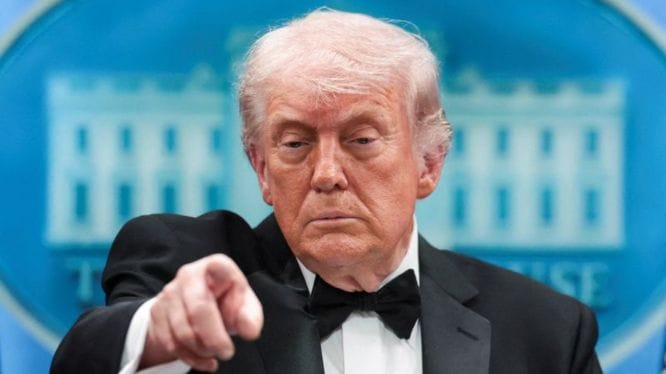
As the Iran war enters its third month, it is sobering to reflect on how far the U.S. foreign policy has moved from Wilson’s vision to that of Donald Trump. Wilson’s idealism was noble but naive and the decades that followed corrected for it. American foreign policy came to be guided by raison d’état, the primacy of state interest, but always dressed in moral terms. Every president since then retained that vocabulary until Trump came along. Trump is the first President to discard it almost entirely. His victory in 2024 was in part due to public’s reaction against Democratic Party that had drifted towards a borderless universalism and he arrived in office with greater latitude than his predecessors to ignore the moral framing of American actions, and to pursue an openly muscular policy. Wilson the Democrat and Trump the Republican present a perfect contrast in the American foreign policy tradition: one rooted entirely in shared universal values, the other in raw national interest as the administration defines it.
Every major war the United States has fought abroad has had, at least on paper, a moral foundation. Korea and Vietnam were framed as containments of communism. Afghanistan was a clear retaliation for an attack on American soil. The Iraq war was sold on the fear of non-existent weapons of mass destruction, but one that the mainstream media of a pre-internet age was able to amplify into something most Americans accepted initially. Iran war, by contrast, suffers from complete lack of support beyond Trump’s hardcore base. Trump’s stated reasons for striking Iran changed over time giving support to the suspicion that attack on Iran was bereft of any genuine justification. The administration cycled through several moral justifications, from pursuing regime change to destroying Iran’s Military and Nuclear capabilities. These justifications have not resonated with the public for several reasons.
First, the intelligence community had confirmed before the war that there was no imminent Iranian threat to the United States. Second, Iran was struck when negotiations were in progress, reinforcing the perception that the U.S. and Israel are less interested in reaching an agreement than in degrading Iran’s capabilities, despite the absence of any imminent threat. Third, Trump entered the conflict following a string of actions that carried no moral pretence at all. His moves against Venezuela, the blockade of Cuba, his threats of occupying Greenland were explained, plainly, as American interests exercised because America could. Fourth, Israel, the principal driver of the conflict has steadily lost goodwill, including within the Republican coalition. Israel’s response to October 7th was at first widely seen as justified but two years of disproportionate retaliation has eroded that support. Fifth, any moral justification provided by Trump administration is overshadowed by its repeated rhetoric about raining “death and destruction” on Iran, that has reinforced the sense that this administration operates without a moral compass.
Narratives matter, even when they are pretences. By discarding the American tradition of framing state interests in moral terms, Trump underestimated something deeper: the human need to perceive moral grounding in every action. Morality is woven into how we evolved as a species and a moral justification for war, even an invented one, functions as a restraint on excess. Removing moral justifications provides a license to the unconstrained and that is precisely what Trump’s foreign policy is beginning to normalise. This approach may yield results in situations that are swift and decisive, where public opinion plays little role. But prolonged conflicts demand sustained public support both domestically and among allies. Key allies, particularly in Europe, have been hesitant to fully back the United States reflecting not just strategic concerns but also the absence of a shared moral narrative.
Wilson may have overestimated the power of ideals but he understood their necessity. Trump, in rejecting them, may have gone too far in the opposite direction. That miscalculation may yet prove costly not only for the trajectory of this war but for the broader credibility of U.S. leadership.
These pieces are being published as they have been received – they have not been edited/fact-checked by ThePrint.