




Thank you dear subscribers, we are overwhelmed with your response.
Your Turn is a unique section from ThePrint featuring points of view from its subscribers. If you are a subscriber, have a point of view, please send it to us. If not, do subscribe here: https://theprint.in/subscribe/
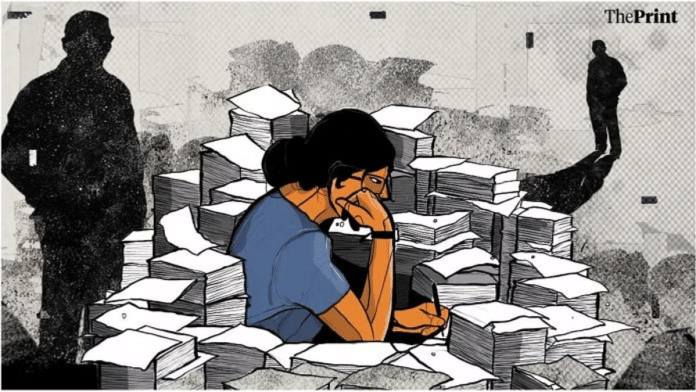
Every 11 minutes, a woman or girl is killed by an intimate partner or family member. In 2023 alone, an estimated 51,100 women were killed by the people closest to them. That number exceeds most battlefield death tolls, but it receives a fraction of the attention, the resources, or the outrage.
The Reality of Domestic Violence
According to the World Health Organisation, 1 in 3 women globally will experience physical or sexual violence in her lifetime, the overwhelming majority of it at the hands of someone she knows, trusts, or lives with. Globally, 137 women are killed by a partner or family member every single day. Forty per cent of all women who are murdered are killed by an intimate partner.
Domestic violence cuts across every income level, religion, ethnicity, and country. It is not a problem of poor households or uneducated men. It thrives wherever silence is normalized, where “don’t wash dirty linen in public” is considered wisdom rather than complicity. It thrives when police tell a woman to go home and sort it out. It thrives when a family tells a survivor she should have been more obedient. It thrives when we watch and say nothing. The most dangerous place for a woman in the world is not a war zone. It is, statistically, her own home.
How We Can Actually Respect Women, Not Just Say We Do
Respect is not declared. It is not posted. It is practiced. If you like, I can also make a punchy “ready-to-post” version with extra witty one-liners for each leader, perfect for social media or a fun article layout. It’ll be like your satire in turbo mode.
In daily choices, in how we raise sons, in what we tolerate, in what we refuse to let slide. Start at home, with how we raise boys. Teach sons that emotions are human, not shameful. Teach them that consent is not a formality but a foundation. Teach them that a woman’s “no” ends the conversation, not begins a negotiation. Teach them early, consistently, and by example.
Stop minimizing. “She provoked him.” “He was drunk.” “They’re going through a rough patch.” “It’s a private matter.” These are the sentences that keep abusers safe. Every time we say them, we choose the abuser over the survivor. Name abuse as abuse. Every time. Without qualification.
Believe women. Statistically, false reports of sexual assault are rare; research consistently places them between 2% and 10%. Cultures that default to disbelief protect perpetrators, not truth. Believing a woman’s account is not the same as convicting her abuser, it is simply the baseline of human dignity.
Make structural change, not just gestures. A token woman on a board can change nothing without equal pay, harassment-free pathways, and genuine representation at decision-making levels. International Women’s Day celebrations mean little in organisations that promote men faster, pay women less, and handle complaints of harassment by moving the victim rather than the abuser.
Reform the laws and enforce them. Many countries still carry marital rape exemptions on the books. Many require multiple witnesses for assault cases, but many permit child marriage. Laws encode a society’s values. If the laws protect abusers, change the laws. And where laws exist, enforce them not selectively, not lightly, but consistently.
Support women economically. Financial dependence is one of the most powerful traps that keeps women in dangerous situations.
A woman who cannot support herself and her children cannot easily leave. Equal pay, access to property, and education for girls are not feminist politics they are the
The Reality of Domestic Violence
According to the World Health Organisation, 1 in 3 women globally will experience physical or sexual violence in her lifetime the overwhelming majority of it at the hands of someone she knows, trusts, or lives with. Globally, 137 women are killed by a partner or family member every single day. Forty per cent of all women who are murdered are killed by an intimate partner.
Domestic violence cuts across every income level, religion, ethnicity, and country. It is not a problem of poor households or uneducated men. It thrives wherever silence is normalised, where “don’t wash dirty linen in public” is considered wisdom rather than complicity. It thrives when police tell a woman to go home and sort it out. It thrives when a family tells a survivor she should have been more obedient. It thrives when we watch and say nothing.
The most dangerous place for a woman in the world is not a war zone. It is, statistically, her own home.
How We Can Actually Respect Women, Not Just Say We Do
Respect is not declared. It is not posted. It is practiced in daily choices, in how we raise sons, in what we tolerate, in what we refuse to let slide.
Start at home, with how we raise boys. Teach sons that emotions are human, not shameful. Teach them that consent is not a formality but a foundation. Teach them that a woman’s “no” ends the conversation, not begins a negotiation. Teach them early, consistently, and by example.
Stop minimising. “She provoked him.” “He was drunk.” “They’re going through a rough patch.” “It’s a private matter.” These are the sentences that keep abusers safe. Every time we say them, we choose the abuser over the survivor. Name abuse as abuse. Every time. Without qualification.
Believe women. Statistically, false reports of sexual assault are rare — research consistently places them between 2% and 10%. Cultures that default to disbelief protect perpetrators, not truth. Believing a woman’s account is not the same as convicting her abuser, it is simply the baseline of human dignity.
Make structural change, not just gestures. A token woman on a board can change nothing without equal pay, harassment-free pathways, and genuine representation at decision-making levels. International Women’s Day celebrations mean little in organisations that promote men faster, pay women less, and handle complaints of harassment by moving the victim rather than the abuser.
Reform the laws and enforce them. Many countries still carry marital rape exemptions on the books. Many require multiple witnesses for assault cases, but many permit child marriage. Laws encode a society’s values. If the laws protect abusers, change the laws. And where laws exist, enforce them not selectively, not lightly, but consistently.
Support women economically. Financial dependence is one of the most powerful traps that keeps women in dangerous situations. A woman who cannot support herself and her children cannot easily leave. Equal pay, access to property, and education for girls are not feminist politics; they are the basic infrastructure of safety.
Intervene when you witness abuse. The bystander who says nothing enables what comes next.
Safe intervention, speaking privately to a survivor, calling authorities, and publicly naming harmful behavior is not an intrusion. It is responsible
How We Can Actually Respect Women, Not Just Say We Do
Respect is not declared. It is not posted. It is practiced in daily choices, in how we raise sons, in what we tolerate, and in what we refuse to let slide.
Start at home, with how we raise boys. Teach sons that emotions are human, not shameful. Teach them that consent is not a formality but a foundation. Teach them that a woman’s “no” ends the conversation, not begins a negotiation. Teach them early, consistently, and by example.
Stop minimizing. “She provoked him.” “He was drunk.” “They’re going through a rough patch.” “It’s a private matter.” These are the sentences that keep abusers safe. Every time we say them, we choose the abuser over the survivor. Name abuse as abuse. Every time. Without qualification.
Believe women. Statistically, false reports of sexual assault are rare; research consistently places them between 2% and 10%. Cultures that default to disbelief protect perpetrators, not truth. Believing a woman’s account is not the same as convicting her abuser, it is simply the baseline of human dignity.
Make structural change, not just gestures. A token woman on a board change nothing without equal pay, pathways free of harassment, and genuine representation at decision-making levels. International Women’s Day celebrations mean little in organisations that promote men faster, pay women less, and handle complaints of harassment by moving the victim rather than the abuser.
Reform the laws and enforce them. Many countries still carry marital rape exemptions on the books. Many require multiple witnesses for assault cases, but many permit child marriage. Laws encode a society’s values. If the laws protect abusers, change the laws. And where laws exist, enforce them not selectively, not lightly, but consistently.
Respect for women is not a Women’s Day post. It is not a rally, a hashtag, or a prayer said once a year at a temple dedicated to a goddess while a real woman is silenced in the next room. It is the slow, unglamorous, daily work of changing how we speak, what we allow, what we refuse to ignore, and who we hold accountable.
The gap between what we say and what we do is not a misunderstanding. It is a choice — made a thousand times a day, in homes and offices and courtrooms and classrooms. We can choose differently. We just have to actually want to
Support women economically. Financial dependence is one of the most powerful traps that keeps women in dangerous situations. A woman who cannot support herself and her children cannot easily leave. Equal pay, access to property, and education for girls are not feminist politics — they are the basic infrastructure of safety.
Intervene when you witness abuse. The bystander who says nothing enables what comes next. Safe intervention, speaking privately to a survivor, calling authorities, or publicly naming harmful behavior, is not an intrusion. It is a responsibility. Silence is a choice too, and it always sides with the abuser.
Amplify women’s voices in real spaces. When a woman’s idea is ignored in a meeting and a man repeats it to applause, say something. When a woman’s expertise is questioned in a way a man would not be, notice it. Representation without power is theatre. Real respect looks like listening, crediting, and ceding space.
Dismantle honour culture. In systems where a woman’s “purity” defines her family’s social standing, women are controlled, punished, and killed to protect male reputation. Honour belongs to the conduct of how we treat each other, not to a woman’s body or her choices about it.
Make it personal. Stay uncomfortable. Every statistic in this article is someone’s mother, daughter, sister, colleague, or friend. Not because women’s value depends on their relationship to men but because numbers anaesthetise and faces wake us up. Do not let the scale of the problem become an excuse for paralysis. One person, one household, one conversation at a time.
These pieces are being published as they have been received – they have not been edited/fact-checked by ThePrint.