



Thank you dear subscribers, we are overwhelmed with your response.
Your Turn is a unique section from ThePrint featuring points of view from its subscribers. If you are a subscriber, have a point of view, please send it to us. If not, do subscribe here: https://theprint.in/subscribe/
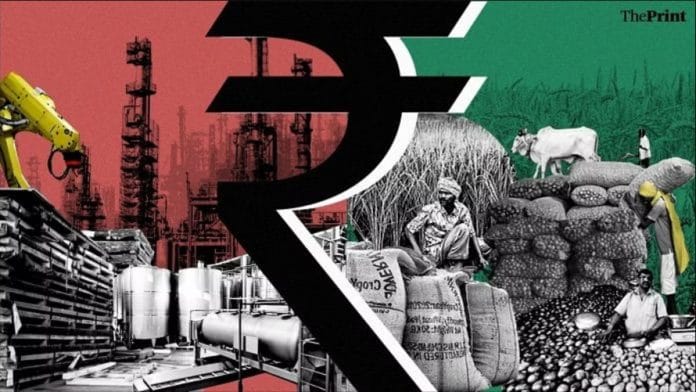
India’s economy grew by 7.8% in the first quarter of 2026–27, a performance that underlines its resilience amid global uncertainty. Yet a strong growth number cannot answer a question that matters to millions of households: does expansion create work that is secure, productive and adequately paid? Gross domestic product measures the value of output, not the dignity or stability of the livelihoods behind it. India’s next economic challenge is to make growth more employment-intensive.
The paradox is not that growth creates no jobs. Official labour data show rising workforce participation and an increase in the share of regular wage and salaried employment in 2025. These gains matter. But national averages can conceal the uneven quality of work: a person counted as employed may still face irregular hours, low earnings, weak social protection or involuntary self-employment. The issue is therefore not simply the number of jobs, but whether they provide a credible route out of insecurity.
Part of the explanation lies in the structure of growth. Modern factories can produce more with automation, advanced machinery and fewer workers. Digital platforms and capital-intensive industries generate substantial value, but their output does not automatically translate into mass employment. Meanwhile, millions of young Indians enter the labour market with qualifications that do not always match employers’ needs. When formal opportunities are scarce, workers turn to informal services, casual labour or low-return self-employment. Economic activity continues, but productivity and bargaining power remain limited.
Manufacturing must become a stronger bridge between growth and employment. India has made efforts to expand domestic production, attract investment and strengthen supply chains. The test is whether these investments create dense networks of jobs beyond a few highly automated facilities. Labour-intensive sectors such as textiles, footwear, food processing, tourism, logistics and construction can absorb workers at scale. They need reliable infrastructure, predictable regulation, affordable credit and access to export markets. Small and medium enterprises are especially important: they account for a substantial share of manufacturing, exports and national output, yet many struggle to expand because of delayed payments, costly finance and compliance burdens.
States, too, must align land, transport, childcare and urban services with employment hubs, so workers especially women, can access jobs without prohibitive costs or unsafe journeys. These conditions determine whether a vacancy becomes a lasting opportunity.
Skills policy also requires a change in emphasis. Training certificates are not an employment strategy unless they lead to actual vacancies. Industrial training institutes, colleges and employers should jointly design courses around local demand, while paid apprenticeships give young people experience before they are expected to compete for permanent work. The goal should not be to produce graduates for yesterday’s jobs, but to help workers move into emerging occupations without treating every mismatch as an individual failure.
Government incentives should be judged by additional, sustained employment, not investment announcements alone. Public support can be tied to transparent measures of job creation, wages, retention, training and social-security coverage. Labour-intensive firms need easier access to credit and technology, while workers require portable benefits across formal, informal and platform work. Better employment data, disaggregated by age, gender, region and job quality, would help policymakers see who is being left behind.
None of this means India should reject automation or sacrifice productivity. Higher productivity is essential to raising wages and competing globally. But technology should complement a broad employment strategy, not substitute for one. A growing economy also needs stronger demand from households; when incomes remain uncertain, consumption weakens and businesses have less reason to invest. Good jobs are therefore not merely a social outcome of growth. They help sustain growth itself.
India’s demographic strength is not an automatic dividend. It becomes one only when people can turn their abilities into useful work and reliable incomes. The true measure of economic success is not how quickly the national pie expands, but whether more citizens can earn a meaningful share of it. India’s growth story needs a jobs dividend.
These pieces are being published as they have been received – they have not been edited/fact-checked by ThePrint.