








In episode 1807 of Cut the Clutter, ThePrint Editor-in-Chief Shekhar Gupta looks at the strategic importance, geography and geology of the Strait of Hormuz. With nearly one-fifth of global oil supply passing through the narrow sea passage between Iran and Oman, the strait is a critical chokepoint for global energy.
Here is a complete transcript of the episode, edited for clarity.
What’s the current war in the Gulf region about? It’s about one of two things. Either it’s about oil and gas—a large percentage of the global storehouse of hydrocarbons sits in this limited real estate. The second reason, is the protection of Israel.
One, oil and gas, which is, who controls oil and gas and does oil and gas flow freely to buyers in the rest of the world from here or not, because there is dependence all over the world on these hydrocarbons, this source of energy. The second is Israel.
Israel came into being between the First and the Second World War, and since then has been at odds with a lot of its neighbours, particularly in the Islamic world. Initially it was at war with other Arab countries, which were not exactly coming from an Islamic motivation but more from a Left-Ba’athist motivation and, therefore, aligned with the Soviet Union.
Israel has fought wars in the past with Egypt, Syria, Iraq. Jordan isn’t an oil country, neither are Egypt nor Syria. Iraq is an oil country. But it only joined indirectly in the 1973 war.
Protection of Israel has been the second reason wars have broken out in this region. In those wars also, the big oil-bearing Arab countries (Saudi Arabia, Qatar, the UAE, etc.) did not participate directly. They may have supported the Palestinian cause, or at the most they would have given diplomatic support, lip sympathy and maybe economic support. But they stayed out of the fighting with Israel, also because over time they’ve become very tightly knit allies and, in some ways, protectorates of the Western powers.
Jordan has been a protectorate, not formally, but in many ways of British authority linked to the larger Western power. They’ve been hosting American military power, and they’ve been protected by the American military powers. So any war for the protection of Israel has been limited to its neighbours. Those neighbours have signed peace accords with Israel and recognised it; barring Syria, which is in a different situation now.
That’s why warfare with Israel has been taken over by the Iranians. It’s the Iranians, located far away from Israel, who’ve taken the mantle of the Palestinian cause.
Again, why do they do it? That is to show up the Arab power—‘You may be rich, but you don’t want to fight for Palestine. We are willing to fight for Palestine. We are also willing to raise groups to fight for Palestine or to get the Israelis out.’
The second reason is for the protection of oil and gas. But what happens when both combine? You don’t have to go far. Look at the first Gulf War of 1991 when Saddam Hussein invaded Kuwait and occupied it. That’s when the Americans, they also got the UN sanction for this, put together a multinational force to ‘liberate’ Kuwait. That was purely for oil and for protecting the supply of oil and gas from this region to the rest of the world.
At this point what we’re seeing is that both motives have combined.
It’s the protection of Israel starting with 7 October, 2023 attacks. Israel has launched an attack on Hamas, after that Hezbollah, and then the Houthis. These were proxies of Iran, or members of the Iranian ‘ring of fire’. These also included many Shia groups Iran built in Iraq. Israel has been at war with all of them. In that war, Israel has wide Western support.
Then it got expanded to Iran’s nuclear weapons programme. And that’s when the Americans also came in last year, in June, during the 12-day war, when on the last day the Americans came and they carried out bombing at the Fordow underground facility and two other nuclear facilities and Trump said the war is over.
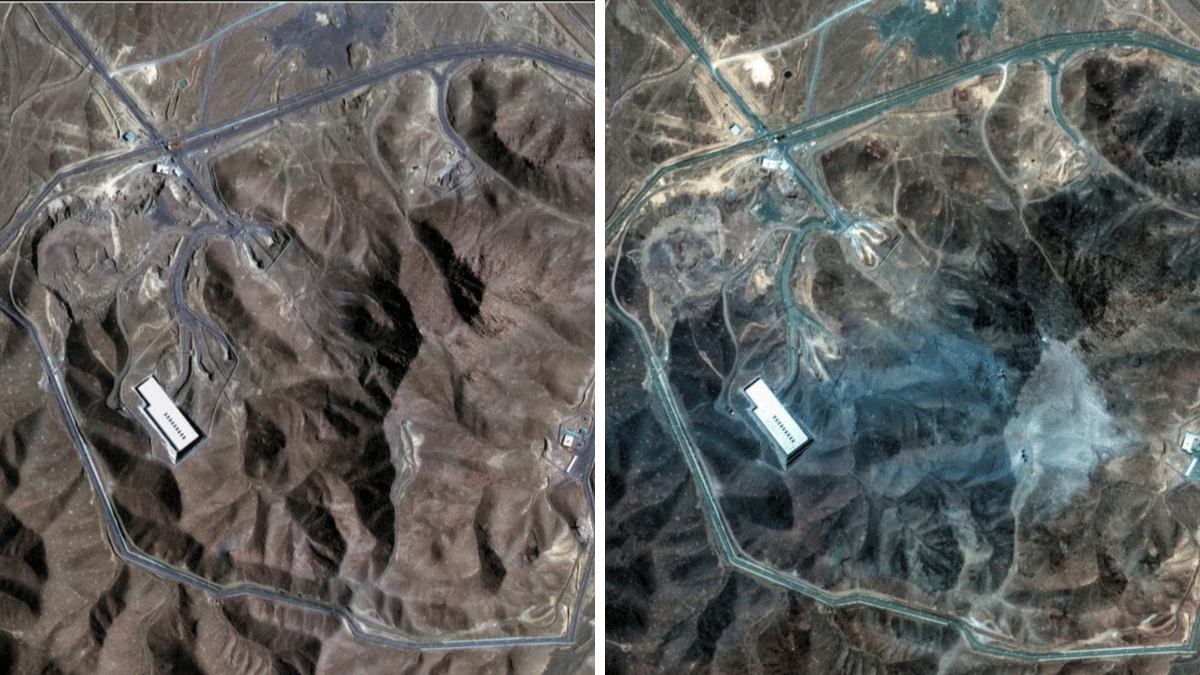
Today, we’ve come to a situation where the two things have combined. Because Israel first of all decided to launch a sizeable attack again. They concluded that what they did last June had not finished the problem for them—Iran had the capability of building the nukes again if it so wanted; its capability to enrich uranium had not been fully destroyed.
In any case, there was no commitment from the Ayatollahs that they won’t do it going ahead. And if anything, the Ayatollahs or the Iranian regime was building new, better, ballistic missiles that would become very difficult and too expensive to block. These are much cheaper than the instruments used to block them, or auto-intercept them far enough from your territory and population centres.
That’s how the Israelis started this war again on Iran and, this time, the Americans, Donald Trump, joined them immediately. That’s how this war started.
America called it ‘Epic Fury’ and Israel called it ‘Roaring Lion’. Now what happens? Once again, if you understand that wars are either about protection of Israel or protecting oil and gas supplies, when the two get combined, the other side uses the leverage that it has.
For Iran, that leverage is to be able to block the supply of oil and gas to the rest of the world. They’re also firing missiles at Israel, causing some damage. Many are being intercepted but they are so large that their fragments fall. They cause some damage.
However, Israel’s civil defence is very good. Their population is very well-trained. So large-scale population casualties are not possible. So far, those haven’t taken place. But Israel remains embattled.
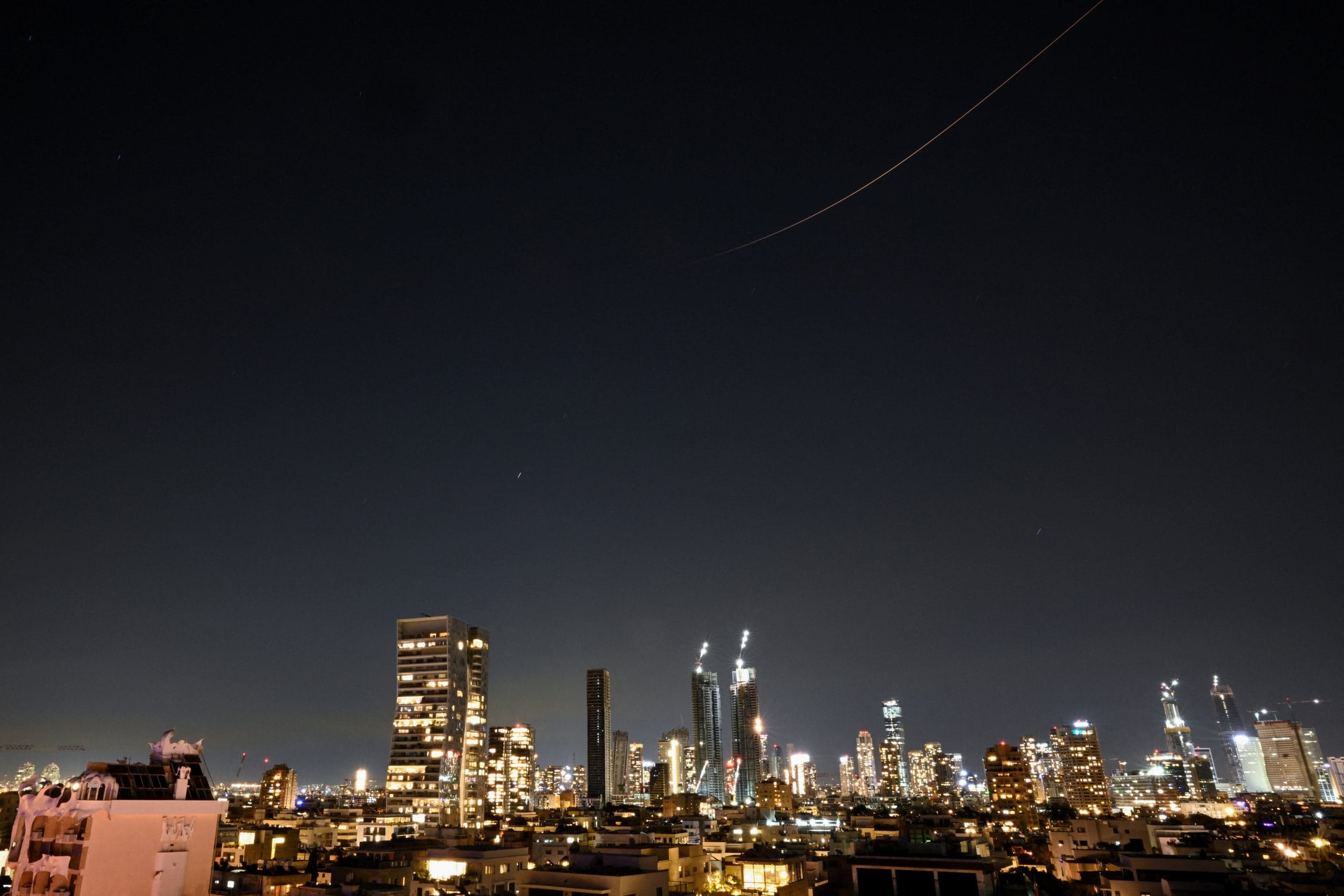
That itself is not something that gives Iran sufficient leverage, particularly when the Americans have gotten involved, when the entire Iranian leadership has been wiped out in bombing, particularly in the first days when Ayatollah Khamenei himself was killed.
In that situation Iran has now unveiled its strongest card, that is to be able to block the supply of oil and gas from this region to the rest of the world. Because in any case, Iran’s oil sales have been sanctioned. Almost no country is buying any oil and gas from Iran, except the Chinese who don’t care about the sanctions. And also, maybe, some bit of it gets smuggled to Pakistan, across land borders, and also across the sea through coastal waters in small boats, etc. But that’s not very much.
Iran, therefore, does not have such a big interest right now in freely flowing oil and gas from this region. It’s sitting on its own reserves. Some of its neighbours also have plenty of hydrocarbons. Azerbaijan has plenty. Going further, Russia has enormous amounts. And many of the former Soviet republics either have their own or can buy from Russia.
It’s in this situation that Iran says: ‘All right, maybe I can’t fight you in the air. I can’t fight you normally, in the water, like navy to navy. I cannot fight you on the ground, or maybe I don’t even need to fight you on the ground because you will not send your ground troops here. But I can deny the waters to you.’
And that marvel of geology is something called the Strait of Hormuz.
Also Read: India’s risks in the Iran conflict go way beyond oil
Now Hormuz, where does the name come from? Hormuz, from whatever I read, comes from Ahura Mazda, the God of the Zoroastrians or Parsis.
Iran, or Persia as it used to be, was a Zoroastrian kingdom. For hundreds of years, the predominant religion in Persia was Zoroastrianism. The Zoroastrian power was first destroyed by Alexander in 331-330 BCE. That’s when the beautiful city of Persepolis was laid to waste. Alexander, however, did not bring any religion. He took some elements of Zoroastrianism with him. He died in Babylon, in Iraq, on his way back after his little misadventure in India with Porus. And then, the Zoroastrian Empire came back.
Finally, it was defeated when Persia was conquered in the 7th century by Islamic power. Since then, Iran has been almost entirely a Muslim country, a Shia Islamic power.
You might be wondering why I took this detour in history so far back. That’s because I wanted to explain to you the name Strait of Hormuz, or Hormuz Strait. And that the Zoroastrian or Parsi tradition is still very much alive there and the Strait of Hormuz is a very good example of that. Parsis, as we know, the largest population of Parsis, they escaped to India and this is where they’ve thrived since. Very few survive in Iran.
Now, this Strait of Hormuz, entry to it from the Arabian Sea—Gulf of Oman on the western side and Arabian Sea southwards—is through this very tiny inlet, almost U-shaped. That is the strait between Omani territory. Now you might say where is Oman? Oman’s a little bit of a distance away. That’s because Oman has its enclave here called Musandam Peninsula.
Between that and the Iranian territory, this is very narrow and the Iranians have now said that they’re blocking it and will fire at any ship going through it.
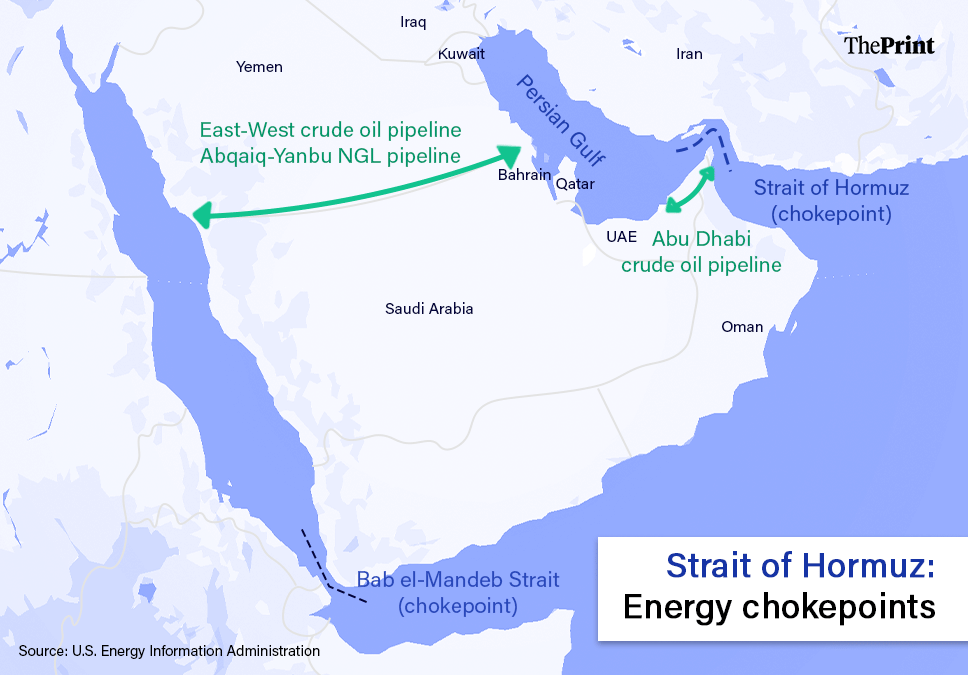
What happens is that the strait is so narrow, that at one point, it’s almost entirely either Oman’s or Iran’s territorial waters.
The strait itself is about 90 nautical miles. I will give you figures in all three measures— nautical miles, miles and kilometres, because many of us think in different terms. So 90 nautical miles is 104 miles or 167 kilometres. That’s the entire length of this strait. If you look at the width, at its widest the strait is 97 kilometres or 60 miles or 52 nautical miles. At its narrowest, it’s 21 nautical miles or 24 miles or 39 kilometres. That’s really narrow.
Remember 12 nautical miles is any country’s territorial waters. So if you look at the narrowest point of the strait, it does not even cover for what could be the two countries’ territorial waters. Of course, there are laws of the seas which determine these things. But basically, it tells that Iranians are sitting right on top of this narrowest point and that’s the reason this becomes the most significant choke point in global shipping, particularly global energy shipping.
There are other choke points too. There’s Bab el-Mandeb, which isn’t very far, on the other side of Oman. You go to Yemen, that’s again a narrow one and that’s where the Houthis had stopped global shipping some time back. That’s, however, not so critical for energy as the Strait of Hormuz is. We have the other choke points too, Malacca Strait and a couple around Turkey, between Black Sea and the Mediterranean.
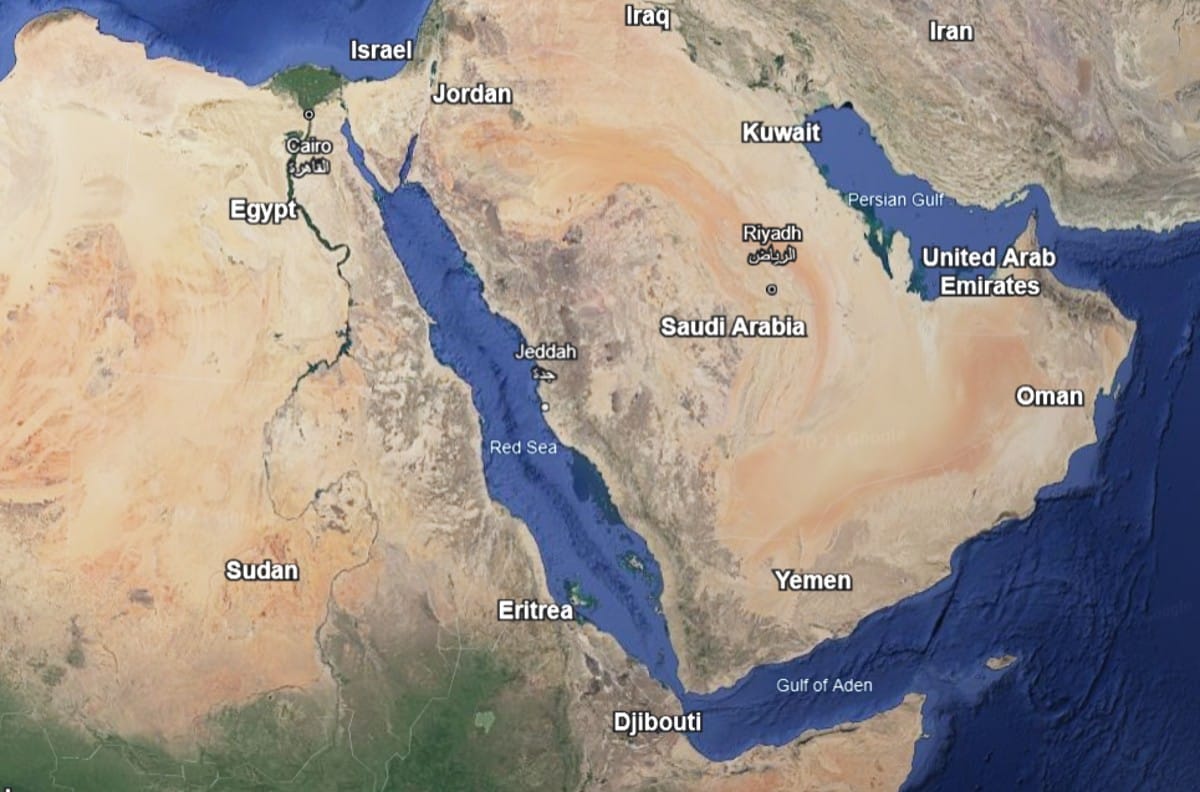
But that’s going too far. The Strait of Hormuz is what matters right now. Now what happens, if you understand something called bathymetry, which is the science of studying the ocean floors and basically checking out the depth, if you look at the bathymetric chart of Strait of Hormuz, it’s not that deep. At its deepest it’s about 200-300 metres.
It’s therefore, given how narrow it is and given how shallow it is, relatively, it’s deep enough for the largest super tankers or largest aircraft carriers to pass. However, it’s still shallow enough for somebody to drop anti-ship mines. And those then are difficult to find.
It takes specialised surveillance tools to find those mines. And also you can fire at shipping going through this tiny vestibule from the coast, from a bunch of islands the Iranians have in that area, particularly this island called Qeshm, which is a very large island, populated.
The Iranians have a whole network of missiles, air defenses, drone stations there. They have really turned these islands into porcupine-style fortresses.
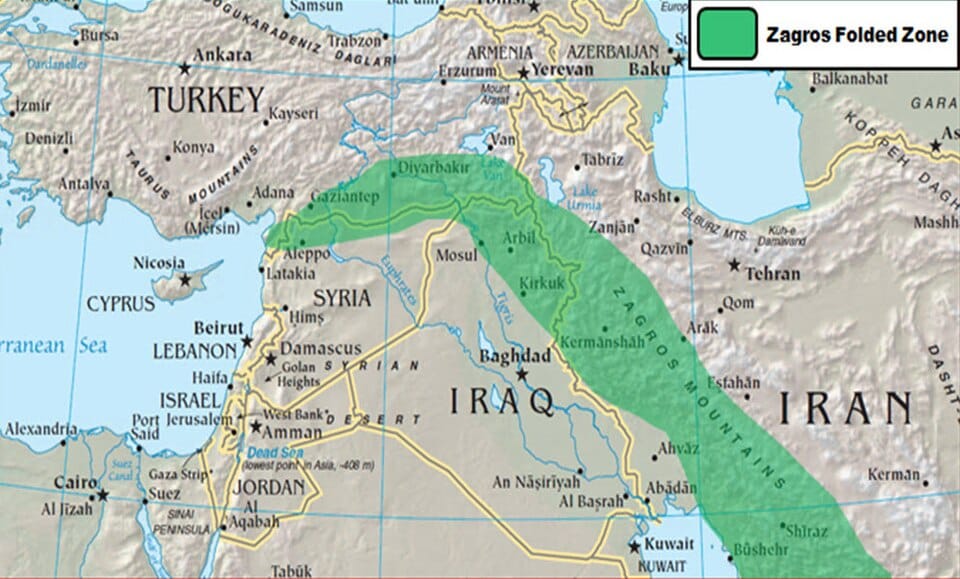
But even if we look behind it, if you go deeper into Iranian hinterland in this area, you go to Zagros mountains. First of all, it’s one of the most desolate regions of the world. If you’ve flown to Europe from India, in good times when you could fly over Pakistan, this area was among the driest and the most desolate you found on that route.
The Zagros mountains also have the Dena range after which the ill-fated Iranian Navy frigate was named. These are also the mountains that you see from the air where you see loads of ice, particularly in winter time. It’s in these mountains that the Iranians can easily base their missile launchers, drone launchers. And in such asymmetric warfare, the defender usually has a much greater advantage than the attacker.
Also the history of naval warfare tells that even in the past those defending these narrow passages have actually been quite successful, or have inflicted a great deal of damage on those trying to break through. You can go right back to the First World War, the Battle of Gallipoli where the Allied powers tried to break through and reach Istanbul or Constantinople, but they failed. Gallipoli was considered a Turkish victory.
Although the Ottomans lost in the end, the Turkish commander at Gallipoli, Kemal Atatürk, emerged a hero. In 1923, he took over as the leader of Turkey.
Defending such narrow passages, therefore, I’m not saying it’s easy, but a determined defender can suck in a much larger power. Because what happens is a determined defender entices you to bring your vessels close to the coast. And when that happens, you come in the range of multiple kinds of vectors, from mines to drones to missiles of various kinds. And those missiles could be launched from many places.
And warships are very expensive. In some ways they are very delicate, because they have a lot on their surface to lose, particularly radars, missiles, missile launchers etc. That’s why in 1987-88, the last time the American Navy carried out tanker escort duties here, that is when Iraq and Iran were fighting, and they were trying to stop oil supplies or oil sales from each other. So Iraqis thought if they could stop Iranian oil from going out the Iranian economy will suffer and they’ll be weakened and vice versa.
In that war, Americans decided to escort Kuwaiti ships. Even in that operation, called ‘Earnest Will’, American Navy aircraft were on the other side of the tanker. They were not on the side of the tanker that faced the Iranian coast.
In fact, once again, I’ll take you back to the strait where it’s very narrow. In the narrowest part, two 3.2 km lanes are demarcated—one for ships going in, one for ships coming out.
These are very large ships, you don’t want a traffic jam there. And between the two lanes, also, there is a 3.2-kilometre gap, an empty channel that is like a lane separator. So this is a very crowded area.
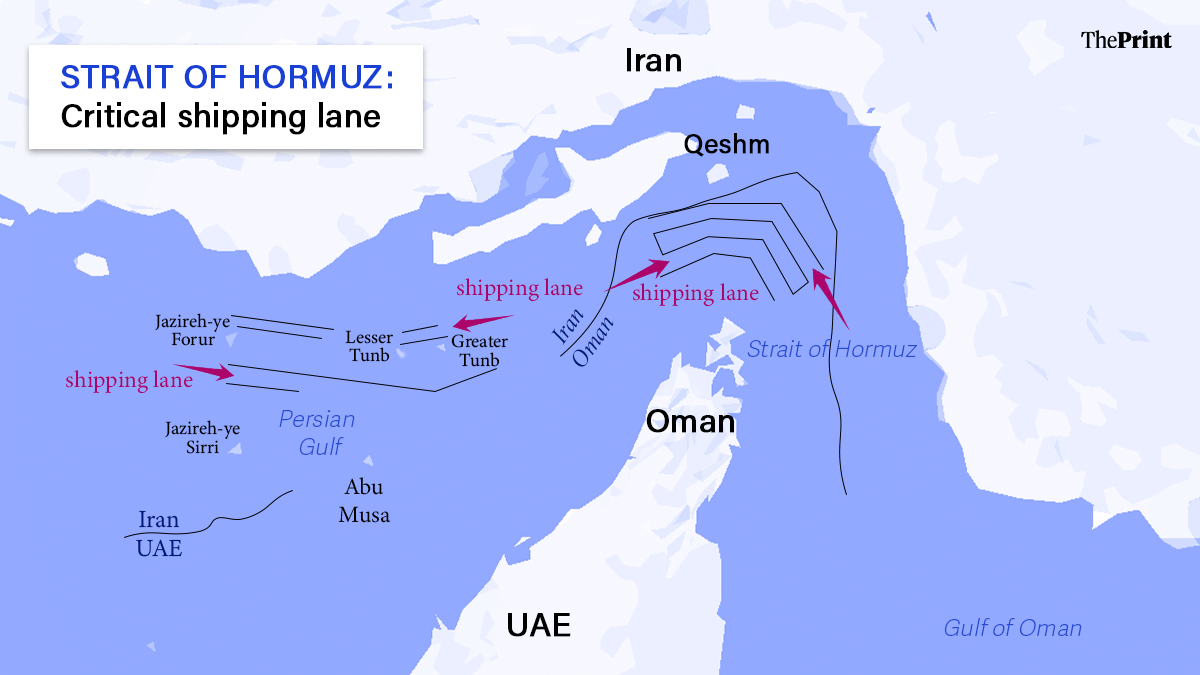
In normal times, we’ve seen about 138 ships, mostly tankers pass through this channel per day. Now it’s down to low single digits. On Wednesday, a Thai-flagged tanker passing through the Strait of Hormuz was struck by Iranian drones. The other complication that the Americans have, that under American law, American Navy cannot escort ships which are not American or allied to America. NATO ships, all right, but not unallied ships.
So even in 1987-88, Kuwaiti Navy agreed to fly American flags on their tankers to give America the cover. That is not available now. This will need either changes going to the US Congress which Trump would not like to do. That’s the reason the Americans have not yet put this ban into effect. Although Chris Wright, the US Secretary of Energy, said in a tweet just a day back that the first tanker has now been escorted out by American Navy ships. But later that tweet was deleted, and the Speaker of the Iranian Parliament mocked him by asking, “Oh, where was it done, on PlayStation?”
Americans as yet have not started escorting anything through this passage, and even to do that will be quite challenging. What they’ve started right now is to attack wherever they can find an Iranian mine-laying vessel. Sixteen of them have already been sunk. That’s what the US Central Command said. They also put out videos of at least nine being sunk.
However, the Iranians don’t necessarily need mine-laying vessels to lay these. They can use any chhota (small) vessels. They have many of them. Even normal Arabian-style dhows to lay these mines because each one can drop one-four mines. Mines can be devastating and to clear these is a task.
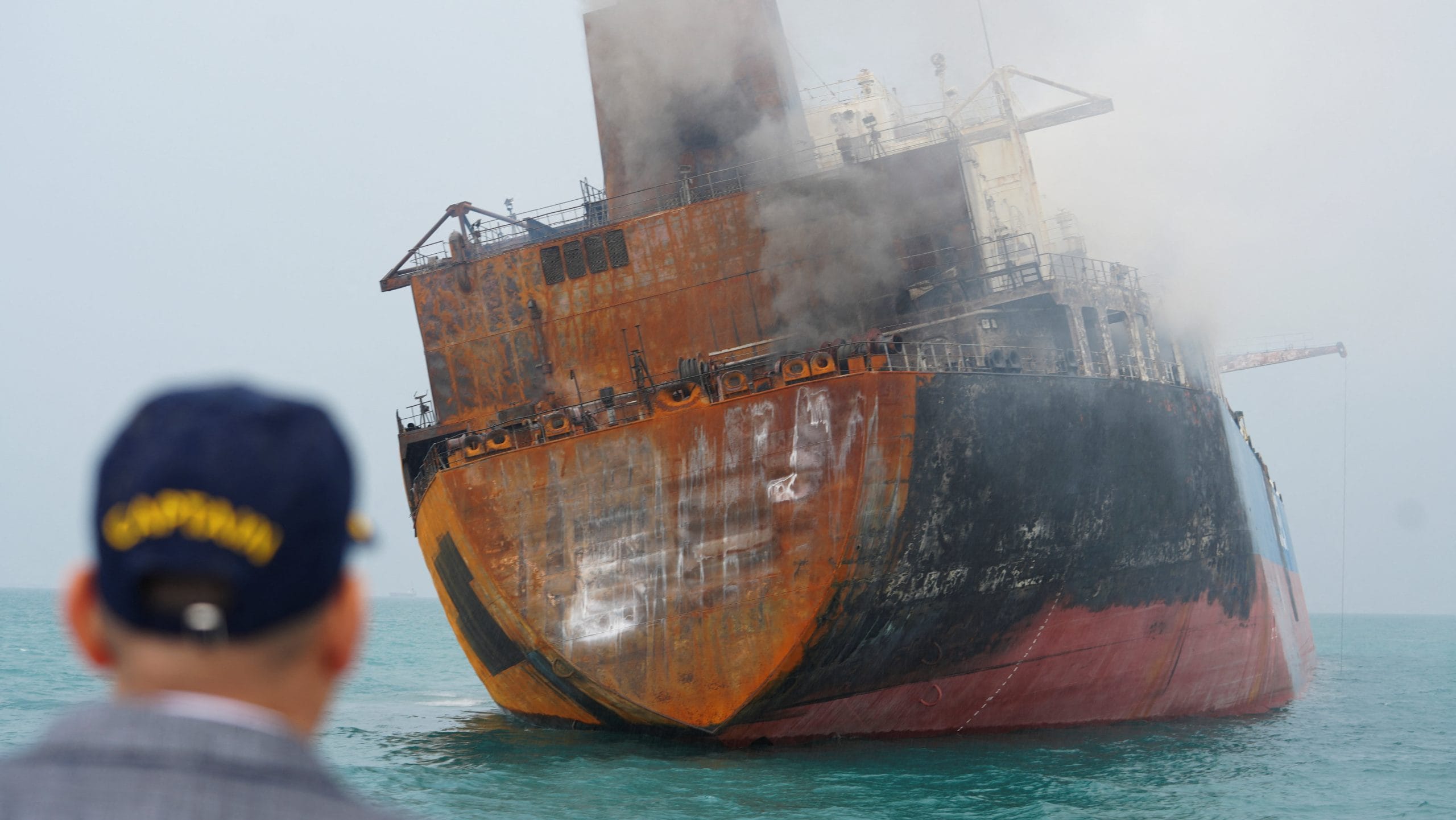
Now Americans have specialised vessels to do this and those will be used. Those vessels then employ unmanned submersibles which can look sideways, which can look down. The old-generation mine sweepers, actually, were made of wood. The hull was made of wood and the bottoms made of glass. That is, one, to see and second, also, to minimise the damage in case you were hit by a mine. The Americans as we know have taken all of those out of the Gulf and those are now earmarked for disposal. There are more modern vessels available. However, you can never be sure that no mine survives. That is what I meant when I said the Iranian strategy is to convert these islands and the coastal regions also into kind of porcupine fortresses.
Now what happens if this blockade continues, if the Americans are not able to break it? Israelis won’t be able to do it, they don’t have the wherewithal. They also will not be interested. Americans have to do it. Suppose they’re not able to do it, how come all this while the Arab countries have not tried to find solutions? So it’s not as if they haven’t tried to find. The Saudis have built a pipeline which goes from their side of the Persian Gulf to the other side, that means into the Red Sea. So this begins at a place called Abqaiq, which is an oil producing centre. From there the pipeline can, at its maximum, carry 5 million barrels per day to the western coast on Red Sea to a port called Yanbu.
Now the fact is that when oil and gas are emptied there, will they come south and come towards Asia, where the big consumers are, or will they go towards Europe because that is much safer; then they don’t have to cross Bab el-Mandeb, and then they don’t have to worry about the Houthis. In any case, all of the world wants Middle Eastern oil.
There is the other pipeline that the UAE has built and that’s a much smaller pipeline that takes about one-third of this crude to Fujairah oil terminals. Fujairah is an emirate under the UAE that opens out in the Gulf of Oman. Once again, both of these cannot quite fulfill the needs of the rest of the world.
If you see the LNG coming out of the Middle East, more than 20 percent of it is bought by the Chinese, 15 percent by us in India, 6.6 percent by Pakistan, 3.6 percent by Bangladesh. We are very energy hungry countries which will all be affected by any continuing blockade of the Strait of Hormuz.
Also Read: The oil pipelines that could decide the Iran war
We’ve talked about strategic, geopolitical and military issues. There’s one more thing left and I can’t let you go without a little bit of geology. How did this strange feature of geography come into being? You have to go right back about 180-200 million years back. That is at the time of the great Gondwana supercontinent, of which we were a part. It was called so because the fossils establishing that this supercontinent existed have been found in the Gondwana region of our Madhya Pradesh. The big Gondwana supercontinent split 180-200 million years ago. That Arabian plate broke away and in the course of time it moved northwards, more distant from the Gondwana plate. The Gondwana plate was meanwhile going through its own changes, creating mountains like the Himalayas, etc. and other oceans.
Because of the movement of the Arabian plate now, a large new sea called Neo-Tethys was formed. That was the space between the Arabian and the Eurasian plate. Then you come to more recent times. In the Cenozoic period, there was a collision between the Arabian and Eurasian plate and that collision, again, brought about geological changes. One of the changes was, also, as they pressed against each other, was creation of Zagros mountains.
And then we come to the most recent period, and this collision, the force of this collision, which pushed back and created the Zagros mountains, this also created a basin in front of the Zagros mountains. Because, after all, this stuff got pushed up to make the mountains, so the space opened up in front became part of the Persian Gulf and Strait of Hormuz.
Finally, there was one more change that was in the Pleistocene era. And this is when the weight of the rising Zagros mountains made the crust in front of them buckle and sink. And that is what gifted the world Strait of Hormuz. Now you can say gifted because this strait allows the world to take out this oil and gas from the Middle East.
For anybody living in that region and sharing this coastline, it could also be a strategic gift. That is exactly what the Iranians have used it for, and that is what the Americans are not finding any answer to right now. And that’s the reason all the rest of the world right now, India included, is concerned.
If Saudi leadership was intelligent enough, it would build thousands of miles long pipepline to friendly neighbours shores to enable export of oil rather than investing trillions into vanity projects like The Line !