





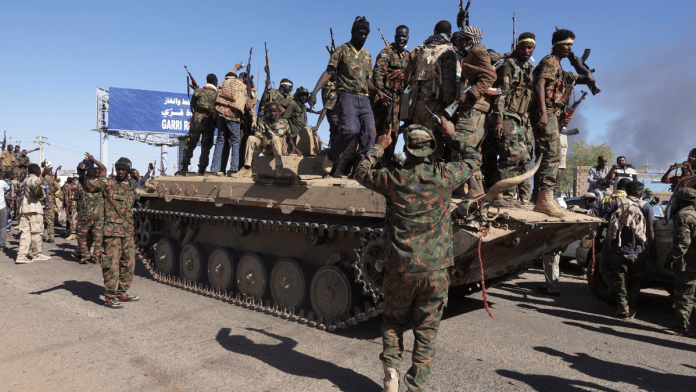



New Delhi: On 9 December, the US imposed sanctions targeting a transnational network accused of recruiting Colombian fighters to support Rapid Support Forces (RSF) in Sudan’s latest civil war that is ongoing since 2023.
“Treasury is targeting a network that recruits fighters for the Rapid Support Forces (RSF),” US Under Secretary of the Treasury for Terrorism and Financial Intelligence John K. Hurley said in a statement.
“The RSF has shown again and again that it is willing to target civilians—including infants and young children. Its brutality has deepened the conflict and destabilized the region, creating the conditions for terrorist groups to grow.”
In the first week of December, UN human rights chief Volker Türk warned that Kordofan cannot become “another El Fasher.”
Truly shocking to see history repeating itself in #Sudan's Kordofan region so soon after the horrific events in El Fasher. This fighting must end immediately, and life-saving aid must be allowed to reach those who face starvation.https://t.co/Mzgr2KsZw9 pic.twitter.com/Qmy7mnlUhU
— Volker Türk (@volker_turk) December 4, 2025
“It is truly shocking to see history repeating itself in Kordofan so soon after the horrific events in El Fasher,” he said. “The international community stood united then, unequivocally condemning the barbarous violations and destruction. We must not allow Kordofan to become another El Fasher.”
ThePrint takes a look at the nearly three-year civil war—which in US President Donald Trump’s own words last month—has made Sudan “the most violent place on Earth”. As of April 2025, nearly 13 million people have been forced to flee homes in search of safety as two warlords are engaged in a power tussle in the African country.
The current crisis
Sudan’s latest war is a part of a larger story of conflict that has afflicted the country since its independence in 1956. In the years since, Sudan has faced 20 attempted coups, two civil wars with the one in 2011 resulting in separation of South Sudan.
At the time of independence, Sudan inherited ethnic, religious, and economic divides between the centralised Arab-Muslim elite in Khartoum with a concentration of resources, and the peripheral regions like South Darfur marginalised, resulting in unequal growth and unbalanced development, making the already existing divides deeper.
The current civil war, erupting in April 2023, pitting the Sudanese Armed Forces (SAF) under General Abdel Fattah al‑Burhan and the Mohamed Hamdan Dagalo aka Hemedti-led RSF in a brutal power struggle. Both men had jointly seized power in an October 2021 coup but relations broke down over integration of the RSF into the army and ultimately over the control of the state.
The RSF grew out of Arab militias collectively known as ‘Janjaweed’ militias that were widely used in the Darfur conflict of the 2000s. By 2023, the RSF had evolved into a national force with its own command, economic network, and foreign allies. With a force comparable in size to the regular army, making the question of its integration the trigger for an already volatile political rivalry.
The war began with intense urban fighting in the cities of Khartoum, Omdurman and Bahri, with the RSF rapidly seizing control of key sites and entrenching their units deep in the neighbourhood. The SAF responded with airstrikes and artillery.
By late 2023, the RSF controlled most of Darfur and large parts of Khartoum, Kordofan and Gezira. While the army had strongholds in eastern and northern regions, it had retaken key positions in Khartoum, including the presidential palace and the main airport, by March 2025.
Despite international mediation efforts and ceasefire proposals, the conflict has continued, prolonging the humanitarian crisis. Due to large cuts to humanitarian funding by major donors including the US, the UK, and the European Union, the crisis has deepened, as the military stalemate persists.
The SAF rejected peace proposals that would compromise government recognition, while the RSF has pursued military victories, capturing the Darfur region’s major city of El Fasher in October after a siege of 18 months, blocking food supply, overwhelming hospitals and health centres causing hundreds of casualties.
Also Read: Sudan shows what happens when the world is happy to let mass killers rule
Unending violence
The consequences of this power-struggle between the two factions have been catastrophic. The humanitarian toll extends far beyond combat deaths, in addition to systematic sexual violence and weaponised starvation, Sudan now hosts the worlds largest displacement crisis, famine in major regions and an unfolding health crisis with most hospitals in conflict affected areas being rendered non functional.
While there are about 150,000 reported deaths, there are disturbing reports of systematic use of sexual violence. “Armed men are raping and sexually assaulting children, including infants as young as one, amid the nationwide conflict rippling across Sudan,” the UNICEF said in a press release in March.
Around the same time, the Human Rights Watch warned of a possible genocide by RSF and allied militias in West Dafur. This was highlighted in the atrocities carried out against the ethnic Masalit and other non-Arab populations in and around El Geneina. The toll is said to be between 10,000 and 15,000 people in El Geneina alone, according to a report by a UN panel of experts.
As of now the crisis does not appear to have an end in sight, with schools converted into displaced person shelters and an utter collapse of public services. To make things worse, both RSF and SAF have weaponised starvation by obstructing food delivery.
One of the most harrowing illustrations of the unprecedented violence is the recent El Fasher massacre in North Darfur.
El Fasher, the capital of North Darfur was the last major SAF stronghold in the region, faced 500-day-plus siege with roads blocked, markets strangled, and humanitarian supplies denied, systematically creating starvation.
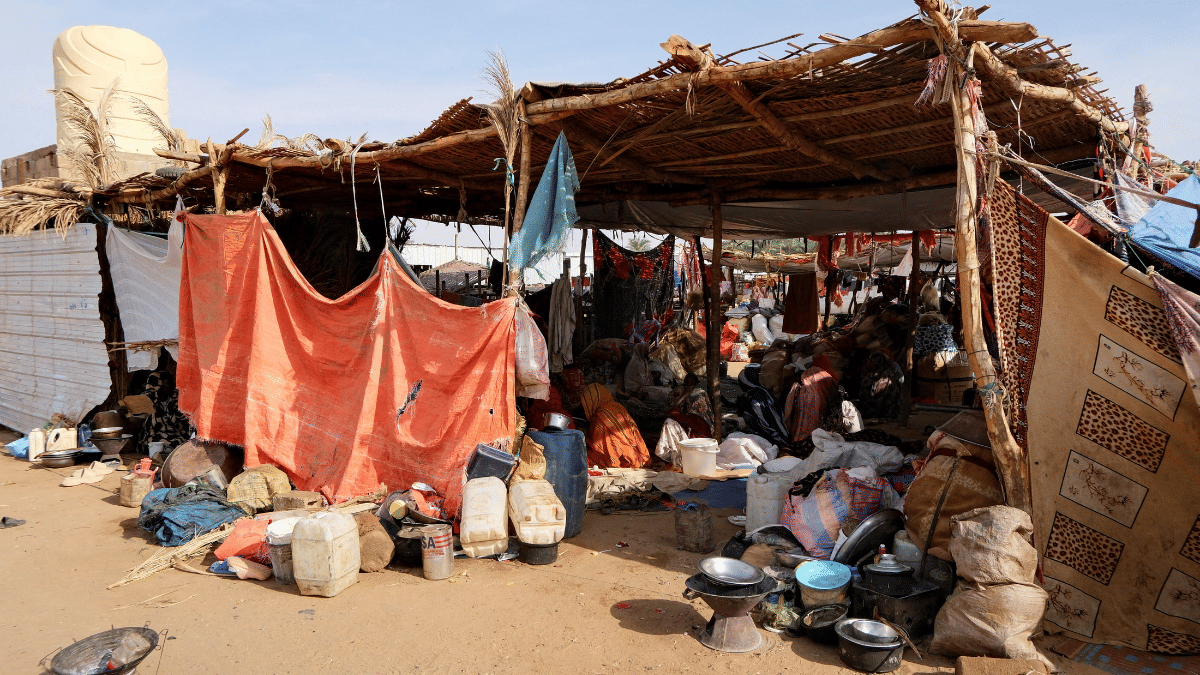
In the final assault the RSF and allied Arab militias pushed into non-Arab neighbourhoods mostly inhabited by the Masalit and other African-identifying groups and carried out large scale killings and destruction, hinting at ethnic cleansing.
The conflict has destroyed the African country’s economy and systems to an extent that there is little hope of respite for the population as of now. Critical infrastructure such as roads, power grids, water systems, hospitals, universities, government offices have been bombed, looted, or abandoned, while public services have collapsed countrywide.
With governance structures displaced by the militia rule and a whole generation of children out of school, as well as loss of trust in the State and no prospects for investment, the war is casting what economists call the ‘Lost Decade Effect’.
In simpler words, a country’s economic and public systems have collapsed in such a manner that even after the outright fighting ends, the consequent economy remains stagnant and will likely take a decade to stabilise, permanently altering the future and development.
Disha Vashisth is a TPSJ alumna currently interning with ThePrint.
(Edited by Tony Rai)
Also Read: Israeli devotee to sceptical journalist—book launch explores human side of Kumbh