







By Andrea Shalal
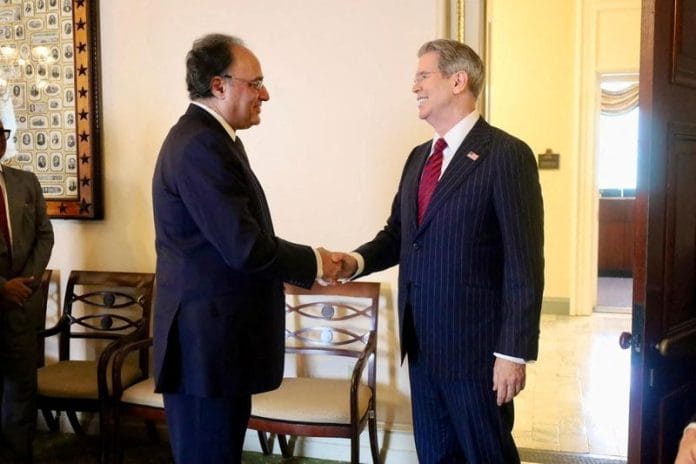
WASHINGTON, July 22 (Reuters) – U.S. Treasury Secretary Scott Bessent met Pakistan’s finance minister, Muhammad Aurangzeb, on Tuesday and welcomed the country’s progress in implementing economic reforms and laying the groundwork for a return to international capital markets, Treasury said in a statement on Wednesday.
The statement did not address Pakistan’s request for a $10 billion exchange stabilization facility, first reported by Reuters.
But Treasury said Bessent emphasized the importance of Pakistan’s work to continue its reforms, become more economically self-reliant, boost growth and strengthen its economic resilience.
“Secretary Bessent welcomed the progress Pakistan has made in restoring macroeconomic stability and advancing fiscal consolidation, recognizing the government’s efforts to implement significant economic reforms,” Treasury said.
“Secretary Bessent expressed support for Pakistan’s efforts to build greater economic self-reliance and commended the government’s commitment to creating the conditions for a successful return to international capital markets,” it said.
A U.S. official on Wednesday confirmed that Pakistan had requested a $10 billion currency swapline during the meeting with Bessent, which if approved, could provide a lifeline for the cash-strapped South Asian economy.
Pakistan has been hit hard by the Iran war, given its dependence on Gulf energy imports, remittances and financing support from the region.
Pakistan narrowly avoided default in 2023 with a $3 billion IMF standby deal and later secured a $7 billion Extended Fund Facility, along with a separate $1.3 billion loan to build up its resilience to climate change and natural disasters. But its reserves still depend on official financing, rollovers and deposits from China and Saudi Arabia.
Islamabad’s request for the bilateral currency stabilization fund comes after it stepped up to broker talks on ending the Iran war, which helped raise its diplomatic profile and earned praise from the Trump administration.
(Reporting by Andrea ShalalEditing by Alexandra Hudson)
Disclaimer: This report is auto generated from the Reuters news service. ThePrint holds no responsibility for its content.