








By Suchitra Mukherjee
Ayutthaya [Bangkok], November 29 (ANI): Do you know that like the Ayodhya in Uttar Pradesh, there is an Ayodhya in Thailand too? Not just the place has been named Ayodhya, but the kings here too have the title of Ram in their names which is an old tradition here.
What are the similarities between Ayodhya of India and Ayodhya of Thailand? Let us tell you how to become a follower of Lord Shri Ram here. Ayodhya in Thailand is called “Ayutthaya ” and there is a dynasty, every king of which is considered to be an incarnation of Ram.

Dr. Suresh Pal Giri has been teaching in Thailand for 22 years. He said in an exclusive interview with ANI that “I teach in a religious university in Thailand. The land on which you are standing is a part of the missing link of India. For some years, it was called Thailand, it is genetically Hindu and later with time, elements of Buddhism kept coming into Hinduism and it got mixed.”
He said: “The similarity between India’s Ayodhya and Thailand’s Ayodhya is that we have not forgotten our ancestors, our existence and our traditions. Even after so many years, we still believe in Shri Ram and worship him in Thailand as well as in India. The king here has also built some Hindu temples in this city. Here, 35 kilometres away from Ayutthaya, there is a temple of Lord Vishnu, Brahma Ji and Shankar Ji.”
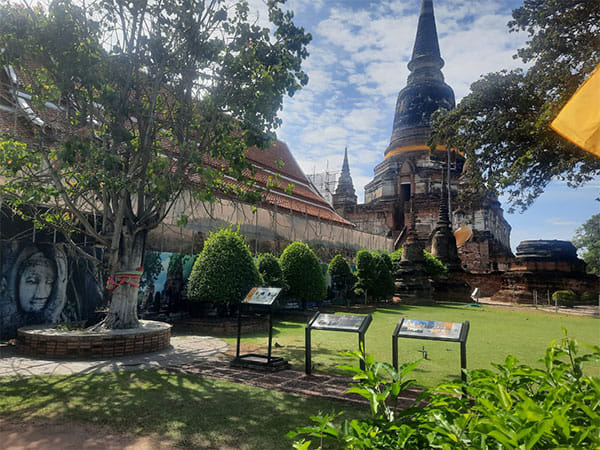
A famous city in Thailand was known as Ayutthaya, where its kings bore the title of ‘Ramatibodhi’ (“Lord Rama”). Ayutthaya has been linked to the context in which Ayodhya is mentioned as the capital of Lord Rama in the Ramayana. Ayutthaya, which was the capital of the Siamese rulers from 1351 AD, was looted and almost completely destroyed by the Burmese forces in 1767.
The name of the Thai religious text is Ramkeen, which has the same status as the Thai Ramayana. Ramanujan, who wrote the book ‘300 Ramayana’, has compared this book with Valmiki Ramayana. It is believed to have been composed afresh by King Rama I in the 18th century and the main villain in this book, Thotsakan, is like Ravana of the Hindu text. The ideal of Ram is depicted in the hero of this book, Phra Ram. However, now the remains of Thai Ayodhya are spread over a large area and are a UNESCO World Heritage Site. (ANI)
This report is auto-generated from ANI news service. ThePrint holds no responsibility for its content.