








By Elida Moreno and Marianna Parraga
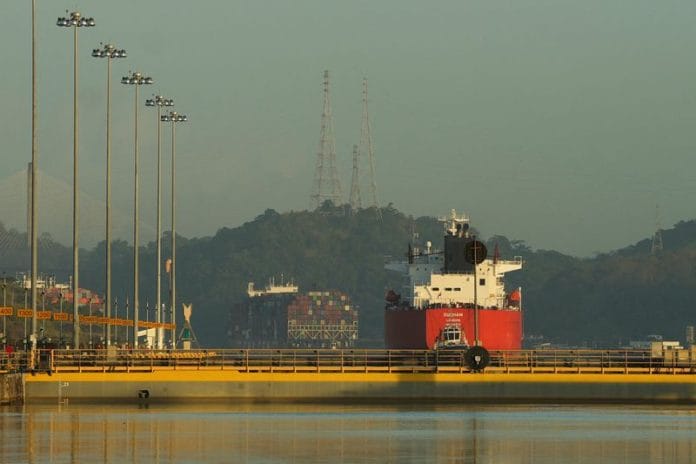
PANAMA CITY, March 20 (Reuters) – The Panama Canal is operating at top capacity, with a daily passage of between 36 and 38 vessels, the waterway’s chief Ricaurte Vasquez told reporters on Friday, adding that the war on Iran was boosting demand by owners and operators of liquefied natural gas tankers.
Demand was particularly strong for those loading at U.S. ports, Vasquez added.
Since the war started, many vessels have been struggling to reach or have been avoiding the world’s largest waterway, the Suez Canal. The Strait of Hormuz, a crucial passage used to transport energy products from Kuwait, Qatar and Bahrain, has been closed.
Panama is increasingly being seen as an alternative route, especially to distribute U.S. LNG to consuming countries, Vasquez said.
The Panama Canal – the world’s second-busiest waterway – was already experiencing increased traffic of LNG vessels before the war started almost three weeks ago. It is now getting ready to offer one slot per day for LNG tankers to transit the canal, a notable jump from a recent four per month, Vasquez said.
“We have (enough) water now, so we are working at top capacity,” he said, referring to a previous drought that led the freshwater canal to impose passage restrictions between 2023 and 2024.
The increased demand is driving more daily transits than the average of 34 that had been forecast for this fiscal year.
The canal’s authority said earlier on Friday that a planned maintenance program for March to September would not affect traffic through the waterway.
“Cargoes must reach their destinations and the shortest route is still Panama, which has the capacity to accommodate additional transit,” Vasquez said.
The canal typically sees decreased seasonal demand from container ships from Asia in the January-March period, which allows it to offer more slots to tankers carrying energy products, he added.
(Reporting by Elida Moreno and Marianna Parraga, Editing by Rosalba O’Brien)
Disclaimer: This report is auto generated from the Reuters news service. ThePrint holds no responsibility for its content.