








In Episode 1824 of Cut The Clutter, ThePrint Editor-in-Chief Shekhar Gupta explains why a supposed ceasefire in West Asia coexists with continued fighting in Lebanon. Even as Iran, the US, Israel and GCC countries signal a truce, Israel has carried out its largest wave of airstrikes targeting Hezbollah, and Prime Minister Benjamin Netanyahu has said he will hold direct talks with Lebanon. Gupta traces the origins and rise of the Iran-backed Hezbollah, its long conflict with Israel, and why Lebanon has emerged as the key obstacle in the ceasefire. He also explains the strategic importance of the Litani river, Israel’s push to keep Hezbollah north of it, and how decades of conflict have made this narrow stretch of territory central to the region’s instability.
Here’s the full transcript edited for clarity:
Is there a ceasefire in the Middle East, or is fighting still going on? The fact is that both are true. There is a ceasefire between Iran and the US, Israel and the GCC (Gulf Cooperation Council) countries. But there is also fighting between Israel and Hezbollah in Lebanon. So, in Lebanon, the Israeli air force carried out more than 100 raids on Wednesday. Those raids continued into Thursday.
The Iranian government, particularly the Iranian parliamentary speaker Mohammed Baqer Ghalibaf, said that Iran intends to deliver explicit costs and strong responses, and that if Israel is not respecting the ceasefire in Lebanon, Iran also sees no need to respect a ceasefire. In fact, they also announced on Wednesday night and again on Thursday morning that they were closing the Strait of Hormuz.
However, that is a doubtful thing because some traffic is getting past that. The White House spokesperson said that the people say different things but do different things, and some traffic is passing. We can see that. So, this ‘tamasha’ (spectacle) is going on.
Netanyahu also said on Thursday, that he will not stop fighting. He will not stop the raids until, and I quote, “full security is restored to the residents of the north”, that is, northern Israel. Now, Netanyahu said this a few hours ago, but this is such a fast-moving target that even as I am recording this, he has issued one more statement saying that he will be setting up talks with Beirut, that is, the Lebanon government, in the next few days about the Hezbollah problem.
This follows nudges from US President Donald Trump to go easy in Lebanon so that the ceasefire is not broken, and so the ceasefire can survive this unfortunate turn of events in Lebanon. Now, what happens in Lebanon is something that we have spoken about in the past. There was a full episode explaining Lebanon, this really unfortunate failed state.
In Lebanon, large parts of the country are occupied by this militia, or this terrorist organisation, called Hezbollah. No hesitation in calling it a terrorist organisation because most of the rest of the world calls it a terrorist organisation, including all the GCC countries. Iraq does not, but all GCC countries also call it a terrorist organisation.
Over time, Israel has carried out many operations assassinating a bulk of Hezbollah’s key leaders. Also the big pager operation called Operation Grim Beeper, in which lots and lots of Hezbollah people—key people—were killed, many others were seriously wounded and thrown into complete confusion. Hezbollah, however, has been able to recover quite effectively from all of that, and only today Israel claimed that it had assassinated the nephew of Hezbollah secretary general Naim Qassem and they say he is the one who was running his office and organising the forces.
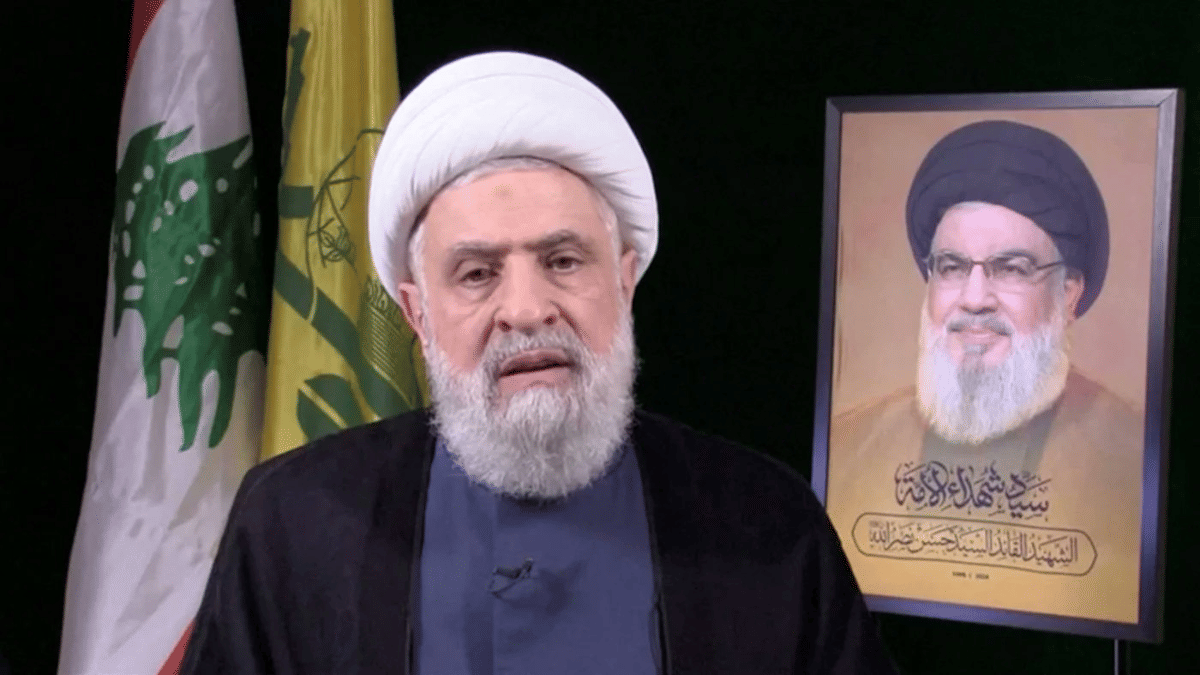
Literally, Hezbollah means the army of Allah. This is a Shia force. This Shia force came into being in 1982. It was set up by some Shia clerics in Lebanon. Lebanon has a very fascinating demographic, something we spoke about in that full episode, but I will also tell you a little bit as we go along.
In 1979, the Iranian revolution took place. Shortly after that, the Palestine Liberation Organisation (PLO)—these were Palestinians, they had sanctuaries in southern Lebanon— started mounting attacks on Israel from there. These also included the Abu Nidal group, which was one of the deadliest PLO groups. The Israeli army launched operations against them.
That was the First Lebanon War in which the Israeli army got involved. It was in that mess that a bunch of Shia clerics in Lebanon said: “Look, Lebanon, there is an opportunity. We have to fight Israel. It is an evil country, etc., etc. So, we cannot leave it to the PLO. We will set up our own force.” And that is when the Iranians got involved as well, and Shia clerics launched Hezbollah. They also swore allegiance to the supreme leader of Iran. Effectively, from that moment, large parts of Lebanon became an Iranian political colony.
Now, the Shia are not all of, or the majority of, the Lebanese. Lebanon, as I told you, has a fascinating population mix. Although over time the Christian population has come down, roughly you would say it is one-third, one-third, one-third. So, about 65 percent of Lebanon is Muslim, of which Shias and Sunnis are about half and half, and the remaining about 30 percent Christians and 5 percent Druze. Druze can be identified as this or that, but in Lebanon they are bunched with the Muslims. Once again, the peculiar Lebanese political system—I had explained this in the earlier episode.
Also, in the peculiar Lebanese system, power is divided constitutionally between various communities. So, very much like their respective shares in the population, if you have these three groups—Christians, Maronite Christian groups as they are called; it is the Maronite order—they get to choose the president. The prime minister is a Sunni Muslim and the speaker of parliament is a Shia Muslim. Again, in terms of parliament seats, it is 50 percent Christian, 50 percent Muslim, with the Druze also bundled in. It is that complex a country.
In that country, Hezbollah is actually a political party. It is a legitimate political party that has been contesting elections and winning seats in parliament since 1992, when it won eight seats for the first time. In the latest election that took place in 2022, Hezbollah won 13 seats. It has often been part of the government, its leaders have been ministers, although this time the coalition of which Hezbollah was a part did not win a majority.
In any case, governments do not survive in Lebanon. That caretaker government that was set up in 2022 failed to control the situation, like every government in Lebanon’s history. There was a government in 1982, in fact, which signed a peace deal with Israel, and that was a government under Bashir Gemayel. He signed a peace deal and everybody thought this would lead to many decades, or maybe many generations, of peace. Within days, Gemayel was assassinated because peacemaking is a very dangerous business there.
The latest caretaker government was dissolved in 2025. They failed to control the situation after 7 October 2023, and a new regular government came into power in 2025. There, the president, as I mentioned earlier, has to be a Maronite Christian; the prime minister is Sunni Muslim; and the speaker is Shia Muslim. This was a caretaker government, which is still there once again, given the principle in Lebanon. The president is Joseph Aoun. The prime minister is Nawaf Salam. Days after Israel and the US attacked Iran, Salam, obviously a Sunni Muslim, said, “This is a devastating war that we did not seek or choose.” However, nobody listens to him. Nobody listens to anybody.
Shias may be one-third of Lebanon, and Hezbollah may be just one of the factions among the Shias. But Hezbollah has a large army. Hezbollah’s army, at one point, Hassan Nasrallah, who was the head of Hezbollah and subsequently assassinated by the Israelis, claimed it had 100,000 fighters. Generally, global security organisations, analysts and think tanks estimate that Hezbollah has anything between 25,000 and 40,000 fighters. It is a lot of people for those countries where populations are so small.
Think about it: Israel has just about 1 crore people. Lebanon is just a little short of 60 lakh people. And since out-migration continues all the time, I do not know what the number is right now. So, to have an armed group with 40,000 or 50,000 fighters—also, if you read international think tanks, until a few years ago at least, it was said that Hezbollah has a larger artillery than most countries in the world. This may have changed now because the Houthis, in the meanwhile, have acquired a lot more.
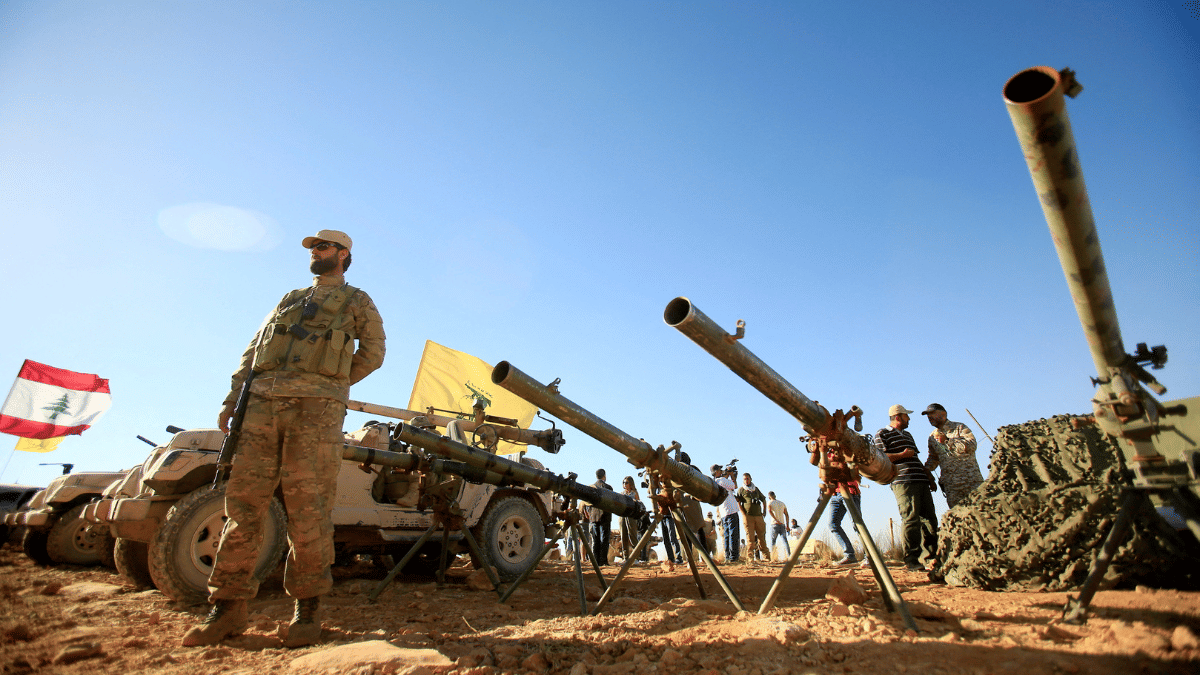
Now, you can argue with this. You can say Hezbollah is still the most militarised, or most well-armed, non-state actor because the Houthis might claim that they are no longer non-state actors. They have a statehood of their own, at least North Yemen if not all of Yemen, which is what they claim. However, those are just arguments. I am listing all these points to explain to you the chaos that exists in Lebanon right now and the reason why Lebanon continues to be an ungovernable country.
Lebanon’s national army is 80,000 soldiers. They have some weapons, but again, they are divided on a demographic basis and they are very weak in their command and their structures, and they are not willing to fight anybody. Successive Lebanese governments have said that everybody will be disarmed.
Over the decades, going back 50 years, successive United Nations Security Council (UNSC) resolutions have called for all groups to disarm and disband themselves. Many have done so. At one point, around 1982—between 1979 and 1982—many militias had come up. There was a Sunni militia. There was a Christian militia. There was a Druze militia, besides two Shia militias. All the others disbanded themselves. However, Hezbollah had no intention of doing so.
How powerful is Hezbollah? Now, I will give you an example. Just after this war started in Iran and Israel, people started paying attention to Lebanon because rockets had started coming in from Hezbollah targeting Israel. At that point, the Lebanese government decided that it was going to expel the Iranian ambassador to Lebanon because obviously, they said, he was interfering in their internal affairs.
The insinuation was basically that he was guiding and leading the Hezbollah forces. Ambassador Mohammad Reza Shabbani, however, did not leave Lebanon. The government to which he was accredited expelled him, but he did not leave. And different Shia groups came out to say that they would not allow him to be expelled, and Iran continues to run its embassy as it has always done. Iran also said that it had no intention of shutting its embassy. That led Gideon Saar, Israel’s foreign minister, to say that Lebanon is a virtual state that is, in practice, occupied by Iran. That is where this fighting is going on now.
Now, while this fighting is going on, Israel now says it has no intention of stopping the fighting. If you see the Iranians, they say that Lebanon was very much part of the ceasefire deal, that Israel and America are committed that fighting will stop in Lebanon as well.
With the greatest humility, I am pleased to announce that the Islamic Republic of Iran and the United States of America, along with their allies, have agreed to an immediate ceasefire everywhere including Lebanon and elsewhere, EFFECTIVE IMMEDIATELY.
I warmly welcome the…
— Shehbaz Sharif (@CMShehbaz) April 7, 2026
Pakistan’s Prime Minister Shehbaz Sharif also said in his tweet specifically that there will be a ceasefire everywhere, including in Lebanon. However, Israel said Lebanon is not included. The Americans also say Lebanon is not included. The White House spokesperson, Karoline Leavitt, said this is wrong. It is explicit. There was no ceasefire agreed upon in Lebanon.
Trump was asked a question by one of the journalists, who said, “I spoke with President Trump on the phone.” He said, “No, Lebanon was not included, because the problem there is Hezbollah.” And he said that, in the course of time, this problem will also be sorted. So Israel and the US do not accept that the ceasefire extends to Lebanon.
Hezbollah had initially said that they would honour the ceasefire in Lebanon, but they had also presumed that there is a ceasefire in Lebanon. Israel and the US have no intention of accepting that because Hezbollah is too close to Lebanon. It is too dangerous. It is too risky for them to let it prosper. They do not want to give it any period of peace.
Now, they have cut off many of Hezbollah’s supply links. For example, a lot of its supplies from Iran into Lebanese territory used to come through Iraq. Iran has a lot of support in Iraq. There were corridors through Iraq, then going into Syria and coming into Lebanon.
All of that has now stopped mainly because Syria has had a change of regime. Assad is no longer there and the current leader, Ahmed al-Sharaa, is aligned with the West. He is friendly with Israel. They do not let the Iranians bring anything in.
Yet, Hezbollah has been able to rebuild itself because, if at one point it had 75,000 short-range rockets and missiles, maybe at this point it has 25,000. That is bad enough for a country which might be running short of interceptors. These missiles are not very long range, but they do not live as far away as Iran. They live just miles from the Israeli border and they can launch these at Israel, particularly at Israel’s northern districts which border Lebanon.
Israel has had a chronic problem with Lebanese instability because earlier it was the PLO. The 1982 war was against the PLO and, ultimately, Israel succeeded in expelling the PLO. But you know what happened? They got the PLO out and got something, from their point of view, worse than the PLO. They got Hezbollah, which was much more ideological, much more radical and which had a clear foreign supporter. The clear foreign supporter was revolutionary Iran.
Effectively, by expelling the PLO from its northern borders, or from southern Lebanon, Israel opened up the region for Iran. So they drew Iran into their neighbourhood. Otherwise, Iran is 2,000 km away. Now, Iran was sitting next door to Israel. That is something that Israel wants to end now.
Also Read: ‘Fog of ceasefire’ & how Trump’s ‘madman theory’ shaped deal with Iran | Cut The Clutter
The UNSC resolutions
I can give you a quick rundown of what happened in the decades subsequent to the 1982 Israeli invasion. After that, there was a two-decade occupation of southern Lebanon by Israel. In 1990, the Lebanese civil war ended among the groups there—Christians, Sunnis, Shias, and Druzes. That ended in 1991. The Lebanese parliament gave everybody amnesty and ordered all militias to be dissolved. All militias did dissolve themselves except two. One was Hezbollah and the second was the South Lebanese Army, which called itself sort of secular and Arab but was not so powerful.
In the course of time, it disappeared. Hezbollah continued to control much of the Shia-majority areas, including parts of Beirut. Hezbollah also became like two factions, or two groups. Factions is the wrong word. Two groups: one is the political group that was overground and was fighting elections, and the second was the military wing. So it was not that different from the way the Hamas evolved subsequently. That military wing is what is fighting right now. The political wing sits in the Lebanese parliament.
There were many other agreements because other Arab countries got involved. In 1989, there was the Taif Agreement. Taif is a city close to Mecca, with Saudi intervention and Saudi mediation, where everybody again agreed to lay down their arms, but everybody did not, Hezbollah not least because it was controlled by the Iranians.
Again, in 2004, Resolution 1559 of the UNSC asked all to disarm and disband. Everybody did, but Hezbollah. In 1978, the UN even sent its peacekeeping force called UNIFIL, or the United Nations Interim Force, in Lebanon. It has now been nearly 50 years. This year, they will wind up and go because nobody wants them there. They have been able to make no difference in Lebanon. This will be a complete UN failure over 50 years.
Now, UNSC Resolution 1559 of 2004 may not have brought about peace, but the Israelis and Hezbollah and the other groups kept on fighting. By 2006, the Israelis withdrew from Lebanon. And when they withdrew from Lebanon, an agreement or understanding was arrived at that south of the Litani River—and that is where this becomes very important, the Litani River—no Hezbollah fighters would remain.
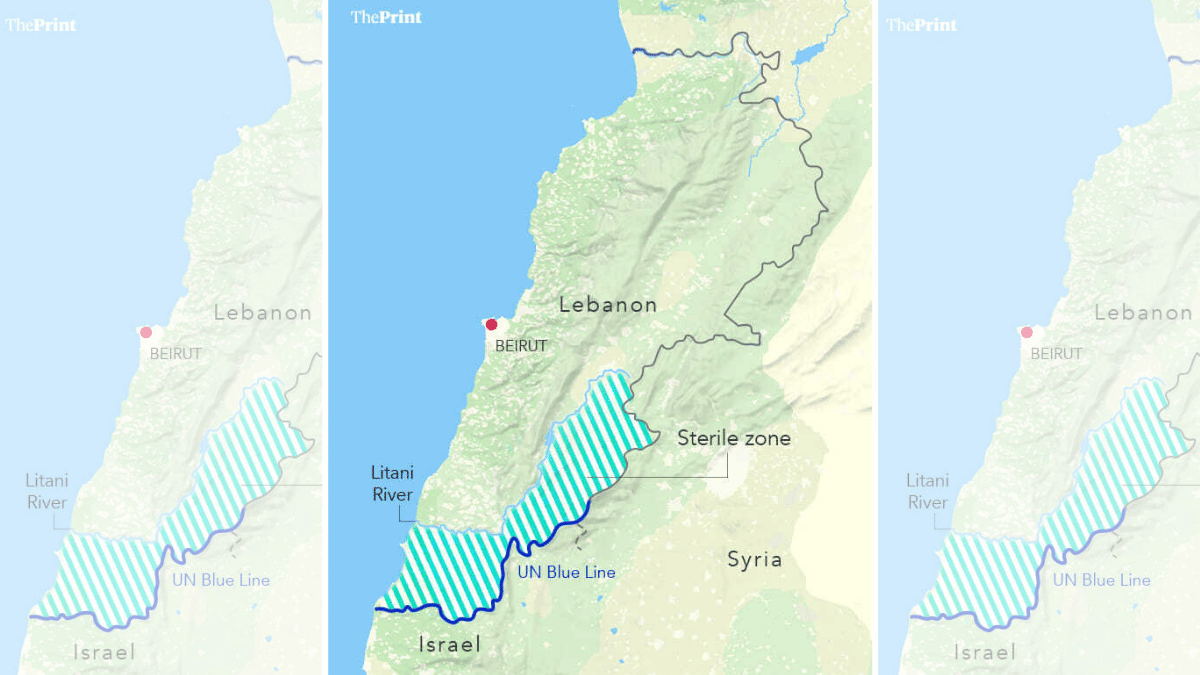
Look at the map now. When you look at the map, it looks like a lot of territory, but these are not large territories. These are small countries. The Litani River is 145 km long, and it cuts southern Lebanon like this. To the south of the Litani River, there is territory that borders Israel. Israel wanted all Hezbollah fighters to cross over to the other side of the Litani River, to the northern side, so no weapons remained on this side. However, this was honoured only for some time. In the course of time, Hezbollah started coming across the river, and once again it was not possible for the Lebanese government to control them.
Now, the Litani River, or the region south of the Litani River, has been a thorn in Israel’s side for a long time. On 11 March 1978, the Coastal Road massacre took place. This is when a group of PLO guerrillas landed by boat south of Haifa in mainland Israel and hijacked a bus. They killed 38 people in the bus, all civilians, including 13 children. In retaliation, the Israelis launched Operation Litani. So, once again, the idea was to clear the area south of the Litani River so that no PLO or militant organisations would exist in that area. That was carried out. Then the Israelis came back, and once again groups came in there because that is the region that borders Israel.
What triggered the Israeli move into Lebanon in 1982 was an attempt on the life of the Israeli ambassador to the UK, Shlomo Argov, for which Menachem Begin, the Israeli prime minister, blamed the PLO’s Abu Nidal group. Once again, now I will conclude this with the map of the zone showing the Litani River. See the areas south of the Litani River. That is what the Israelis are after now. They have moved in there in force and they have now made it quite clear that they have no intention of returning.
Their point is that in the past there have been many agreements that Hezbollah, or any armed groups, will stay on the other side of the Litani River. That has not been honoured. So now they cannot trust anybody. They will occupy all territory up to the Litani River and thereby redraw the region’s borders—redraw Lebanon’s borders, for sure.
Now, this is not that much territory. Once again, on the map, it looks like a lot, but the depth is just about 15 to 20 mile. The Litani River itself is about 90 miles—that is about 145 km. The width of the territory between the Litani River and the Israeli border is between 15 and 20 mile, that is, 24 to 32 km. So what the Israelis are now trying to do is shift their borders ahead by 24 to 32 km across their northern border with Lebanon. That is what the immediate fight is about.
(Edited by Tony Rai)
Also Read: Why Iran hit UAE hardest & how tiny Gulf power is fighting back | Cut the Clutter