








Israel and the US launched what they called a “preemptive strike” against Iran on the morning of 28 February, plunging the region into chaos as Tehran launched counter strikes that also targeted American military bases across the Gulf. Tensions persist as the string of strikes and counter-strikes continues.
Iran’s Supreme Leader Ayatollah Ali Khamenei was killed in the attack, Iran had confirmed Sunday, after which Alireza Arafi was picked as the interim successor. Arafi has been appointed the jurist member of the temporary leadership council to fulfill the Supreme Leader’s role.
Israeli Defence Minister Israel Katz had first announced the strike Saturday that many believed was a long time in making, with the White House stepping up pressure on Tehran over its nuclear programme.
US President Donald Trump described the military action as “massive and ongoing”, and plainly called for a regime change. He urged Iranians to “take over your government” and accused Tehran of working to rebuild its nuclear programme. Tehran has long maintained that its nuclear programme is for civilian purposes only. Iran’s state media said the country was preparing for “a crushing response”.
Stay tuned to ThePrint for the latest developments.
US, Israel strike Iran | LIVE UPDATES
7.08 pm: Pentagon confirms US submarine sunk Iranian frigate
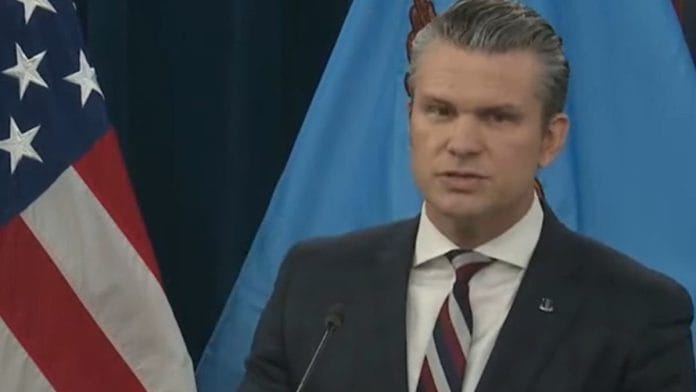
An American submarine sunk an Iranian warship in international waters, says US defence secretary Pete Hegseth, adding that this is the “first sinking of an enemy ship by a torpedo since the Second World War”.
Read this report by ThePrint’s Snehesh Alex Philip.
6.40 pm: ‘More forces are arriving,’ says US Defence Secretary Hegseth
US Defence Secretary Pete Hegseth says “more forces are arriving” in the Middle East amid the ongoing conflict. “It’s very early and as President Trump has said we will take all the time we need to make sure that we succeed.”
6.30 pm: NATO defence systems shoot down missile headed towards Türkiye
A ballistic missile fired from Iran towards Türkiye was blocked and destroyed by NATO air and missile defence systems stationed in the eastern Mediterranean.
“We warn all parties to refrain from actions that would lead to further escalation of conflict in the region. In this context, we will continue to consult with NATO and our other allies,” the Turkish defence ministry said. “All necessary steps to defend our territory and airspace will be taken resolutely and without hesitation. We remind all parties that we reserve the right to respond to any hostile actions against our country,” it added.
NATO has also condemned “Iran’s targeting of Türkiye”.
“NATO stands firmly with all Allies, including Türkiye, as Iran continues its indiscriminate attacks across the region,” NATO spokesperson Allison Hart said, as reported by Reuters. “Our deterrence and defence posture remains strong across all domains, including when it comes to air and missile defence.”
5.50 pm: Iran death toll at 1045, state media reports
Iran’s death toll from US-Israeli attacks has risen to 1,045, Iranian state media reports.
4.50 pm: No radiological release risk at this time in Iran, says IAEA
UN nuclear watchdog International Atomic Energy Agency has said in a post on X that it has detected “no damage to facilities containing nuclear material in Iran, and therefore no radiological release risk at this time”. Damage is visible at two buildings near Isfahan nuclear site, and no additional impact detected at Natanz after previously reported damage at entrances, it added. There is no impact at other nuclear sites, including Bushehr NPP.
3.50 pm: ‘India-Iran ties were always more promise than reality. Real risk for us is a distracted US’
Rajesh Rajagopalan, professor of International Politics at Jawaharlal Nehru University, writes for ThePrint:
“The US-Israeli attack on Iran is likely to lead to a more chaotic region, at least in the short run. Though both countries had good reasons to launch this attack, considering decades of Iranian terrorism targeting Israel and the US, and the potential existential threat that the regime in Tehran posed to Israel, it is not clear that US President Donald Trump, in particular, thought through the endgame.
That could mean he leaves behind a weakened regime that is still in charge of the country, which would likely produce further chaos. Trump has called on the Iranian people to rise up, but this is a foolish strategy, if it is a strategy at all. Indeed, it appears to be the opposite — a way of avoiding the difficult decision about deploying ground forces, because air attacks alone are unlikely to resolve the Iran regime problem. Authoritarian regimes are, of course, brittle, but it is difficult to know when exactly they will break.
For India, how the war will play out matters, but it has little to do with Iran itself.”
Read the column here.
3.20 pm: Russia says alleged threat from Iran a pretext to overthrow its govt
Slamming the US-Israel aggression against Iran, Russia has accused the US of inventing an alleged threat from the country as a pretext to overthrow its government.
At a briefing, Russian foreign ministry spokesperson Maria Zakharova said the US “does not even try to conceal that it is seeking ‘regime change’ in Iran”.
💬 #Zakharova: There is no doubt that the alleged Iranian threat was merely a pretext for implementing a plan to violently overthrow the constitutional order in a sovereign UN member state.
Washington does not even try to conceal that it is seeking “regime change” in Iran. pic.twitter.com/2bI2CITFCa
— MFA Russia 🇷🇺 (@mfa_russia) March 4, 2026
2.50 pm: Iran denies Israeli media reports on appointment of Khamenei’s successor
The Iranian government, via the Consulate General in Mumbai, has rubbished reports emerging from Israeli media that Mojtaba Khamenei was named as his late father Ayatollah Khamenei’s successor.
A post on the consulate’s X account read, “Reports circulating on media regarding potential candidates for leadership selected by Iran’s Assembly of Experts have no official source and are officially denied.”
Reports circulating on media regarding potential candidates for leadership selected by Iran’s Assembly of Experts have no official source and are officially denied.#Iran#AssemblyOfExperts#FactCheck pic.twitter.com/g9b9znt8j8
— Consulate General of the I.R. Iran in Mumbai (@IRANinMumbai) March 4, 2026
Israeli media had reported that Mojtaba has been chosen as the successor to his father and would be taking over as Iran’s Supreme Leader. Senior officials were quoted as saying in these reports that the assembly was expected to formally announce Mojtaba Khamenei as the successor soon. However, no independent confirmation came from official Iran state media.
2.40 pm: ‘Ongoing conflict a failure of international order, US didn’t consult allies before striking Iran’: Carney
Canadian Prime Minister Mark Carney has said that the ongoing conflict in the Middle East is a “failure” of the international order, and the US did not consulted its allies before striking Iran.
“The current conflict is another example of the failure of the international order, despite decades of UN Security Council resolutions, the work of the International Atomic Energy Agency in a succession of sanctions and diplomatic frameworks,” Carney said. He was speaking at the Lowy Institute think tank during a visit to Sydney, Australia, Reuters reported.
“Iran’s nuclear threat remains, and now the United States and Israel have acted without engaging the UN or consulting with allies, including Canada.”
2.10 pm: Tracing the story of Iran’s nuclear programme & turning points as Israel-US try to obliterate it
For the second time in eight months, Israel and the US are trying to obliterate Iran’s nuclear programme. Will it work?
ThePrint Contributing Editor Praveen Swami explains the story of Iran’s nuclear programme, its roots & turning points in #ThePrintExplorer.
1.45 pm: Why Trump-Netanyahu regime change goal is perilous, learnings from Middle East
In #CutTheClutter Episode 1803, ThePrint Editor-In-Chief Shekhar Gupta looks at US’ Operation Epic Fury & Israel’s Operation Roaring Lion in Iran, why Trump & Netanyahu’s regime change goal in the country is unrealistic and overambitious, and how it has never been possible only through air interventions. He also traces Iran’s journey, the past coup attempt by the UK and US, and the harsh lessons from earlier foreign interventions in other countries.
1.15 pm: Democrat senators slam Trump’s ‘illegal war’ against Iran
US Democratic senators Ed Markey and Elizabeth Warren have criticised President Trump’s handling of the conflict with Iran after attending a classified briefing, calling the war “illegal” and warning that the situation is worsening.
In a post on X, Senator Ed Markey said the briefing “only confirmed what we already knew”.
I just left the classified briefing on Iran. And it only confirmed what we already knew:
Donald Trump is waging an illegal war and he has no plan to end it. pic.twitter.com/GmQ4wiJrnh
— Ed Markey (@SenMarkey) March 4, 2026
“Donald Trump is waging an illegal war, and he has no plan to end it,” Markey said in a statement. “Today, he said we attacked Iran because he had a feeling. But we know the truth. Trump is lying about Iran’s nuclear capacity, he’s lying about Iran’s missile capabilities, and he’s dragging the United States into another endless war in the Middle East.”
Senator Warren also echoed similar concerns following the classified session with the Trump administration on the US-Israeli aggression against Iran. “I just left a classified briefing on Iran, and here’s what I can say: It is so much worse than you thought. You are right to be worried,” Warren said.
I just left a classified briefing with the Trump Administration about the war in Iran.
I was worried before, but I’m more worried now. pic.twitter.com/HoSWLVWrR8
— Elizabeth Warren (@SenWarren) March 3, 2026
1.00 pm: ‘No evidence of Iran building nuclear bomb, but its lack of cooperation cause for concern’: IAEA chief
Rafael Grossi, Director General of the International Atomic Energy Agency, has said that although there is no evidence of Iran building a nuclear bomb, the country’s lack of cooperation is a matter of serious concern.
In a statement on X Tuesday night, he wrote, “I have been very clear and consistent in my reports on Iran’s nuclear programme: while there has been no evidence of Iran building a nuclear bomb, its large stockpile of near-weapons grade enriched uranium and refusal to grant my inspectors full access are cause for serious concern. For these reasons, my previous reports indicate that unless and until Iran assists the @IAEAorg in resolving the outstanding safeguards issues, the Agency will not be in a position to provide assurance that Iran’s nuclear programme is exclusively peaceful.”
12.45 pm: Israel says it will target any new leader chosen by ‘Iranian terror regime’
Israel says it would not accept any new leader appointed by “Iranian terror regime” who would pose a threat to Israel, US and other countries, and continue to ‘suppress Iranian people”.
In a statement, Israeli Defence Minister Israel Katz said, “Every leader appointed by the Iranian terror regime to continue and lead the plan to destroy Israel, to threaten the United States and the free world and the countries of the region, and to suppress the Iranian people—will be an unequivocal target for elimination.”
כל מנהיג שימונה ע"י משטר הטרור האיראני כדי להמשיך ולהוביל את התוכנית להשמדת ישראל, לאיים על ארה"ב והעולם החופשי ומדינות האזור, ולדכא את העם האירני – יהיה יעד חד משמעי לחיסול.
לא חשוב מה שמו והמקום בו יסתתר.
רה"מ ואני הנחינו את צה"ל להיערך ולפעול בכל האמצעים למימוש המשימה כחלק…
— ישראל כ”ץ Israel Katz (@Israel_katz) March 4, 2026
12.40 pm: IDF claims to have struck ‘internal security command centres’ in Tehran
The Israel Defense Forces claim to have carried out strikes targeting the Basij and internal security command centres in Tehran “belonging to the Iranian terror regime”.
“The IDF also struck the regime’s missile launchers and other systems,” a statement reads.
⭕️The IDF has carried out a series of strikes on the Basij and internal security command centers in Tehran belonging to the Iranian terror regime.
The targeted command centers were used by the Iranian regime to maintain control throughout Iran.
The IDF also struck the regime’s… pic.twitter.com/nvlq72W6vJ
— Israel Defense Forces (@IDF) March 4, 2026
12.30 pm: Three-day ‘farewell ceremony’ for Khamenei
Iran will hold a three-day farewell ceremony for slain Supreme Leader Khamenei, starting Wednesday, with the funeral set to take place in the city of Mashhad.
11.45 am: MEA sets up special control room
A control room has been set up in the Ministry of External Affairs in view of the situation in West Asia and the Gulf. India has released helpline numbers for the control room and emergency contact number for all its embassies in the region.
A Special Control Room has been set up in the Ministry of External Affairs in view of the current situation in West Asia and the Gulf region. Details are as below ⬇️
🔗 https://t.co/nK3d6SY9Pa pic.twitter.com/v2EhUI5B1x
— Randhir Jaiswal (@MEAIndia) March 4, 2026
11.40 am: IRGC claims to have control of Strait of Hormuz
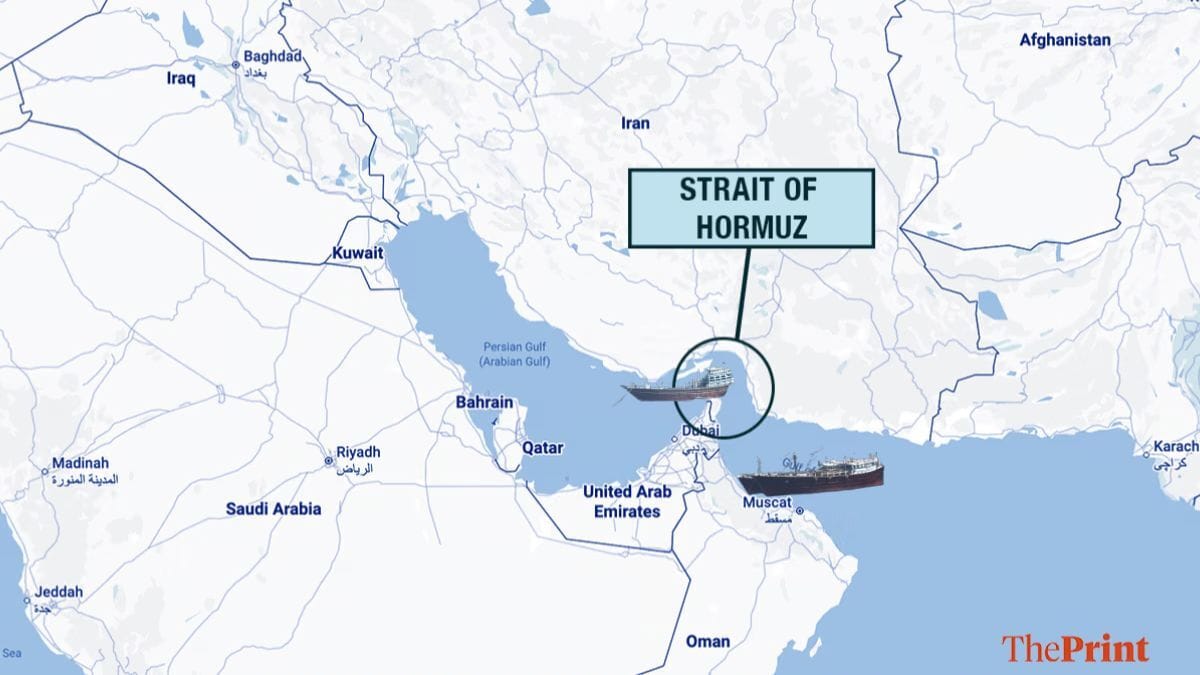
Iran’s Islamic Revolutionary Guard Corps has claimed that they control the Strait of Hormuz, a vital shipping route for oil and gas, and any vessels seeking to pass through the waterway risk damage from missiles or stray drones.
11.30 am: India has ‘40–45 days’ of crude cover, but long-term Hormuz disruption could inflate import bill
India has enough petroleum reserves to cover roughly 40–45 days of import volume through the Strait of Hormuz, but a prolonged disruption in the Gulf due to the widening Middle East conflict could significantly raise its import bill and strain energy security, according to trade intelligence firm Kpler.
The firm’s data suggests that India’s current commercial crude stocks—including volumes held in its Strategic Petroleum Reserve (SPR) facilities at Mangalore, Padur and Visakhapatnam—stand at around 100 million barrels.
“With imports via the Strait of Hormuz averaging roughly 2.5 million barrels per day (mpbd)—about half of India’s ~5 mbd total crude imports—these combined reserves could theoretically cover around 40–45 days of imports in a crude disruption scenario,” Sumit Ritolia, the lead analyst for oil markets at Kpler told ThePrint.
In comparison to China — which has built significantly larger emergency stockpiles over the past decade — India’s reserves are smaller in both absolute and relative terms.
However, Ritolia cautioned that these buffers are designed to manage temporary supply shocks, not sustained outages.
India imports nearly 90 percent of its crude requirement, with around 50 percent sourced from the Middle East. About 2.5 million barrels per day — roughly half of its total crude imports — typically transit through the Strait of Hormuz between Iran and Oman, underlining the country’s structural vulnerability.
Read Udit Bubna’s report.
10.50 am: $35K kamikaze drone modelled on Tehran’s own Shahed design—all about LUCAS, deployed by US against Iran
As the US-Israel operation against Tehran continues, Washington has deployed a weapon engineered after Iran’s own battlefield design—a one-way attack drone called the Low-Cost Unmanned Combat Attack System (LUCAS).
US Central Command (CENTCOM) announced Sunday that American forces had used LUCAS, modelled after Iran’s Shahed drones, for the first time.
“CENTCOM’s Task Force Scorpion Strike—for the first time in history—is using one-way attack drones in combat during Operation Epic Fury. These low-cost drones, modeled after Iran’s Shahed drones, are now delivering American-made retribution,” CENTCOM said in a post on X.
The combat debut came eight months after LUCAS was publicly unveiled at the Pentagon in July 2025—a timeline that US defence officials have cited as deliberate proof that the military can compress its traditionally slow acquisition process when strategic urgency demands it.
LUCAS is a loitering munition, more commonly known as a kamikaze drone. Unlike surveillance drones that return to base after gathering intelligence, LUCAS is engineered to identify and strike a target, detonating upon impact, with no recovery once launched.
Read all about the LUCAS in Vaibhav Pant’s report.
10.30 am: Israeli strike on residential complex in Lebanon’s Baalbek kills 5
A strike by Israel on a four-storey residential building has killed at least five people and wounded 15 others in the eastern Lebanese city of Baalbek, the country’s state news agency NNA has reported. Three remain missing. Rescue operations to search for them under the rubble continue.
ارتفاع ضحايا الغارة على المجمع السكني في بعلبك إلى 5 شهداء و15 جريحًا و3 مفقودين https://t.co/ptDWjret68
— National News Agency (@NNALeb) March 4, 2026
10.15 am: US military identifies four of its personnel killed amid ‘Operation Epic Fury’
The US Army Reserve has released the images of four of the first American personnel killed amid the conflict.
“The soldiers died March 1st, in Kuwait at the Port of Shuaiba, during an unmanned aircraft system attack. All Soldiers were assigned to the 103rd Sustainment Command, Des Moines, Iowa. The incident is under investigation,” a statement read.
It is with heavy hearts that we announce the deaths of four U.S. Army Reserve Soldiers supporting Operation Epic Fury on March 1st.
“We honor our fallen Heroes, who served fearlessly and selflessly in defense of our nation.” said Lt. Gen. Robert Harter, Chief of Army Reserve. pic.twitter.com/r4zBm3hfyt
— U.S. Army Reserve (@USArmyReserve) March 4, 2026
09.50 am: What Trump said on US entry into Iran conflict
US President Donald Trump has said that he ordered US forces to join Israel’s attack on Iran because he believed Iran was about to strike first.
This is in contrast to what Secretary of State Marco Rubio had told reporters Monday—that US launched the attack because of fears that Iran would retaliate in response to planned Israeli action against Tehran.
Trump rejected suggestions that Israel pushed the US into the conflict, as his administration gave varying accounts and faced criticism from some supporters and Democrats who accused him of launching a “war of choice”.
“I might have forced their (Israel’s) hand,” Trump told reporters in the Oval Office as he met with German Chancellor Friedrich Merz. “We were having negotiations with these lunatics, and it was my opinion that they were going to attack first. If we didn’t do it, they were going to attack first. I felt strongly about that.”
09.10 am: Israel launches new strikes on Iran, Lebanon
Explosions were heard in Tehran and Beirut overnight with Israel launching another round of strikes.
09.00 am: US embassy in Dubai struck by drones
Clouds of smoke were seen after a drone attack on the US consulate in Dubai started a fire. US embassies in Kuwait and Riyadh have also been struck over the past couple days.