





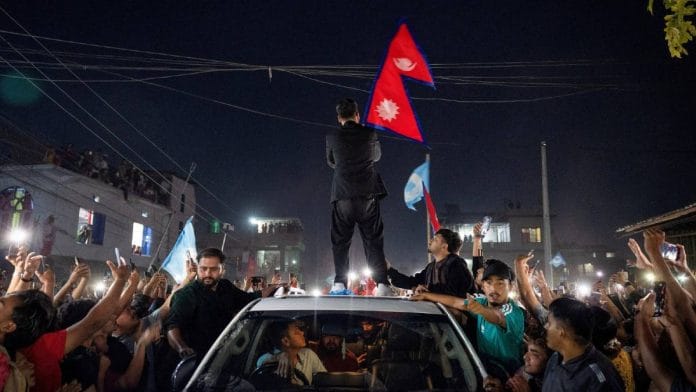



Kathmandu: For decades, Nepalese politics has been dominated by a trio of familiar forces: the Nepali Congress, the Communist Party of Nepal (Unified Marxist-Leninist), and the Maoists. But six months after the Gen Z uprising, voters have delivered a historic verdict: a sweeping mandate for the Rastriya Swatantra Party (RSP), a relative newcomer whose face is former Kathmandu mayor Balendra Shah.
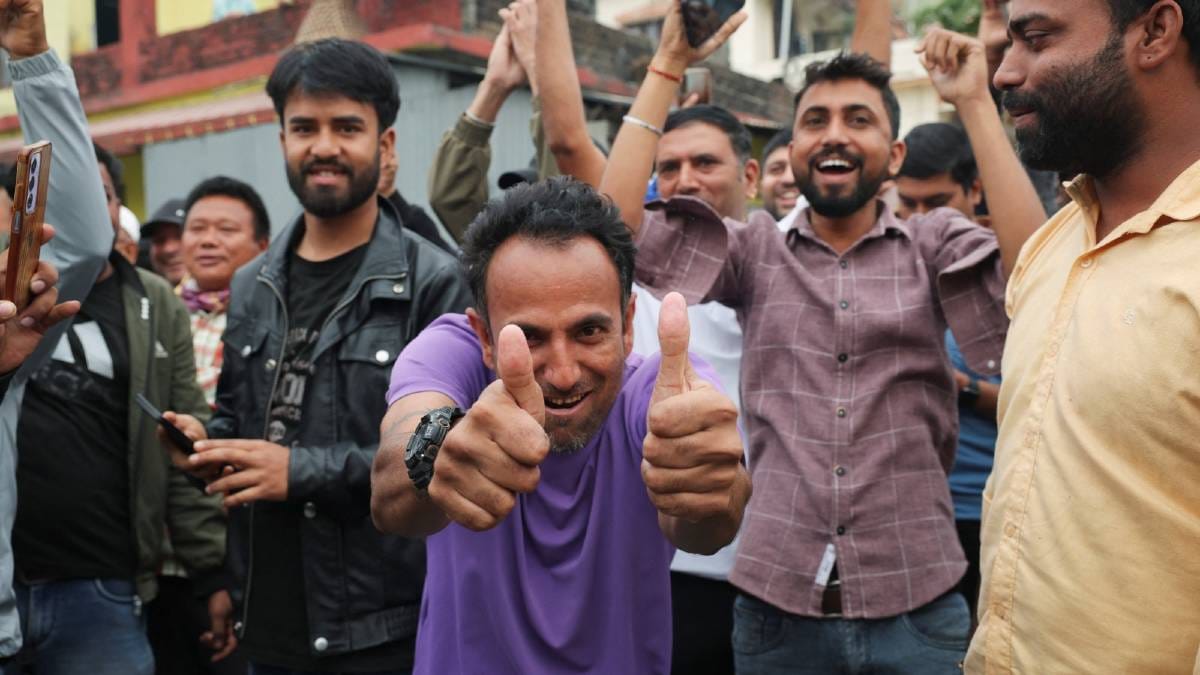
As of Saturday, the party was ahead in or had secured wins in more than 115 of the 165 directly elected seats in Nepal’s First Past the Post system. It may secure a rare two-thirds supermajority once the final results are in, something achieved only once before when the Nepali Congress won 74 of 109 seats in the country’s first democratic election in 1959.
Media reports Sunday said RSP had secured half of the votes counted so far under the proportional representation system for the House of Representatives.
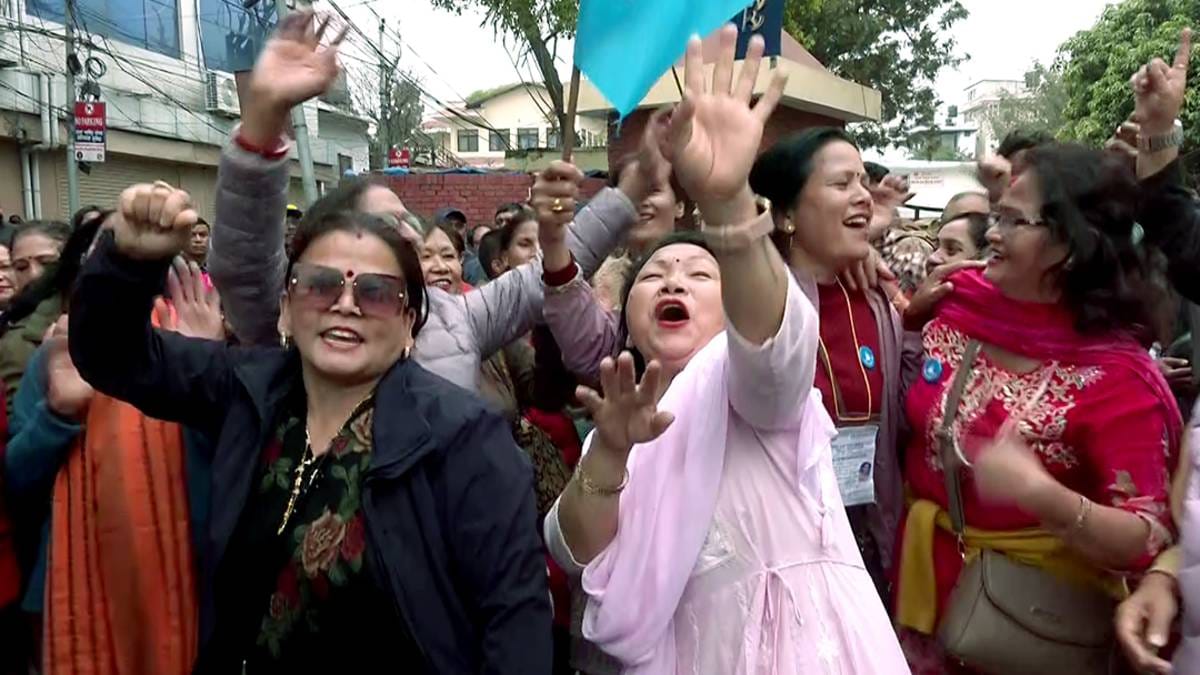
This election marks a decisive move away from the long-dominant traditional parties. After the September protests, the mood on the ground increasingly veered towards change—social, economic and political—and the results seem reflective of that.
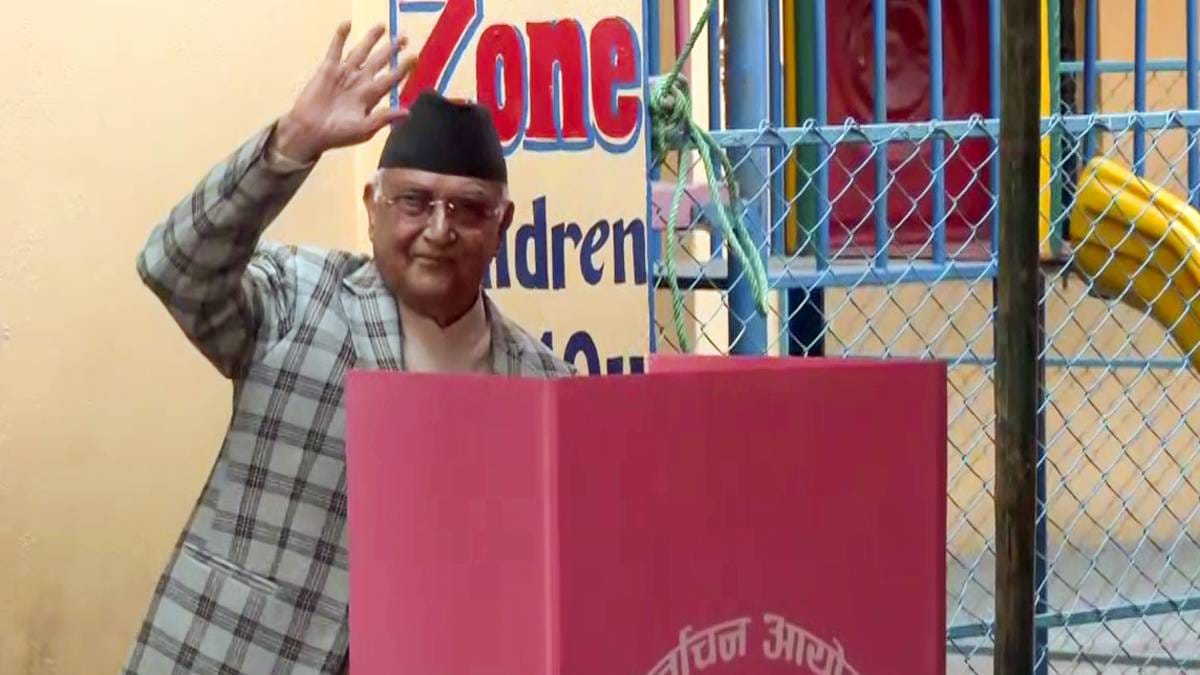
Moreover, Balen Shah has defeated former prime minister K.P. Sharma Oli in his home turf of Jhapa-5 with at least 65,000 votes. The landslide has not only changed decades of political continuity but also spotlighted the now largely irrelevant Maoists, once the revolutionary force that led the fight to take Nepal from a monarchy to a republic.
In the Lower House, the RSP heads towards a nearly two-thirds majority, but remains absent in the Upper House—a “historic anomaly” that reflects its meteoric rise and the nature of Nepal’s institutional balance, as analysts term it.
“This is the first time in the history of parliamentary democracy that a party with a near two-thirds majority in the Lower House won’t have a single member in the Upper House,” Arun Kumar Subedi, political analyst in Kathmandu and former adviser to former PM Sher Bahadur Deuba, told ThePrint.
“The political trajectory has been changed substantially by this election. People realised the failures of the previous government and voted for a new party.”
New party, new hope
Political instability has long been the norm in Nepal, where a multiparty democratic system has seen 14 different governments since becoming a republic in 2008 (where no single party has completed the mandated five-year term), and 32 since the introduction of multiparty democracy in 1990.
In the 2022 elections, the Nepali Congress won 89 seats, and Oli’s CPN-UML won 78 seats, becoming the largest and second-largest parties in the 275-seat House of Representatives, respectively. No party secured a majority.
Former PM Pushpa Kamal Dahal ‘Prachanda’ had previously led a coalition with his party, the Communist Party of Nepal-Marxist Center, and the CPN-UML, maintaining power through alliance shifts.
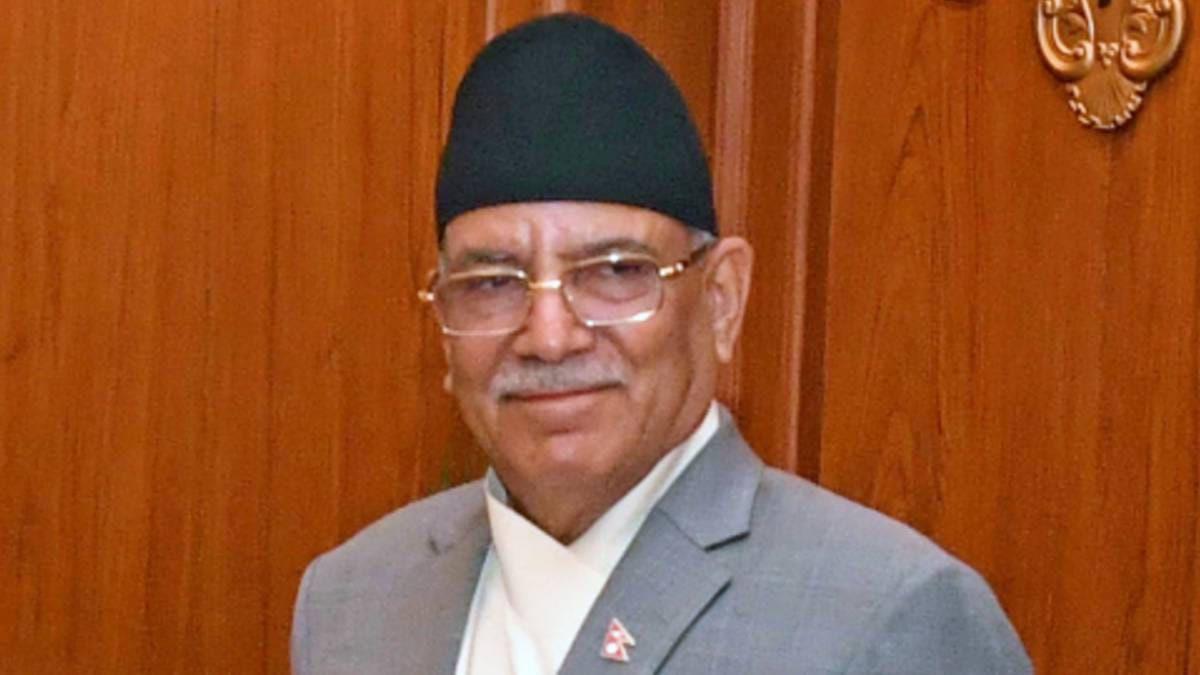
But Prachanda’s manoeuvres caused rifts with the CPN-UML and Nepali Congress. He was eventually ousted by a coalition of both parties, with CPN-UML leader Oli taking office in July 2024.
For the Nepali Congress under Gagan Thapa, joining a coalition with Oli helped escape the repeated corruption allegations against most senior leaders then. Thapa effectively lost this election, having contested from Sarlahi.
Meanwhile, the RSP emerged and challenged this same old guard’s dominance with a strong, digitally-led anti-corruption campaign. As the fourth-largest party, the RSP under founder Rabi Lamichhane supported Prachanda’s government and also went on to hold key ministries like home affairs. Yet Lamichhane himself has faced scrutiny over legal and even citizenship concerns, as well as his release from jail during the September protests.
The scale of the RSP’s surge has surprised even analysts who had predicted its win but not by such a huge margin. The country’s traditional power brokers—the Nepali Congress, UML and the Maoists, now part of the Nepali Communist Party—were mostly trailing in the polls.
Among the old guard, it appears that only Pushpa Kamal Dahal may retain a seat in Parliament. The pro-monarchy Rastriya Prajatantra Party (RPP) has also suffered a massive defeat, effectively ending speculation about a possible restoration of the monarchy.
Within the RSP itself, Balen Shah emerged as the party’s principal electoral figure, overshadowing its founder and president Lamichhane.
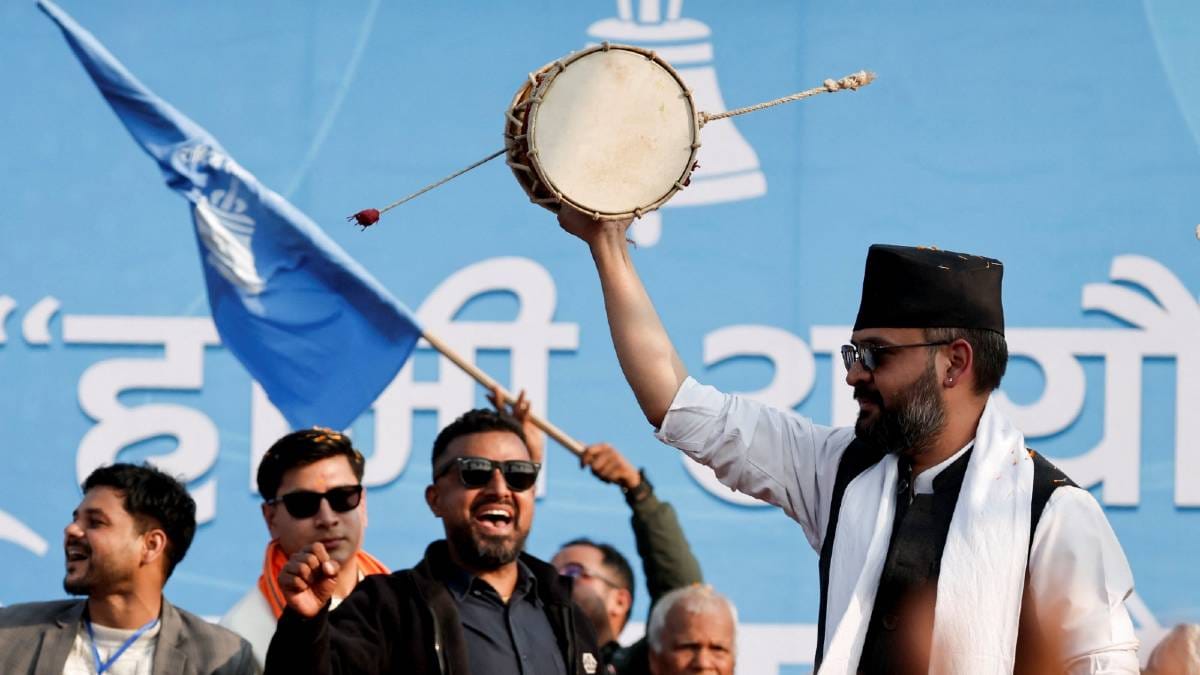
Shah’s growing dominance, many analysts note, can create tensions within the party. Although a relatively recent entrant to the RSP, he has rapidly come to define its public image, overshadowing Lamichhane during the poll campaign. That imbalance may not last indefinitely.
Lamichhane, a former journalist known for his forceful personality, may eventually find it difficult to remain in the background of a party he founded. His past reactions—including his outburst after being forced to step down as Home Minister in 2023 over questions about his citizenship—suggest that such tensions could escalate.
Shah, too, has demonstrated a combative streak, once threatening to burn down Singha Durbar long before protesters actually set it ablaze during last year’s unrest, as noted by analyst Pranaya Rana.
For now, Lamichhane appears content allowing Shah to lead the party’s public face. But that arrangement may not hold. Shah is likely to become prime minister, and Lamichhane will likely seek to return to the powerful home ministry—and perhaps eventually aim for the PM’s post himself. Legal challenges facing Lamichhane could complicate matters further.
If those tensions erupt, the RSP could face the same fate that has plagued many of Nepal’s political parties before it: a split driven by competing ambitions at the top.
However, a key aspect of RSP’s appeal is its promise of change, something the population seems most keen on, particularly in the economic space, amid mass migration and unemployment.
Previous administrations, Subedi said, failed to advance liberalisation, leaning instead toward socialist policies that deterred investment and triggered flight of capital. The RSP now faces the task of delivering pro-private sector reforms, implementing what Subedi described as a “second stage of liberalisation”, and amending constitutional restrictions that limit economic freedom.
“If they won’t be able to deliver a good pro-private sector economic policy and a second stage of liberalisation, then definitely the economy will be worse than before,” Subedi warned. “All controlling laws and bylaws need to be changed to support economic reform.”
Fall of Maoists
Once seen as champions of revolutionary change, the Maoists in Nepal now face political irrelevance. Pushpa Kamal Dahal has failed to inspire confidence, and his party appears increasingly disconnected from the electorate.
“The country has had enough of him and his antics,” Subedi said. “His party will most likely fade into irrelevance with every subsequent election cycle. Others would form a banner removing the word communist altogether and becoming socialist-democratic parties.”
Political analyst Deepak Thapa noted in an article in The Kathmandu Post the absence of any statement from Pushpa Kamal Dahal as Nepal marked the 30th anniversary of the Maoist insurgency last month.
Thapa also observed that the insurgency’s impact was far from straightforward. While some Maoist leaders profited individually and were later embroiled in corruption, this led to disillusionment among citizens.
The party, analysts believe, was unable to fulfil its revolutionary promise or produce a groundbreaking change amid shifting politics. What it instead did was intensify political rivalries and erode public trust in politicians.
However, the insurgency also acted as a catalyst for transformation. Under the weight of Maoist demands, each subsequent government implemented reforms. These touched on land rights, social inclusion, gender representation, and protections for minorities. This process eventually led to the 2015 Constitution, which enshrined federalism, inclusion, secularism, and republicanism.
Thapa highlighted another crucial element: the Maoists’ rise also originated from concerns within marginalised populations such as caste, gender, and class disparities. “Thirty years on, the root causes remain in the country, even if the leaders have forgotten.”
One in five young Nepalis is unemployed, turning the country’s demographic dividend into a growing dilemma. While Nepal’s overall unemployment hovers around 12%, youth unemployment exceeds 20%. Traditionally, India used to be the core destination for migrant workers, but today Nepalis migrate across the Gulf, Malaysia, South Korea, Cyprus, Malta and Eastern Europe.
They now work in at least 150 countries, yet the government has bilateral labour agreements with fewer than 10% of these destinations. In FY 2024-25, remittance inflows surged to NPR 1,356.6 billion by mid-May, a 13.2% rise from the same period the previous year.
For the first time, Nepal’s post-civil-war generation mobilised en masse on the streets. Unlike their parents who endured monarchy and Maoist insurgency, these protesters were digital natives: angry, impatient, and increasingly disillusioned. What may have appeared to outsiders as a campaign for online free speech was, in truth, a struggle for survival.
(Edited by Nida Fatima Siddiqui)