







By Jessie Pang and Greg Torode
HONG KONG, April 21 (Reuters) – The Hong Kong government is attempting to seize more than HK$127 million ($16.22 million) from jailed media tycoon Jimmy Lai after the city’s biggest national security case, according to a court document released on Tuesday.
The writ issued by the High Court details bank accounts, several small factory properties and private company shareholdings linked to Lai, who built his fortune in the garment trade before moving into media.
The seizure case is due to be heard on July 8. A spokesperson for Lai’s lawyers said they had no comment for now.
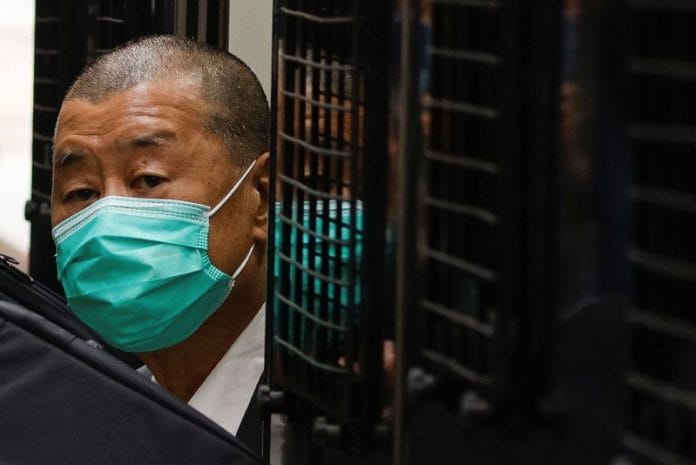
Lai, a veteran pro-democracy advocate and the city’s most vocal China critic, was sentenced to 20 years jail in February on two counts of conspiracy to collude with foreign forces and one count of publishing seditious materials.
Lai’s case sparked global concerns over the national security clampdown in Hong Kong, in part reflecting his prominence as founder of the feisty and now-shuttered Apple Daily newspaper.
Pro-Beijing media and officials have repeatedly described Lai as a pro-American traitor and the mastermind of the pro-democracy protests that rocked the city for months in 2019.
The single biggest item listed in the writ involves Lai’s shareholdings in two privately-held companies, Comitex Holdings and Dico Consultants, that the document values at more than HK$71.3 million ($9.10 million) given the firms’ property and bank holdings.
The government is also seeking to seize HK$12 million ($1.53 million) in bail funds provided by Lai.
The rest involves a range of deposits in more than 50 bank accounts linked to Lai and privately held companies, the document says.
The government’s seizure order is made under the implementing rules of a national security law imposed on the city by Beijing in 2020.
Lawyers say the rules grant the government extensive powers to freeze and then seize property and financial assets linked to national security cases.
While some foreign governments and international rights groups criticised the new law and impact on the former British colony, Hong Kong and Chinese officials have said it was needed to ensure stability after the sometimes-violent pro-democracy protests.
($1 = 7.8309 Hong Kong dollars)
(Reporting By Jessie Pang and Greg Torode in Hong Kong; Editing by Raju Gopalakrishnan)
Disclaimer: This report is auto generated from the Reuters news service. ThePrint holds no responsibility for its content.