








New Delhi: From a geopolitical point of view, 2025 could easily qualify as one of the more turbulent years in recent decades. The Russia-Ukraine conflict entered its fourth year as efforts by Washington to strike a peace deal came to naught, Israel ramped up its military offensive in Gaza aimed at eliminating the Hamas leadership, the US bombed three nuclear sites in Iran, and India and Pakistan entered into a military confrontation.
South Asia, in particular, witnessed bursts of political instability. Pakistan Army tightened its grip over the country, while the government in Nepal was toppled after widespread protests.
India, too, was confronted with a series of challenges—the Pahalgam terror attack to which it responded with Operation Sindoor, besides imposition of 50 percent tariffs on Indian goods by the Trump administration.
As 2025 winds down, ThePrint looks at elections coming up in 2026 that could significantly impact the course of geopolitics.
Also Read: 5 biggest infrastructure fails of 2025—shoddy roads, 90-degree turns, falling bridges
US midterms
The US is expected to hold a midterm general election on 3 November, 2026, about two years after Donald Trump defeated Democratic nominee Kamala Harris in the November 2024 presidential election. The Democrats had then lost control of both the House of Representatives and the Senate.
But a Pew Research Center survey from August this year suggests public sentiment has shifted. Among young Americans, President Trump’s disapproval ratings are now at 60 percent. The survey underscored that this can be attributed, in some measure, to increasing unaffordability and Trump’s stance on the Epstein files.
On the other hand, the Democratic Party is energised after its victory in key gubernatorial elections in New Jersey, Virginia; besides the mayoral elections in New York.
If the Democrats carry this momentum into the midterm elections, it could break the Trump administration’s control over the House of Representatives, putting a legislative check on the Executive’s exercise of authority.
Similarly, control over the Senate will also be up for grabs, but the electoral map favours the Republicans, making it difficult for the Democrats to flip the Upper House.
Bangladesh
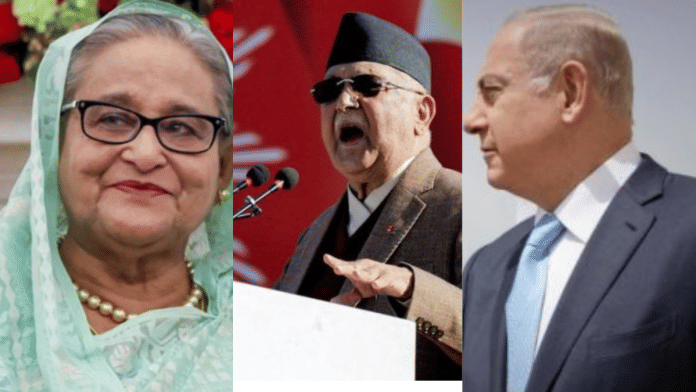
Dhaka is scheduled to hold a high-stakes, and potentially turbulent election in February 2026, a major milestone since the ouster of the Sheikh Hasina government on 5 August, 2024. The election will take place alongside a referendum on proposed political and institutional reforms.
With the interim government of Bangladesh banning all activities of Sheikh Hasina’s party Awami League, these elections open political space for its long-term rival, the Bangladesh Nationalist Party (BNP), and new political groups such as the youth-led National Citizen Party (NCP), which emerged out of the anti-Hasina uprising.
It also created a political opening for hardline religious parties, such as the Jamaat-e-Islami, which has seen a political resurgence following Hasina’s exit.
The election will be pivotal in deciding future relations between India and Bangladesh too, as the ties have suffered under the caretaker government led by Muhammad Yunus.
Nepal
Kathmandu is also gearing up for an election in March 2026 after the Gen-Z protests led to the fall of K.P. Sharma Oli’s government in September 2025.
An interim government, led by former Supreme Court chief justice Sushila Karki, wants to hold elections within just six months of the violent overthrow of the previous administration.
Holding elections in the backdrop of the Gen-Z protests could amount to a logistical challenge, but the surge in new political formations and voter registrations point to high voter interest.
Brazil
In Brasília, 80-year-old President Luiz Inácio Lula da Silva has announced his intention to seek re-election in October 2026. If he wins, he will secure a fourth term.
His primary opponent is former President Jair Bolsonaro’s eldest son. Bolsonaro is serving a sentence after being convicted for involvement in a coup attempt.
Lula’s approval ratings have risen after his defiant response to Trump’s unilateral trade war, putting him ahead of his Right-wing rival.
Israel
Tel Aviv will hold elections in October 2026, the first since the 7 October 2023 Hamas attack to which Israel responded with a military operation in Gaza.
Incumbent Prime Minister Benjamin Netanyahu, also known as Bibi, has long been grappling with a series of corruption cases, leading to political polarisation. His aggressive actions have not just alienated European partners, but also a sizable population in Israel.
Domestically, his current approval ratings have been drastically failing. Channel 12 polls show that his approval ratings have plummeted to 30 percent, and 70 percent of Israelis no longer trust Bibi.
However, his Likud Party could gradually climb back into the lead in the polls with the support of the far-Right nationalist faction in the Knesset.
Thailand
Thailand is expected to hold elections in February 2026, after the expulsion of the former Prime Minister Paetongtarn Shinawatra, over a leaked conversation with Cambodian Senate President Hun Sen during an active conflict.
The progressive reformist People’s Party is expected to take advantage of the fall of the influential Shinawatra family and win a second election in a row.
However, the party faces an increasingly powerful and popular opponent in the conservative and royalist Bhumjaithai Party, led by the politically savvy Prime Minister Anutin Charnvirakul.
Geopolitically, this election will be closely monitored by Phnom Penh for its implications for the overall stability of the Association of Southeast Asian Nations (ASEAN).
Hungary
Hungary’s long-term populist Prime Minister Viktor Orbán, who has been in office since 2010, might face his toughest election in April 2026 because his Fidesz Party is currently running behind in popular polls against the Tisze party.
This upset has been largely fuelled by increasing frustration with corruption and growing concerns regarding the democratic backsliding.
Colombia
In Bogotá, President Gustavo Petro is constitutionally barred from seeking a reelection, but his alliance nominee, Senator Ivan Cepeda, could emerge victorious among many prospective candidates in the May 2026 election.
Petro’s popularity has largely waned as his goal of total peace has remained elusive. His reform agenda has also faced hurdles due to troubled relations with the Trump administration, which could bring war to Colombia’s doorsteps with a feared attack on neighbouring Venezuela over drug smuggling.
(Edited by Sugita Katyal)
Also Read: ‘Grovel’, ‘bauna’, ‘kaali taxi’—top 6 sports controversies of 2025