





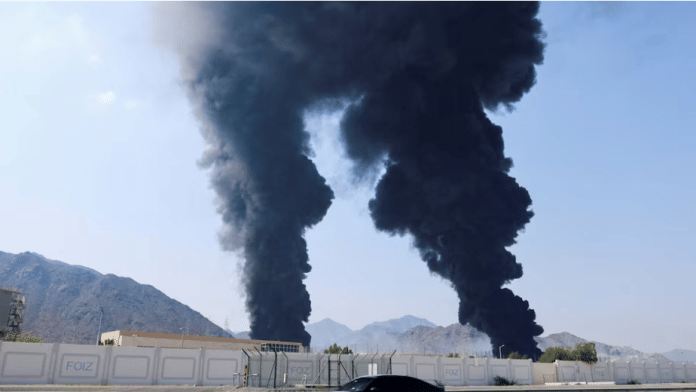



The key port of Fujairah in the United Arab Emirates was hit by a drone, the latest in a series of strikes threatening the country’s only export route outside the Strait of Hormuz.
A drone attack caused a fire in the petrochemicals complex in the area, the Fujairah Media office said Monday. Oil loadings have been halted as a precautionary measure as the damage was being assessed, people familiar with the matter said, asking not to be identified because they aren’t authorized to speak to the media. Loading at the port had restarted over the weekend after a previous drone strike caused a fire on Saturday.
Fujairah is a major hub for both crude and fuels, and has taken on increased significance for both the UAE and global markets because of its position outside the Strait of Hormuz, which has been been all-but-closed because of the war. The latest attack follows a warning from Iran’s military on Saturday that Fujairah and other UAE ports of Jebel Ali and Port Khalifa had become legitimate targets due to the presence of US military forces in civilian facilities, the semi-official Fars news agency had reported.
UAE’s Fujairah Port Sits Outside Strait of Hormuz
Fujairah sits at the end of a pipeline that connects it to the main oil fields in Abu Dhabi, and is the primary export terminal for the UAE’s Murban crude. In addition to Adnoc’s crude-storage facility, the port has capacity for more than 70 million barrels of oil and fuels for traders needing rapid supply access. It also serves as a ship refueling hub.
The port’s second suspension in three days highlights the acute risks to regional supplies from the conflict, which has lifted oil price above $100 a barrel. The UAE and Saudi Arabia are the only two countries in the Persian Gulf that can bypass the Strait of Hormuz for some of their oil exports.
The Paris-based International Energy Agency said last week the war had created the largest supply disruption in the history of the oil market, and heightened the importance of reopening the Strait of Hormuz. The agency is coordinating the release of a record 400 million barrels of oil from its member’s emergency stockpiles, with supplies in Asia made available immediately.
This report is auto-generated from Bloomberg news service. ThePrint holds no responsibility for its content.