





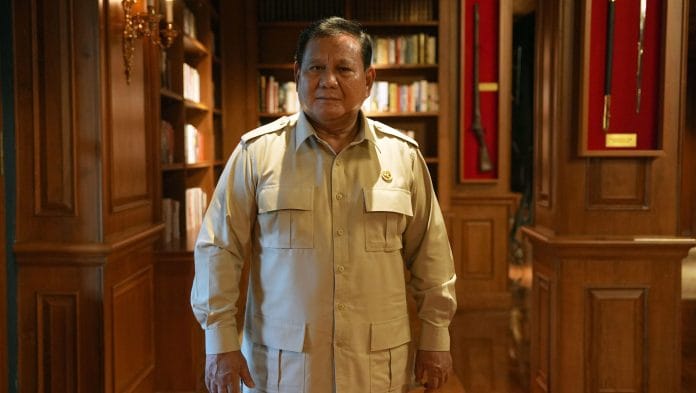



At the top of a narrow winding road packed with locals on motorcycles and small concrete shops, Indonesian President Prabowo Subianto greeted visitors at the sprawling hilltop estate where he spends much of his time.
Sitting next to protected forests that overlook a valley with rolling green hills, his home in Hambalang feels like a world away from the gridlocked streets of Jakarta, the planet’s largest city about an hour’s drive north. The constant hum of revving engines gives way to the chirping of birds, the rustle of tree branches and the occasional whinny from one of his horses.
Inside the main structure of mostly teak wood, large chandeliers hang from high ceilings. Swords, spears and some rifles are positioned along walls filled with old black-and-white military photographs, as well as some of Prabowo meeting world leaders. Rooms are filled with figurines of horses, which also feature prominently in paintings and couch cushions. Two ancient cannons set on large wheels flank the building’s main entrance.
“It’s some sort of haven here,” Prabowo, 74, said from his office in the inner sanctum, a cavernous two-story room with hundreds of books where he hosts dinners, meets guests and holds cabinet meetings. “This is, for me, one of my favorite places. I even sleep here sometimes.”
In a wide-ranging interview on Saturday afternoon, his first major sit-down with an international media outlet as president, Prabowo spoke at length without notes about his vision for Indonesia — and why he’s often misunderstood by markets. At times quoting from Shakespeare, Abraham Lincoln and China’s Deng Xiaoping, he easily shifted from talking about his desire for a balanced budget and the elimination of fuel subsidies to his naps on the regular commute to Jakarta and his love for swimming — a daily 30-minute activity he says provides him inspiration. He even picks hotels based on the quality of their pools.
Prabowo called credit-rating firms “wrong,” railed against “thieves” among Indonesia’s tycoons and blasted the “idiocy” of now-ousted officials who mishandled the MSCI Inc. saga that tanked stocks in January. He also praised his finance minister, defended his nephew’s appointment as a Bank Indonesia deputy governor and explained why his newly created sovereign wealth fund Danantara will soon generate billions in returns without falling into scandal like neighboring Malaysia’s 1MDB.
“The markets are not understanding me,” said Prabowo, a former special forces commander who was once the son-in-law of longtime authoritarian leader Suharto, noting that some critics wonder “how can a military man understand economics.”
“I just do what I think is in the best interests of my people,” Prabowo said, dismissing concerns about whether he’s market-friendly or not. “I’m not too ideological. I’m not too doctrinaire. I look for the best solution pragmatically.”
Prabowo has vowed to supercharge annual economic growth to 8% by the end of his term in 2029 from about 5% now by stamping out corruption, better managing state-run enterprises, embracing renewable energy, boosting industrialization and improving the lives of the poor in Southeast Asia’s biggest economy.
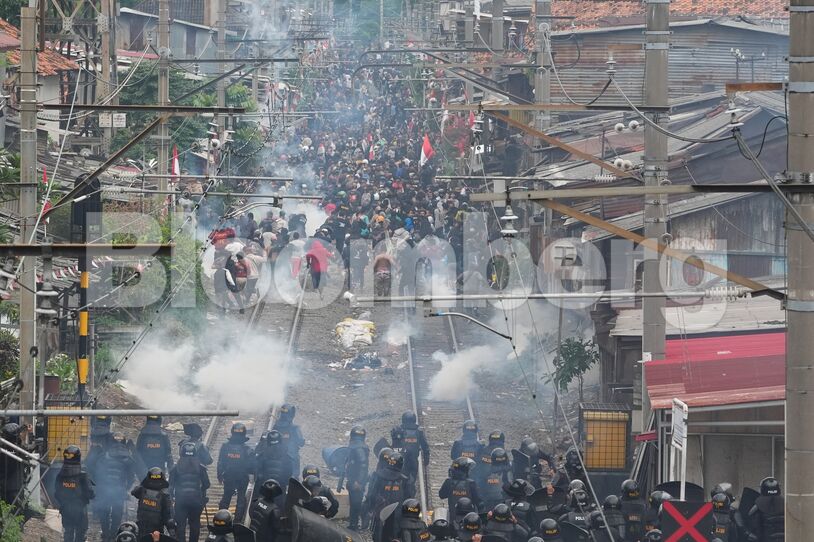
But roughly 18 months into his presidency, the market remains skeptical.
The country’s benchmark stock index is among the world’s worst performers so far this year, while the rupiah is near a record low. Last year saw deadly youth-led protests over cost-of-living concerns. International investors fear his government may start seizing assets, including one of the country’s biggest gold mines. Fitch Ratings Inc. and Moody’s Ratings both recently lowered Indonesia’s credit rating outlook to negative. And bond yields are ticking up again after the 10-year note hit a multi-year low at the end of 2025.
In many ways, Prabowo is a study of contradictions — epitomized by his hilltop mansion, part of a roughly 2 trillion rupiah (about $120 million) fortune he obtained while working in Indonesia’s resources industry between his military service and time as a politician. He said he acquired the scenic Hambalang land from an associate who couldn’t afford school fees for his children in the US after the exchange rate plummeted in the 1997 Asian Financial Crisis.
Despite his personal wealth, Prabowo slams Indonesia’s tycoons and casts himself as a champion of the poor. He’s a battle-hardened soldier who wants to make peace. He’s a proponent of fiscal discipline but is spending big on one of the world’s largest free meals programs. And he’s consolidating power from a private sanctuary that sits closer to active volcanoes than the politicking in the presidential palace in Jakarta.
Read more: Prabowo Open to Breach Indonesia Deficit Cap Only During Crisis
For investors wondering how the numbers add up, it all amounts to some confusion. In cutting its outlook on Indonesia’s credit to negative this month, Fitch cited “increasing policy uncertainty” and concerns of “consistency and credibility amid growing centralization of policymaking authority.”
In the interview on Saturday, Prabowo said he’s committed to fiscal discipline and would only raise the statutory budget deficit cap of 3% of gross domestic product in an emergency. At the same time, he said he’d avoid cuts to his free meals program, ease out costly fuel subsidies in three years without increasing petrol prices and soon get Danantara to contribute $50 billion annually to the budget — all goals that come with big question marks.
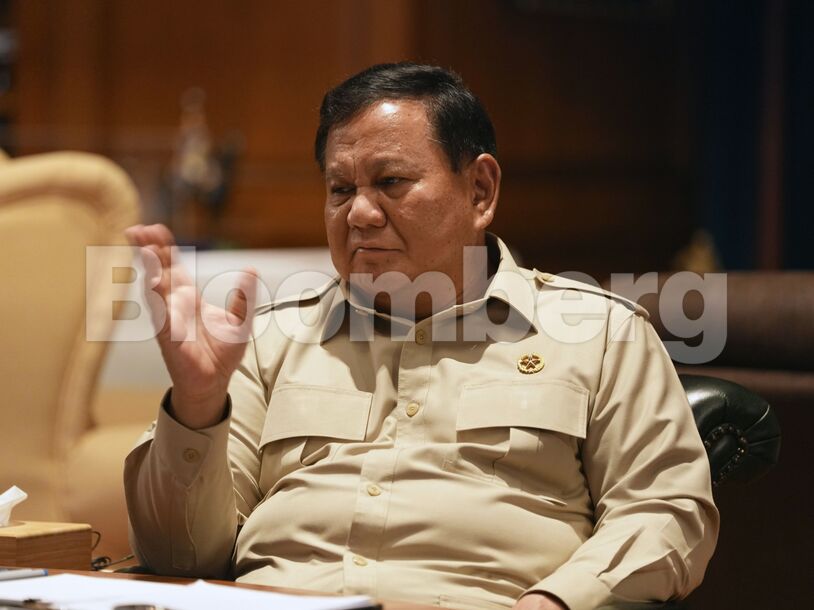
Some of the disconnect is about timing. Danantara could one day earn decent returns and renewables are a realistic part of Indonesia’s future energy mix. Some studies suggest a fully functioning free meals program could boost education and nutrition outcomes over the longer term. Diverting costly subsidies to more productive spending would help fiscal stability, while 8% growth would ease many of the current budget pressures.
But none of that addresses the market’s immediate concern: whether Prabowo’s ambitious plans are outrunning the state’s administrative and fiscal capacity. Investors are focused less on the promise of long-term gains than on the near-term risks of policy uncertainty, weak revenues, governance concerns and hidden financial risks. Prabowo is effectively asking everyone to buy the long game while markets are still pricing the short one.
Even as Prabowo describes his administration as the “fastest” the nation has seen in implementing policy, he’s appealing for patience to root out corruption, improve the management of state-owned firms and bring more of Indonesia’s natural resources wealth under state control.
“The problem with Indonesia is not our revenue, it’s not our wealth,” he said. “The problem is corruption. The problem is inefficiency. The problem is weak management control, weak oversight.”
As for analysts at ratings companies, he said they’re only human: “They got it wrong. And they will see in the end.”
Prabowo sees some critics through the lens of a conspiracy, wondering aloud if there’s a “campaign” against Indonesia by the nation’s competitors or his political rivals. Yet he acknowledges his government could do a better job articulating its vision — another notable contradiction. Despite a reputation for having a fiery temper, Prabowo is an affable and charming host, comfortable taking questions on any topic with no aides present.
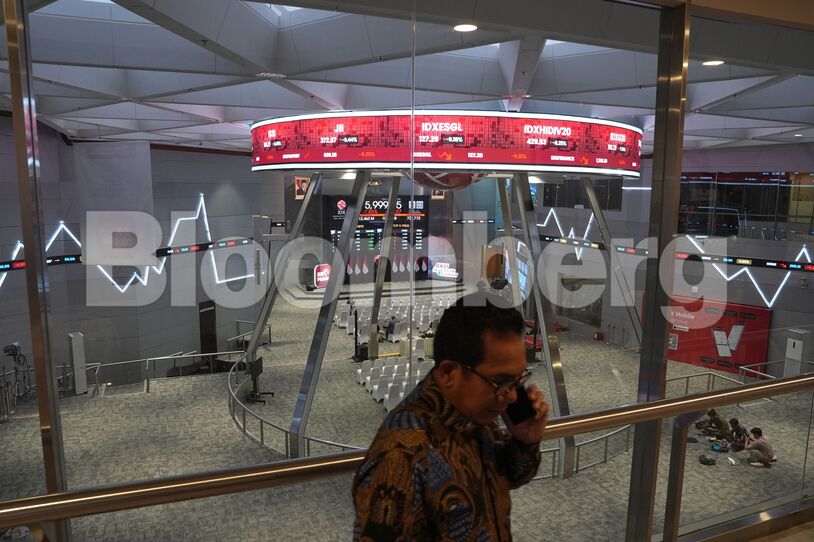
The MSCI incident is one example of a communication breakdown.
In late January, Indonesia saw its worst equity rout since 1998 after the index compiler threatened to downgrade the nation to frontier market status from emerging market, a scenario that would likely force many international investors to pull money from Indonesian stocks. A furious Prabowo demanded accountability, and the heads of the Financial Services Authority and the Indonesia Stock Exchange resigned in the aftermath.
Read more: Prabowo Fury on Market Rout Shows Growing Divisions in Indonesia
In the weekend interview, Prabowo blasted the former officials for incompetence and said he’s weighing litigation against them for what he called “a clear dereliction of duty” for not replying to MSCI when it expressed concerns about market transparency.
“They wrote three or four letters with no answer,” Prabowo said, referring to MSCI. “Can you imagine that? It’s idiotic. It’s complete idiocy.”
For Prabowo, meeting the MSCI requirements is all about improving market transparency and enforcing the rules, something he sees as essential when dealing with the nation’s tycoons more broadly. In his eyes, eliminating corruption is key to finally unleashing the potential of the world’s fourth-most populous nation.
“I have to wake up the Indonesian elite,” Prabowo said. “I have to get rid of these, basically these corrupt people, these thieves.”
While Prabowo declined to single anyone out, he called on the nation’s wealthiest individuals to “be rational” and avoid smuggling, tax evasion and other illicit forms of enriching themselves at the expense of the state. He’s been asking them to give back more to the country, including last year when Danantara sold them so-called patriot bonds at below-market yields.
The emergence of Danantara has spurred some concerns that the sovereign wealth fund, which now manages all of Indonesia’s state-run enterprises, would start to take back control of some state assets currently in private hands. Last month, reports emerged that Danantara was considering a takeover of one of Indonesia’s largest gold mines, leading to concerns from key investors of Jardine Matheson Holdings Ltd., a Hong Kong-based conglomerate that controlled the mine.
Prabowo said he didn’t have an update on the mine’s status, only adding that investigations were still ongoing into which companies were responsible for environmental damage in the wake of devastating floods late last year that killed more than 1,100 people in Sumatra. He added that investors who take care of concessions, follow the law and pay the proper amount of tax would have no problems.
Those that don’t, however, might lose their concessions when they expire, Prabowo said. Asked whether Danantara could manage those assets over time, Prabowo pointed to similar funds in Saudi Arabia, Qatar and the United Arab Emirates, which control a much greater percentage of national wealth.
“They’ve been successful,” Prabowo said. “We should copy successful examples.”
Prabowo dismissed concerns that Danantara would turn into another 1MDB, the Malaysian sovereign wealth fund that became the poster child for international financial scandals. The president called Danantara “the most watched institution” in Indonesia and said he wants all of the fund’s initiatives to be scrutinized commercially, including his own proposals.
“I don’t want to be responsible for any loss,” Prabowo said, adding that he’s aiming for a 5% return on $1 trillion in assets by the end of his term, or roughly $50 billion a year.
“At least we have something,” Prabowo said, referring to Danantara. “Before it was crazy — nobody controlled our state-owned enterprises.”
Another area where investors have been concerned is monetary policy. Prabowo’s coalition in January installed his nephew, Thomas Djiwandono, as a deputy governor of Bank Indonesia, spurring questions about the central bank’s independence.
Prabowo dismissed those concerns, citing Djiwandono’s education at Johns Hopkins University while also noting he has many other nephews who haven’t been given any opportunities. He asked whether critics of the appointment had also expressed concern when Ho Ching, wife of former Singapore Prime Minister Lee Hsien Loong, was appointed to run state-owned investor Temasek Holdings Pte. — a position she held for 17 years before stepping down in 2021. Temasek declined to comment.
“When you are in a position of responsibility, you look for the best people and the people who you can trust,” Prabowo said, adding that former US President John F. Kennedy was also criticized for appointing his brother, Robert F. Kennedy, as attorney general.
Prabowo said he believes in an independent Bank Indonesia but warned that any malfeasance wouldn’t be tolerated: “They’re not going to be above the law.” Asked how much the government and central bank should coordinate, he said both were “in the same boat” and needed “synchronization.”
Prabowo acknowledged the optics of some of these decisions, but said he wanted “complete transparency” when it comes to the stock market, noting that retail investors could also lose a lot of money if everything isn’t above board. He said that despite some criticism, he was confident that larger investors would take a favorable view of Indonesia’s fundamentals.
“The big guys with the real money, they have better intelligence than many other countries,” Prabowo said.
When asked about his top priorities, Prabowo said he wanted to get rid of hunger and extreme poverty in Indonesia, calling it unacceptable for a Group of 20 nation to allow families to go without enough to eat. He also wanted to see a better bureaucracy, greater national wealth and more downstream industrial projects.
Prabowo expressed confidence in his “core cabinet,” saying they were producing “real results.” He said he was pleased with Finance Minister Purbaya Yudhi Sadewa, who took over last September from investor favorite Sri Mulyani Indrawati. The president said he ended up picking Purbaya after seeing a presentation in which he was “bullish” about Indonesia.
“I need people who are optimistic,” Prabowo said as the afternoon fell into evening, lowering the temperature in the mountain air. A self-described night owl, he noted he has meetings late into the evening.
“I don’t need pessimists around me,” he said. “That’s not my nature.”