





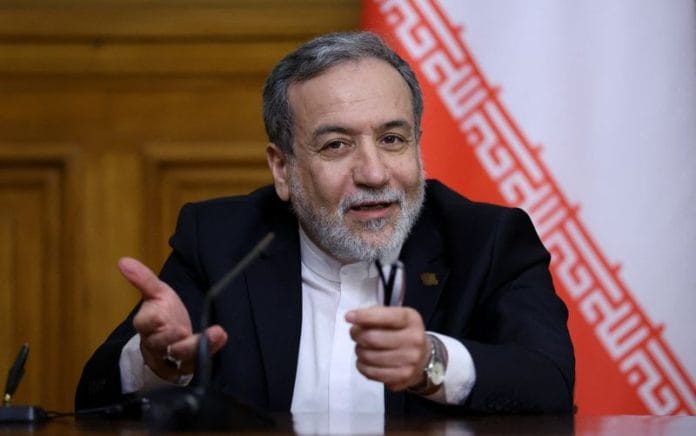



DUBAI, Feb 24 (Reuters) – Iran’s Foreign Minister Abbas Araqchi said on Tuesday that a deal with the U.S. was “within reach, but only if diplomacy is given priority”, days ahead of an expected fresh round of talks between the two sides in Geneva.
The talks are set to take place on Thursday in Geneva, a senior U.S. official said on Monday, with U.S. envoys Steve Witkoff and Jared Kushner slated to meet with an Iranian delegation for the negotiations.
The two countries resumed negotiations earlier this month as the U.S. builds up its military capability in the Middle East. Iran has threatened to strike U.S. bases in the region if it is attacked.
“We have a historic opportunity to strike an unprecedented agreement that addresses mutual concerns and achieves mutual interests,” Araqchi said in a post on X.
The Iranian top diplomat said his country would resume the talks with “a determination to achieve a fair and equitable deal in the shortest possible time”.
Earlier, Iranian Deputy Foreign Minister Majid Takht-Ravanchi said Iran was ready to take all necessary steps to reach a deal with the United States.
“We are ready to reach an agreement as soon as possible. We will do whatever it takes to make this happen. We will enter the negotiating room in Geneva with complete honesty and good faith,” Takht-Ravanchi said in comments carried by state media.
White House Press Secretary Karoline Leavitt said on Tuesday that U.S. President Donald Trump’s first option was always diplomacy but that he was willing to use lethal force if necessary.
A senior Iranian official told Reuters on Sunday that Tehran would seriously consider a combination of sending half of its most highly enriched uranium abroad, diluting the rest and taking part in creating a regional enrichment consortium – an idea periodically raised during years of Iran-linked diplomacy.
Iran would do this in return for U.S. recognition of Iran’s right to “peaceful nuclear enrichment” under a deal that would also include lifting economic sanctions, the official said.
“If there is an attack or aggression against Iran, we will respond according to our defence plans… A U.S. attack on Iran is a real gamble,” Takht-Ravanchi added.
Indirect talks between the two sides last year brought no agreement, primarily due to friction over a U.S. demand that Iran forgo uranium enrichment on its soil, which Washington views as a pathway to a nuclear bomb.
Iran has always denied seeking such weapons.
The U.S. joined Israel in hitting Iranian nuclear sites last June, effectively curtailing Iran’s uranium enrichment, with Trump saying its key nuclear sites were “obliterated”. But Iran is still believed to possess stockpiles enriched previously, which Washington wants it to relinquish.
(Reporting by Elwely Elwelly; additional reporting by Jaidaa Taha and Muhammad Al Gebaly from Cairo; Editing by Emelia Sithole-Matarise and Gareth Jones)
Disclaimer: This report is auto generated from the Reuters news service. ThePrint holds no responsibility for its content.