








By Laurie Chen
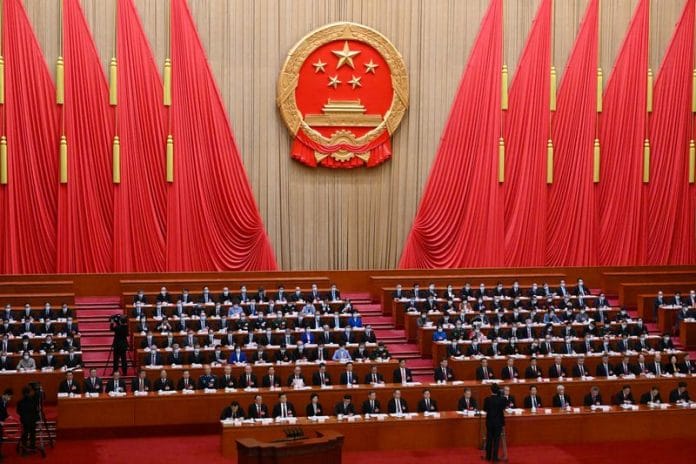
BEIJING (Reuters) -Chinese lawmakers passed a wide-ranging update to Beijing’s anti-espionage legislation on Wednesday, banning the transfer of any information related to national security and broadening the definition of spying.
China’s top legislative body passed the revised Counter-Espionage Law – its first update since 2014 – following three days of deliberations, and it will take effect from July 1, state media reported.
President Xi Jinping has made national security a key focus of his administration since taking office in 2012 and analysts say these revisions are evidence of that stricter regime as suspicion of the United States and its allies grows.
All “documents, data, materials, and items related to national security and interests” are under the same protection as state secrets following the revisions, according to the full text of the revised law published by Xinhua late Wednesday.
The law does not define what falls under China’s national security or interests.
It expands the definition of espionage to include cyber attacks against state organs or critical information infrastructure, state news agency Xinhua reported.
The revised law allows authorities carrying out an anti-espionage investigation to gain access to data, electronic equipment, information on personal property and also to ban border crossings. Cyberattacks are also classed as acts of espionage.
“International relations continue to sour, suspicions continue to rise, and (there is) increased emphasis on national security and countering espionage,” said Jeremy Daum, a senior fellow at Yale Law School’s Paul Tsai China Center.
The revisions “(adopt) both an expansive understanding of national security and emphasise the consideration of potential security risks in all areas”.
In recent years, China has detained dozens of Chinese and foreign nationals on suspicion of espionage, such as an executive at Japanese drugmaker Astellas Pharma who was detained in Beijing last month. Espionage cases are usually tried in secret due to their links to national security.
(Reporting by Laurie Chen and Beijing newsroom; Editing by Sharon Singleton)
Disclaimer: This report is auto generated from the Reuters news service. ThePrint holds no responsibilty for its content.