





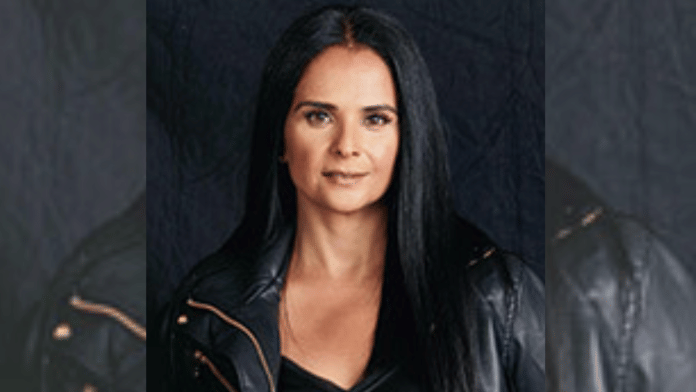



New Delhi: Behind the fan craze and obsession of K-dramas, Spanish crime thrillers and period soaps set in England’s Regency era, there is an unseen hand that is shaping what binge culture looks and feels like—of British-born Bela Bajaria, who is Netflix’s Chief Content Officer. A Forbes article earlier this month dubbed her the “Queen Of Screens”.
Titles and Bajaria have a long relationship. Back in 1991, she was crowned Miss India USA and Miss India Worldwide. This October, she was labelled “Hollywood Power Player” by British Vogue. And, rightly so.
At a time where entertainment is borderless and algorithms are king, Bajaria sits at the intersection of instinct and scale. She oversees Netflix’s entire content slate, scripted, unscripted, films, comedy, live programming, across more than 50 countries, with a budget that rivals the GDP of small nations.
But to reduce her role to numbers wouldn’t be correct. Bajaria isn’t just a content manager. She is redefining what global storytelling means.
And, the strategy of the 55-year-old is working, quite evidently. This week, Netflix clocked in most Golden Globe Award nominations, 35, including for films like Frankenstein, KPop Demon Hunters and shows like Adolescence.
Also Read: Why Netflix wants to acquire Warner Bros and how it could reshape global entertainment
Car wash shop to Netflix
Bajaria was born in London to Indian parents. Her upbringing was shaped by migration and a lot of physical labour; her family had a car wash centre where she would often help. After her parents moved to the US, Bajaria graduated from California State University in 1995 and landed a role at CBS as an assistant in the movies-and-miniseries department.
She read every script that came across her desk along with the executive notes attached to it. She learned by reading and listening. And, her dedication didn’t go unrecognised. She was just 26 when a departing high-ranking executive recommended that she take his place.
“Everyone was my mentor, but they just didn’t know it. And, I never thought in a million years this person was paying enough attention to say you should give her my job. It was my biggest break for sure,” she told Forbes.
Her big leap came when she joined Universal Television, where she eventually became president. It was for the first time a woman of colour led a major Hollywood studio. During her tenure, Universal produced shows like The Mindy Project, Brooklyn Nine-Nine, Master of None, and the Chicago franchise, among others.
But a major setback came her way when she was fired in June 2016 because, in her own words to Forbes, she “refused to play the game”.
A few months later, Netflix came knocking at her door. And, everything accelerated.
At the time, the streamer was expanding aggressively. Bajaria quickly emerged as one of the company’s key creative forces, and eventually became the Head of Global TV. In 2023, she was made the Chief Content Officer.
The 2023 promotion gave her a seat at the top of Netflix’s creative universe. The green light for every new show, film, cancellation or discontinuation, and even every pivot, first goes through her eyes.
And, what makes Bajaria suitable for the post is her resistance to the monolithic taste. One-size-fits-all is not her model. Instead, she is a master at curating a world where a Korean survival drama, a British romance and a small-town Indian series can all coexist.
It was her leadership which gave the world Squid Game, Sacred Games, Lupin, Money Heist.
“We’ve always done well because we really have local creative executives who speak the language, come from the culture, or live there,” Bajaria said in an interview.
Beyond streaming
Bajaria’s hold and brand extends well beyond streaming. She sits on the board of The Coca-Cola Company.
“Bela brings a wealth of experience in global business, from building and leading teams to setting strategy,” James Quincey, chairman and CEO of The Coca-Cola Company, told Variety.
She is also involved with several cultural and civic organisations like The Paley Center and community health initiatives in Los Angeles. These roles reflect her broader understanding of media as part of a larger ecosystem.
Her accolades are many. She has been named among the world’s most powerful women by Forbes and Fortune, featured on TIME’s lists of 100 most influential people. And, she has been consistently ranked as one of Hollywood’s top executives.
But, at its core, Bajaria’s job is to decide who gets to tell stories. And, it’s her decisions that have reshaped Netflix from an American content exporter into a global platform of diverse voices.
The next time Netflix asks “are you still watching?”, there are high chances Bajaria already has the answer.
(Edited by Nida Fatima Siddiqui)
Also Read: How we watch and pay for entertainment will never be the same after Covid-19