





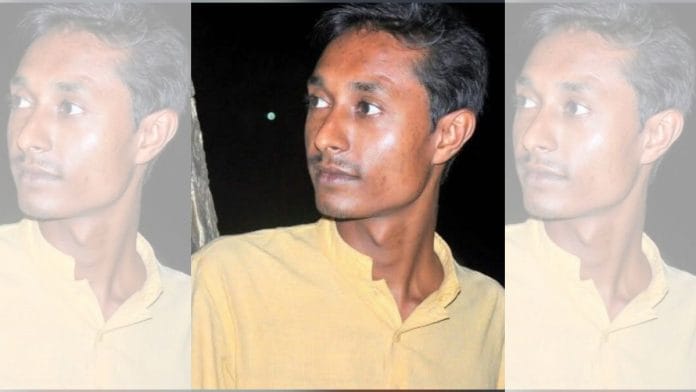



New Delhi: A baby’s death and his 22-year-old mother’s suicide have rattled Bangladesh, drawing criticism from across civil society and rights activists over the treatment of families of detained political figures.
Kaniz Suborna Swarnali ended her life Sunday night in Bagerhat, after killing her nine-month-old son, Najim Hossain. She had reportedly exhausted every legal avenue to secure her husband’s release. After the outrage, according to the Dhaka Tribune, her husband has been granted six months’ bail on humanitarian grounds.
Swarnali’s husband, Jewel Hasan Saddam, president of the Bagerhat Sadar Upazila unit of the Chhatra League, the student wing of the Awami League, was jailed in Jessore and was earlier denied parole to even attend the funeral prayers and burial of his wife and child.
The bodies were brought to the jail premises and he was allowed five minutes to say goodbye to his family.
But after the public outrage over the denial of parole, a high court bench issued the bail order on Monday evening. Lawyer Saeed Ahmed Raja, who represented Awami League student leader Saddam at the hearing, said the court granted bail on humanitarian grounds, according to Bangladesh media reports.
According to Daily Star, relatives allege that the multiple charges against Saddam, who was arrested in August 2024, are fabricated and that he is the victim of political vendetta. Authorities, however, maintain that security concerns had prevented his temporary release.
According to Swarnali’s brother Shubho, she suffered prolonged emotional and psychological stress because of Saddam’s incarceration.
“My sister tried in different ways for a long time to secure his release. This caused severe mental pressure and depression. From that frustration, she drowned her nine-month-old child in a bucket of water and later committed suicide,” the brother was quoted saying.
David Bergman, a British journalist covering Bangladesh wrote on X that under the Yunus government, “large numbers of people have been arrested and detained in connection with murder cases, primarily relating to the July 2024 killings, in the absence of any credible evidence—and without any investigation. Despite this, they are either unable to secure bail or are afraid to even apply for bail, knowing that the police may simply file new cases against them.”
He also added: “That the Yunus government has allowed this situation to persist is deeply troubling—indeed scandalous. That it now appears prepared to pass this unresolved injustice on to an incoming elected government is worse still. Yunus and his government will no doubt get mixed reviews—some good, some bad. But how it dealt with arbitrary detentions will remain (or at least should remain) a huge blot on its—and Yunus’—reputation.”
Bangladeshi journalist Zulkarnain Sami also criticised the handling of the parole request. In a post written in Bangla on X, he refuted claims circulating on social media that no application had been submitted on Saddam’s behalf.
He shared the image of the Awami League student leader’s application and added, “Saddam’s family has been running from the Bagerhat district administration to the office of the Jessore District Magistrate regarding this parole application, but no one has taken firm steps to assist them due to bureaucratic red tape and the excuse of weekly holidays. Rather, the local police’s report states that bringing Saddam could lead to a deterioration in the law-and-order situation. Fearing that thousands of people might gather, they have informed the district administration not to consider the application positively.”
Human rights groups in Bangladesh have repeatedly called for greater transparency and accountability in cases involving political activists. According to Odhikar, a prominent human rights organisation in Bangladesh, between August and September of 2024, police filed criminal cases against 92,486 people, including many for murder. Nearly 400 former Awami League ministers and officials were named in more than 1,170 cases, many of which included vague or unnamed suspects.
The rights body noted, “The interim Bangladesh government of Mohammed Yunus is falling short in implementing its challenging human rights agenda.”
In February last year, Muhammad Yunus’ interim administration had launched ‘Operation Devil Hunt’, a sweeping campaign that led to over 8,600 arrests. Most of those detained were believed to be Awami League supporters. Many others were arrested under the Special Powers Act, a draconian law allowing preventive detention without trial.
(Edited by Viny Mishra)
Also read: Yunus a ‘murderous fascist’, Bangladesh plunged into age of terror—Hasina strikes ahead of polls