





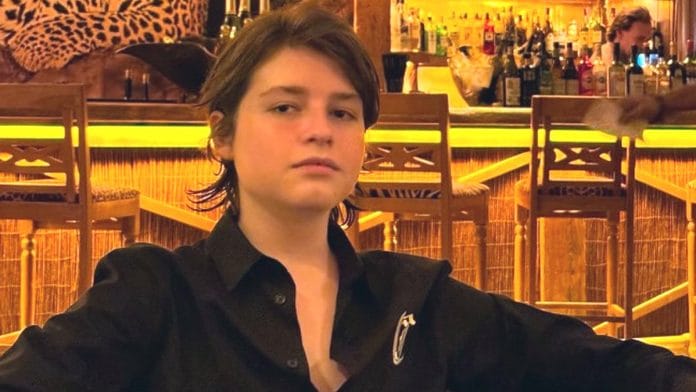



New Delhi: Fifteen-year-old Laurent Simons from Belgium has become one of the youngest people in the world to earn a PhD. But his youth isn’t the only thing causing excitement. His quantum physics research is drawing attention from around the world. And it stands on a foundation laid nearly a century ago by Indian physicist Satyendra Nath Bose.
Belgian newspapers reported that Simons, dubbed the ‘Little Einstein’, received offers from US and Chinese tech companies even a couple of years ago, as well as interest from billionaires who wanted him to ‘join their network’.
Here’s a look at his research and what he plans to do next.
Also Read: How 3 scientists who won physics Nobel brought ‘quantum physics from subatomic world onto chip’
The Bose connection
Simons’ work falls under foundational quantum physics research, which deals with basic atoms and the laws of nature that govern it.
Last month, the University of Antwerp published Simons’ PhD thesis, titled ‘Bose polarons in superfluids and supersolids’. The work builds on research he began during his master’s after an accelerated run through school and college.
Now based in Munich, Simons has been in the news since a very young age because of his brilliant mind. He finished high school at the age of 8 and started a bachelor’s degree in physics soon after at the University of Antwerp. He became the world’s youngest graduate at age 11, finishing his three-year-long bachelor’s degree in just 18 months.
The prodigy then went on to do his master’s, finishing it in 2022 with a thesis on the Bose-Einstein condensate, or BEC, which is often described as a fifth state of matter. Satyendra Nath Bose first developed the quantum statistics that underpin the concept, and Albert Einstein extended those ideas to predict what happens when groups of atoms reach extremely low temperatures. In that state, the atoms clump together and start behaving like one single atom. Because of these unusual quantum properties, a BEC can act as a quantum simulator, allowing physicists to model effects they cannot study directly.
Simons’ research in his master’s thesis picked up on this, and he numerically studied the ‘Hawking radiation’ — a theoretical quantum concept — using the Bose-Einstein condensate.
This thesis was supervised by professors Jacques Tempere and Michiel Wouters from the Department of Physics of the University of Antwerp. They also went on to become his PhD supervisors. Submitted on 18 November 2025, Simons’ PhD research examined another aspect of the BEC as a quantum simulator, this time using a particle called the polaron.
Polarons are ‘impurities’ that interact with a surrounding medium and change properties like mass and energy accordingly. Simons took forward this research by studying and calculating how a polaron behaves in two quantum states — superfluids and supersolids — which he simulated using the BEC.
Also Read: Satyendra Nath Bose, the physicist after whom Higgs boson particle is named
Superhuman dreams
Despite many offers of “no-strings-attached” money that started flowing in when he was still doing his master’s, Simons and his parents wanted his focus to remain on studying.
Even with a doctorate now, the young man is in no mood to take a break. Talking to VTM News, his father said that Simons is already enrolled in another doctoral programme in Munich, this time for “a medical PhD with a focus on artificial intelligence”.
Since he was 9, Simons reportedly wanted to work in medicine and “extend life expectancy.” While he hasn’t said exactly how he will achieve it, he wants to work to make humans immortal.
In an interview with HLN News, Simons said what comes next for him: “I’m working toward my goal of creating superhumans.”
(Edited by Asavari Singh)