





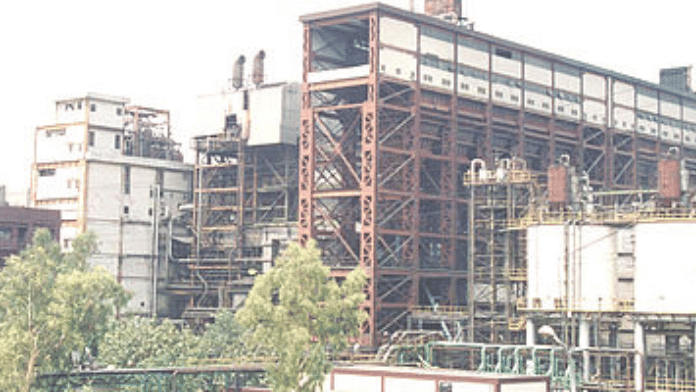



New Delhi: The Delhi government’s power department has proposed a mega transformation of the long-defunct Rajghat Thermal Power Plant into a cultural and nightlife hub. Spread over 28 acres, the proposal envisions cafes, concerts, Sufi and Qawwali nights, museums, recreational zones and a Yamuna River-facing promenade.
The project draws inspiration from adaptive reuse across the United Kingdom, Germany, the Netherlands, and the United States, where abandoned and rusting power plants are being brought back to life as museums, parks, and mixed-use cultural destinations.
Rather than demolishing these massive industrial structures, cities are preserving them as landmarks that tell the story of industrialisation while generating economic and social value. These projects show how obsolete energy infrastructure can be transformed from environmental liabilities into public assets.
Once symbols of pollution and decline, these power plants now stand at the centre of a global shift in how cities treat industrial ruins. Rather than building something new in its place, planners and architects are reimagining power stations as places to gather, learn, and relax.
United Kingdom: Battersea Power Station
London’s Battersea Power Station is one of the most ambitious and famous examples of industrial reuse. Built in 1955 and decommissioned in the 1980s, the coal-fired plant was derelict for decades. A £9 billion redevelopment, completed in 2022, restored its iconic Art Deco turbine halls and four chimneys as a public space.
Engineers reinforced corroded concrete and stabilised steel elements to slow down decay, under the supervision of Historic England, the British government’s statutory adviser on the historic environment.
Today, the site is a mix of heritage and commerce. It includes its very own London Underground station, luxury housing, offices for companies such as Apple, along with shops, restaurants, and guided public tours that showcase the original generators. Millions of visitors arrive each year, and rental income from commercial tenants helps fund long-term maintenance.
Battersea Power Station is a perfect example of how heritage protection can work alongside large-scale mixed-use development.
Also Read: When Kashmere Gate was Delhi’s campus & chaat hub. ‘There was nothing in CP then’
Germany: Museum and cultural powerhouse
Since the late 1980s, Germany has turned several former coal and power facilities in post-industrial regions into cultural landmarks, notably through the 1989 Internationale Bauausstellung (IBA) Emscher Park initiative, which shifted focus from demolition to preservation amid the Ruhr area’s coal industry decline. The best example is the Zollverein Coal Mine Industrial Complex in Essen, which emerged as a pioneering flagship project with formalised preservation planning in 1989. It was designated a UNESCO World Heritage Site in 2001 after its transformation into a cultural and commercial hub had already begun.
Once a vast, rusting coal and coking facility, it was carefully adapted by architects, including Norman Foster. It now hosts the Red Dot Design Museum, while its pithead buildings are reimagined into the Ruhr Museum, which documents the region’s mining and social history.
It hosts exhibitions at museums like the Red Dot Design Museum and Ruhr Museum, major festivals such as Ruhrtriennale and Extraschicht, restaurants including the Casino Zollverein, and seasonal attractions like an ice rink in Zollverein Park. These draws attract around 1.5 million visitors annually, making Zollverein a symbol of Ruhr region renewal, as noted in UNESCO, IBA Emscher Park, and regional reports.
Another project is the E-WERK Luckenwalde power plant near Berlin. Closed after the German reunification, the coal plant reopened in 2020 as a contemporary art centre and renewable energy facility. Its massive turbines were preserved and are periodically activated during performances known as “Power Nights”. The site is powered by woodchip biomass and sells electricity to the grid, helping finance cultural programming.
United States and Netherlands: Power plants as parks
In some cases, former power plants have been transformed into large public parks, prioritising open space and community use. Seattle’s Gas Works Park is an early example.
The plant operated until 1956 and was later converted into a 19-acre park that opened in 1975. Instead of removing all industrial structures, landscape architect Richard Haag preserved towers, tanks, and pipes as sculptural features. Contaminated soil was treated, and debris was reshaped into the “Great Mound,” which offers panoramic views of the city.
The park now hosts concerts, fireworks, and daily recreation, and is one of the most loved public spaces in Seattle.
In the Netherlands, Amsterdam’s Gashouder Westergasfabriek followed a similar path. The 19th-century power plant was closed in 1967 and was gradually redeveloped from the 1990s onwards into Westerpark.
It now holds event halls, restaurants, and creative studios surrounded by lawns, sports fields, and cycling paths. Rusted steel structures were stabilised rather than replaced, allowing the industrial character to remain visible. Public investment ensured environmental cleanup and free access, while festivals and tourism support the local economy.
Also Read: Atta Market was Noida’s CP. It’s now a poorer Sarojini Nagar
Mixed-use and commercial revivals
Some projects combine education, entertainment, and revenue-generating uses to sustain long-term preservation. In Beloit, Wisconsin, the Blackhawk Generating Station is being redeveloped by Beloit College into “The Powerhouse”.
The plant will include an auditorium, swimming pool, wellness centre, and academic spaces, while retaining its historic exterior along the Rock River. Designed as a shared campus and community facility, it aims to strengthen ties between the college and the city.
Despite the differences, all these projects follow similar principles. They begin with environmental remediation and structural reinforcement to address rust, soil contamination, and concrete decay. Adaptive reuse is guided by heritage laws and, in some cases, UNESCO standards.
Financial sustainability comes from a mix of public funding, commercial leases, ticket sales, and events.
(Edited by Insha Jalil Waziri)