





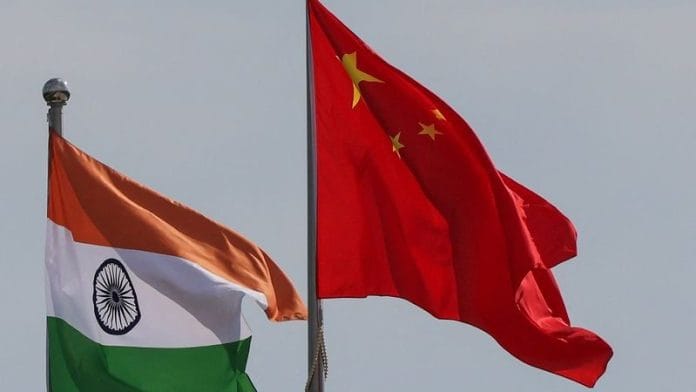



New Delhi: India has launched an e-Production Investment Business Visa, or e-B-4 Visa, for Chinese nationals, in a move to strengthen business ties between the two countries. The Indian embassy in Beijing had announced that the new visa would be introduced on 1 January and must be applied for online without visiting the embassy.
The new visa, which will be processed between 45 to 50 days, has been introduced in light of the growing demand for business travel to India. It covers activities including installation and commissioning of equipment, production, supply chain development, plant design, and training among other areas.
In December 2025, India’s Department for Promotion of Industry and Internal Trade (DPIIT) launched a National Single Window System (NSWS) with simplified visa forms for companies to invite foreign professionals by generating sponsorship letters.
Who can apply?
The new e-B-4 Visa, which requires a sponsorship letter and allows the visa holder to stay in the country for up to six months, needs companies to register on the NSWS portal. No additional recommendations will be required from various ministries.
The new process is also a major boost for Chinese companies like Xiaomi, Vivo, Oppo, and BYD, who have struggled to get visas in the past. According to the Observer Research Foundation, a think tank, visa scrutiny resulted in production losses of $15 billion over four years to Indian electronic makers, many of whom import machinery from China.
The new visa will enable foreign subject-matter specialists and engineers — especially those familiar with Chinese machinery — to travel to India to train local personnel. Industries such as solar, which rely heavily on Chinese-made panels, had been grappling with a skills gap because the technical expertise largely resided with Chinese nationals.
Also read: South Korean President is worried about nationwide baldness. He wants insurance coverage
Thaw in ties
Since the Covid-19 pandemic and the 2020 Galwan Valley clash, bilateral ties between India and China had deteriorated. India suspended tourist visas for Chinese nationals for five years in 2020, after China prevented the re-entry of about 22,000 Indian students after the pandemic.
According to estimates, India issued around 2,000 visas to Chinese nationals in 2024, a sharp decline from about 2,00,000 issued in 2019 before the pandemic and military clashes.
Gradually, relations between the two countries improved. In 2023, China issued 1.8 lakh visas to Indians as part of a series of measures to encourage travel to the country. In early 2025, the Chinese Embassy in India announced that 85,000 visas to Indian nationals were issued in just three months — between 1 January and 9 April 2025.
A few months later, in July 2025, India resumed issuing tourist visas for Chinese nationals. The move came on the back of External Affairs Minister S Jaishankar’s visit to China, his first in five years. This was initially limited to select missions, including in Beijing and Shanghai, but was later expanded to Chinese nationals worldwide in November 2025.
Business visas for Chinese nationals faced heavy delays after the Galwan border clashes. Applications went through additional vetting, resulting in longer processing times and in many cases, outright rejections.
In 2025, as relations warmed through bilateral visits and US President Donald Trump’s aggressive tariff policies, reports emerged that India was planning on relaxing its visa norms for Chinese business professionals.
Till this time, India was only allowing Chinese nationals in technical roles to visit the country, with special preference given to companies engaged in production-linked incentive (PLI) schemes.
(Edited by Aamaan Alam Khan)