





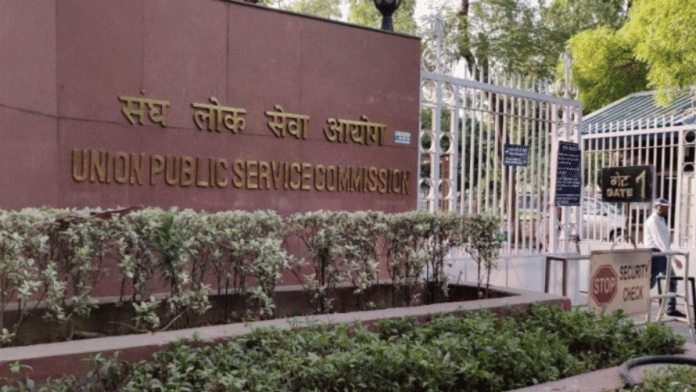



New Delhi: After questions in Parliament about alleged “strict” or “biased” interview boards, the Union Public Service Commission has issued a defence of its interviews—known as personality tests—insisting that they are structured to prevent discrimination of any kind. The UPSC says interview board members are kept unaware of a candidate’s social category and written-exam score, and that allocation of boards is randomised moments before the interaction begins.
“Thus, the question of discrimination or bias in interviews against any category of candidates does not arise,” the Department of Personnel and Training (DoPT) said in a statement.
The rare clarification follows weeks of debate among aspirants. Many say lived experience tells a more complicated story—from panels allegedly inferring caste through names to confusion over what parts of the Detailed Application Form (DAF) are actually visible to interviewers.
How does board allocation actually work at UPSC?
Every interview takes place at Dholpur House, also known as UPSC Bhavan. The Commission emphasises that the process followed on every interview day is fully randomised. Usually, six to eight boards conduct the interviews simultaneously. Each board has one chairperson and is informally referred to by the chairperson’s name. For instance, if Manoj Soni is the chair of a board, candidates refer to it as “Manoj Soni’s board”. Subject experts are also present to assist the interview panel.
The UPSC reiterated that the interview board remains unaware of a candidate’s social category (SC/ST/OBC/EWS/General) and marks in the written exam. This information is deliberately withheld to ensure the board’s judgement is based solely on the 25-30 minute interaction. Board members only have access to the Detailed Application Form (DAF), which includes academic details, work experience, the optional subject, and information relevant to personality assessment.
Candidates often assume that board allocation happens in advance, but the UPSC has clarified that the assignment is generated just before the interviews begin through computerised randomisation. This means no candidate, coaching institute, or official has prior knowledge of which board a candidate will face.
Also read: What’s so special about Putin’s Aurus Senat limousine?
What happens on interview day
When a candidate enters Dholpur House, the day begins with document verification. After this, candidates sit in a common hall. No electronic items, including mobile phones, are allowed inside the interview area.
A few minutes before the interviews begin, a UPSC staff member announces the list of candidates and their allotted boards, and guides them to the designated rooms. “The idea is to keep the process insulated from lobbying or attempts to influence board composition, something aspirants often worry about,” said a UPSC staff member on the condition of anonymity.
However, candidates have a different story to tell. Ketan, who cleared the interview a few years ago, questioned the DoPT statement in an X post.
“This is straight up wrong. The interview board does know the caste and also religion of the candidate. It’s right there in the Detailed Application Form they have in front of them… The board should get only the roll number. Not even the name,” he wrote.
This is straight up wrong. The interview board does know the caste and also religion of the candidate. It’s right there in the Detailed application form they have in front of them. If UPSC really wants to avoid any question of bias, then just saying "we don't discriminate" isn't… https://t.co/CJLNcBxMAj pic.twitter.com/68tubvN8mk
— Ketan (@Ketanomy) December 4, 2025
Many pointed out that names themselves often reveal caste or community. “One thing UPSC can consider is that the panel should not know the candidate’s name, and students should be allowed to use only their roll number… this could dilute caste bias,” wrote another user.
The UPSC has clarified that the board doesn’t get the entire DAF but merely limited information from it.
Interviews are held in two sessions—morning and afternoon. The interaction evaluates a candidate’s decision-making, judgement, clarity of thought, ethics, and awareness of current affairs.
For years, UPSC aspirants have speculated about patterns in board behaviour, hoping to predict which chairperson might be “favourable”. But the Commission’s emphasis on last-minute random allocation and anonymisation of category data seeks to reassure candidates that these speculations have limited relevance.
(Edited by Prasanna Bachchhav)