





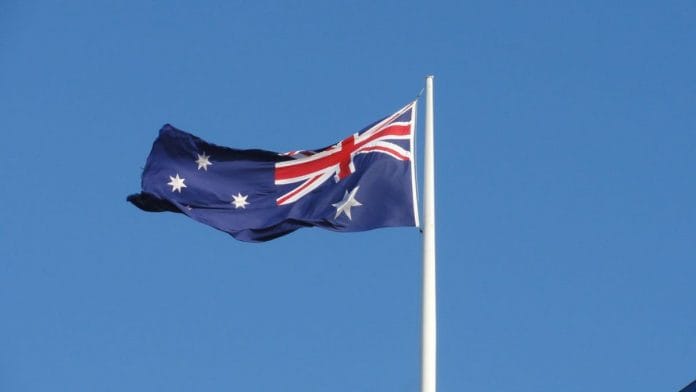



New Delhi: Australia’s decision to move India into Evidence Level 3, the highest-risk category under its Simplified Student Visa Framework, marks a pivotal moment in the long and complex education relationship between the two countries.
Effective from 8 January, the change does not close Australia’s doors to Indian students, but it fundamentally reshapes how those doors are guarded. India now joins Nepal, Bangladesh, and Bhutan in a category reserved for cohorts that demand the most scrutiny.
For the nearly 1,40,000 Indian students already studying in Australia, their daily life remains unchanged. However, for the hundreds of thousands who apply each year, the path forward has become narrower, slower, and far more exacting.
The move also reflects broader changes in global student migration. As the US, the UK, and Canada tighten rules for international students, Australia has become a more attractive alternative.
According to Phil Honeywood, chief executive of the International Education Association of Australia, this trend has also brought an increase in fraudulent financial and academic documents. “By placing a number of these countries into the highest-risk rating level then it automatically enhances any filtering of the student visa applicants to ensure bona fide study motivation,” he said.
What caused this?
The downgrade was the outcome of an intense review conducted by Australia’s Department of Home Affairs late last year. What triggered it was not politics or diplomacy, but patterns in data that officials could no longer ignore. Since mid-2025, authorities recorded a sharp increase in fraudulent documentation linked to Indian student visa applications. Forged academic transcripts, fabricated offer letters, and manipulated financial statements became increasingly common, often traced back to education agents in India advertising near-certain approvals.
The situation worsened when a major fake degree racket was busted by Kerala Police in December, raising concerns in Australia that fraudulent qualifications may have been used for student visas. Queensland Senator Malcolm Roberts cited the case to attack weak enforcement, alleging thousands of foreign students hold fake credentials — claims not backed by any joint India — Australia investigation.
As confidence in the system weakened, the rejection rate for Indian student visas to Australia rose to 24.3 per cent in 2022, the highest since 2012.
Concerns extended beyond entry-stage fraud. Compliance data painted an equally troubling picture after students arrived. Australian authorities noted rising rates of course non-attendance, a noticeable increase in visa overstays, and a growing number of students transitioning to protection visas without credible asylum grounds.
Each breach added strain to Australia’s migration system and reinforced suspicions that student visas were being used less as educational pathways and more as stepping stones to permanent residency.
The sheer scale of applications intensified these pressures. In 2025, India topped student visa approvals, with over 5,000 granted in just the first three months — overwhelming verification systems still recovering from post-pandemic enrolment surges.
Also read: Higher protein, red meat—how the new US dietary guidelines differ from other countries
The mechanism
Patterns within the application raised further red flags. High-performing students with strong academic records were increasingly enrolling in low-level vocational courses that bore little connection to their backgrounds or career histories.
Meanwhile, some agents bundled admissions, financial documents, and pre-written “Genuine Temporary Entrant” statements into packaged deals, further contaminating the applicant pool. Faced with these converging trends, Australia opted to align India’s risk rating with that of neighboring countries in the Indian subcontinent experiencing similar issues, stressing that the decision was grounded in evidence rather than nationality.
The mechanism behind the decision lies in the architecture of the Simplified Student Visa Framework (SSVF), introduced in 2016. The SSVF framework operates on a layered, risk-based model that assesses both the applicant’s country of origin and the education provider’s compliance history.
Countries are classified into Evidence Levels 1, 2, or 3, while institutions registered on the Commonwealth Register of Institutions and Courses for Overseas Students (CRICOS) receive parallel ratings. The higher the combined risk score, the heavier the evidentiary burden placed on the applicants from the moment of lodgement. Behind the scenes, a proprietary algorithm weighs visa grant and refusal rates, detected fraud, student compliance data, and post-study migration behaviours over rolling 12-to-24-months periods. This system allows the Department of Home Affairs to recalibrate quickly when risk indicators spike, as they did in India’s case.
What changes
For applicants now classified under Evidence Level 3, the consequences are tangible. Financial evidence must be exhaustive, accounting for AUD 29,71o in annual living costs alongside full tuition fees, supported by a year’s worth of verifiable bank statements, loan approvals, or sponsor documentation.
Academic records are also under deeper scrutiny, including certified translations and direct verification through official education boards. The Genuine Student requirement, which replaced the earlier Genuine Temporary Entrant (GTE) test, has become a central pillar of assessment. It demands a detailed and coherent narrative explaining course choice, career alignment, and strong ties to India that support temporary intent. Claims are increasingly cross-checked against digital footprints and, in some cases, tested through interviews.
Processing times have also grown longer. Applications that once moved quickly can now take eight to 12 weeks, with checks continuing even after submission. Colleges and universities, concerned about their own risk ratings, have tightened admission screening and reporting rules, which has slowed the process further.
Australian authorities stress that the tougher approach is not meant to shut out genuine students. Most Evidence Level 3 applications are still approved when documents are clear, accurate, and complete.
(Edited by Aamaan Alam Khan)