





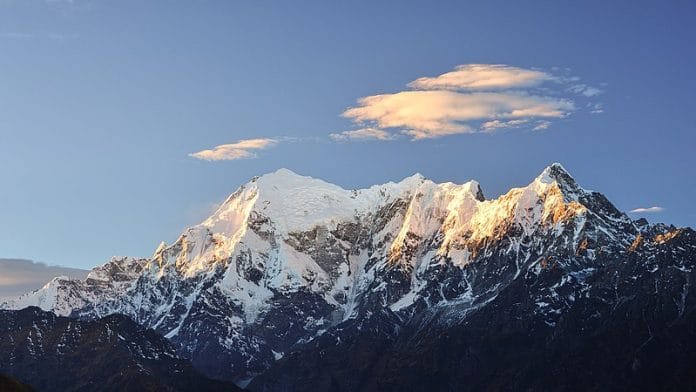



New Delhi: For decades, the Himalayas have been seen as a refuge for people from the polluted air of cities. But new research suggests that even these high-altitude hilltops are not insulated from pollution. Dust storms rising from arid regions of western India, primarily from the Thar desert, are transporting harmful bacteria to the Himalayas, exposing local populations to pathogens associated with respiratory, skin, and gastrointestinal diseases.
The study, conducted by researchers from Kolkata’s Bose Institute under the Department of Science and Technology and published in the international journal Science of the Total Environment, shows how long-distance dust transport and local pollution reshape the Himalayan ecosystem, challenging long-standing assumptions about mountain air being much cleaner.
Researchers discovered that the powerful dust storms carry 41 per cent unique bacteria. They monitored the dust plumes for more than two years. The findings show that these massive dust clouds do not just settle in the nearby area but they travel across densely populated heavily polluted Indo-Gangetic Plain before finally reaching and settling over Himalayan hilltops.
The Thar Desert is one of the major sources of atmospheric mineral dust particles over the Indian subcontinent. According to the study, airborne particles from the desert travel up to Northeast India, particularly during pre-monsoon season (March to May).
Along the way, the dust collects microorganisms from urban pollution, agricultural zones and industrial areas. When it reaches higher altitudes, it carries these microbes into what was once considered a relatively pristine environment.
“In addition to respiratory and skin diseases due to the transported pathogens, vertical uplift injects locally sourced pathogens into high-altitude atmosphere, where they mix with long-range travellers arriving from afar. Together, they reshape the bacterial community floating above the Himalayas, contributing to gastrointestinal infections as well,” said a statement released by the Ministry of Science and Technology.
Also read: There is a ‘natural aerosol factory’ in the Himalayas and it affects climate, study finds
Importantly, the study also found that air rising from the Himalayan foothills carries about 6 per cent unique bacterial types that mainly target respiratory organs. It also tells how both local and distant sources influence airborne microbial risks at high altitudes.
Himalayan population is already vulnerable due to cold temperatures and low oxygen levels, known as hypoxia. Until now, there has been limited scientific evidence connecting airborne microbes to disease outcomes in high-altitude Himalayan regions.
This study fills that gap by showing how transboundary dust movement and local pollution directly affect the microbial makeup of the air—and, in turn, public health.
“Present results highlight the profound impact of atmospheric transport processes on regional bacterial diversity and public health in hill-top regions, highlighting Himalayan atmosphere as a dynamic and global conveyor of life, including pathogens across long distances,” read the study.
(Edited by Theres Sudeep)