





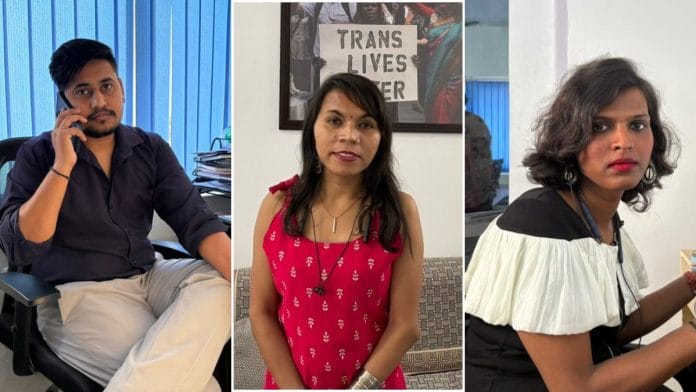


New Delhi: Twenty-nine-year-old Manveer still can’t forget his first visit to a government office in Delhi four years ago. An official looked at his application to change his gender from female to transgender in official documents. Then he looked at him and said: “Why do you need a transgender card? You look just fine to me.”
It’s a familiar script for many transgender persons who approach District Magistrates’ offices. Routine submissions land on the desks of officials who seem unaware of the law, make insensitive remarks, and often ask applicants to explain the rules themselves. They frequently conflate Section 6 with Section 7 of the Transgender Persons (Protection of Rights) Act, 2019, or remain unclear about the distinction between self-declaration and post-transition certification.
Now, that cloud of confusion and ignorance is compounded by the recently amended law, which many say could make the tyranny of bureaucratic paperwork a Sisyphean endeavour.
The paperwork process that many in the transgender community undergo often turns into an encounter with open official apathy and ignorance, retraumatising many in their fragile emotional state. Without a transgender certificate, the ability to make name and gender corrections across Aadhaar, PAN, and voter ID cards remains restricted, limiting access to employment, housing, and trans-specific welfare schemes such as SMILE and Ayushman Bharat’s TG-plus health insurance card.
“The exchanges feel like cross-examination. When we explain, officials simply nod along,” said Manveer.
He has adjusted to using his ‘masculine look’ in everyday situations, whether buying medicines or finding work. It is only at the official level that he remains stuck in what he calls his “dead” identity.
This struggle existed even when the earlier law was in place, granting the community the right to self-identify. Under Section 6 of the 2019 Act, applicants could obtain a certificate recognising them as transgender; under Section 7, they could have a binary gender—male or female—reflected in their documents. Now, the amended Act has done away with this right, replacing it with mandatory verification by a “medical board”, throwing the whole documentation process into further confusion.
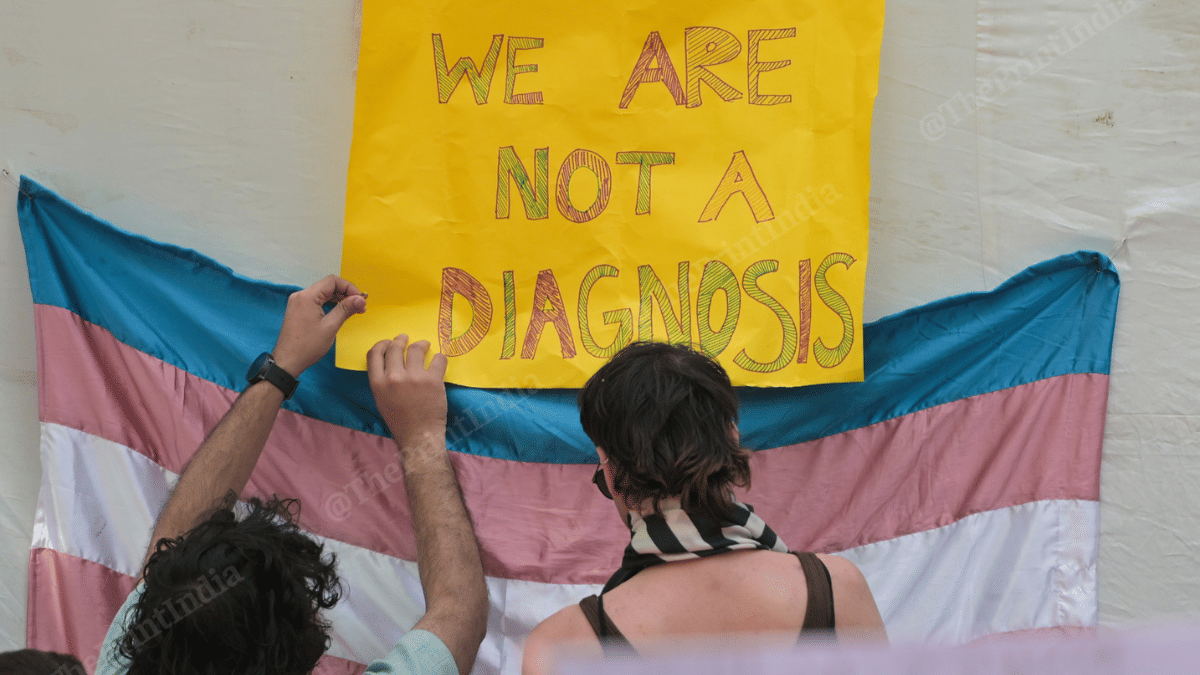
While many foresee a more restrictive system ahead, India’s transgender community has long found even the existing process stacked against it. Applications for transgender certificates are delayed, procedures vary across districts, and government offices become just another public space where ‘appearance’ gets judged or draws quizzical looks.
At the centre of this system is the District Magistrate’s office, which is responsible for issuing transgender identity certificates. On paper, the process is simple: submit the application through the national portal and receive the certificate within 30 days. In practice, it rarely works that way.
By late 2023, the National Portal for Transgender Persons received over 24,000 applications, but only around 15,800 certificates had been issued. Thousands remained pending well beyond the mandated timeline, with little clarity on the reasons for delay. Activists estimate that fewer than 5 per cent of India’s 4.87 lakh transgender population has been able to obtain these identity cards so far.
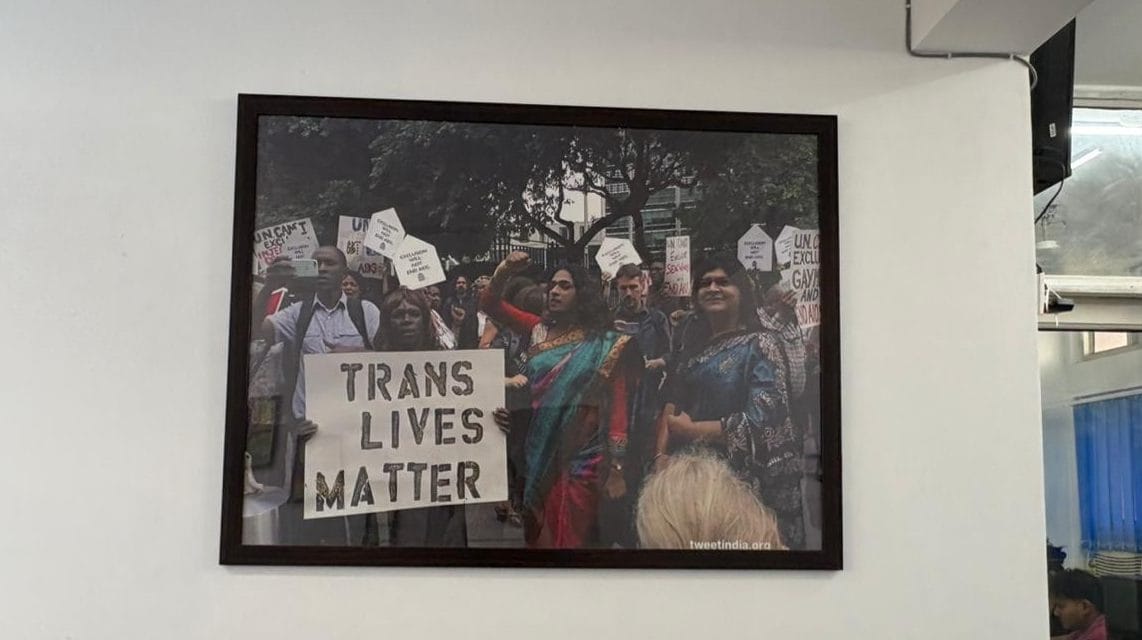
A cycle of explanation, correction, refusal
Securing a transgender certificate is only the first step in an unending battle for legal recognition. For Manveer, that process has stretched over years.
He left his home in Najafgarh in 2014 and began working early, trying to move toward an identity that felt like his own. Over time, he managed to change his name and update his gender on his Aadhaar card. These were partial, hard-won victories.
Getting a transgender certificate itself was a long process. He applied multiple times at different District Magistrate offices—first in Delhi, then in Dholpur, Rajasthan, after being told the process would be faster there. But that did not work out, as officials asked him to change his address to Rajasthan permanently. In the end, he received his TG card from the DM office in Noida in 2023, under Section 6 of the Act.
Back in 2021, during an Aadhaar card camp organised by an NGO, he was able to select a binary gender.
Yet two reminders of his past remain and continue to create practical difficulties. The document still carries an older photograph. On the back, it continues to read “D/O”—daughter of.
“Whenever I try to rent an apartment, people notice it and ask why it says ‘daughter of’ here. I just tell them it’s a mistake,” he said.
It doesn’t always work out smoothly. Sometimes, he finds himself in uncomfortable situations, such as staying in a women’s hostel despite identifying as male. In Sonipat, where he once worked, landlords would refuse accommodation.
Even after updating parts of his Aadhaar, other documents—such as his PAN card and educational certificates—remain unchanged.
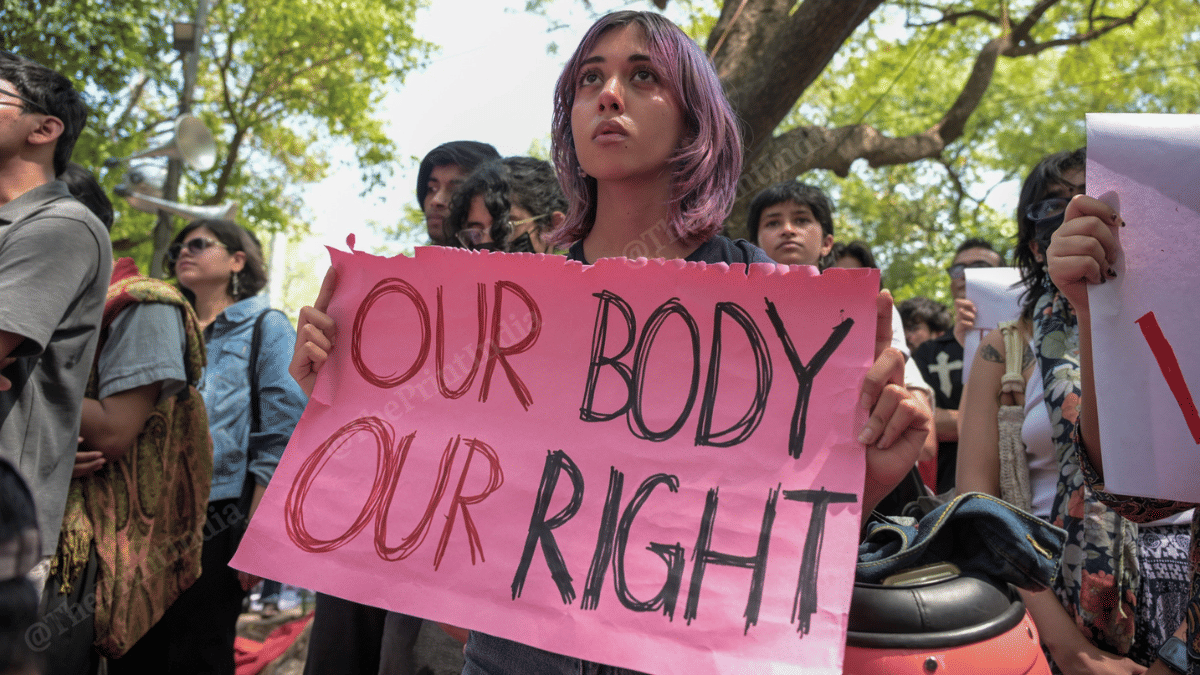
“These mismatches keep causing problems with my job, my bank, and even getting my PF,” he said. “I spent money trying to fix my PAN card, but it didn’t work.”
Manveer has worked a range of jobs over the years, from call centres to consultancy roles, hospital security, and even at Amazon. He also learned stenography and once cleared a government exam, but chose not to pursue it because he feared he wouldn’t be able to live authentically in that environment.
Medical transition brought its own challenges. He started Hormone Replacement Therapy (HRT) in 2018, but had to stop due to financial constraints, resuming it two years later. The process required a Gender Identity Disorder (GID) letter from a psychiatrist and a prescription from an endocrinologist, which he found expensive.
“Initially, I received injections every 15 days. But I stopped going to the doctor and started getting medication from a local chemist,” he said. “I already looked masculine, so it was easier, but I often had to say it was for the gym.”
After undergoing a hysterectomy in June 2025, he applied for a Section 7 transgender ID card to update his gender and have it reflected across official documents. About six months later, his application remains pending. No reason has been given.
Now, tired of waiting, he is considering going to the District Magistrate’s office again—this time, to ask why.
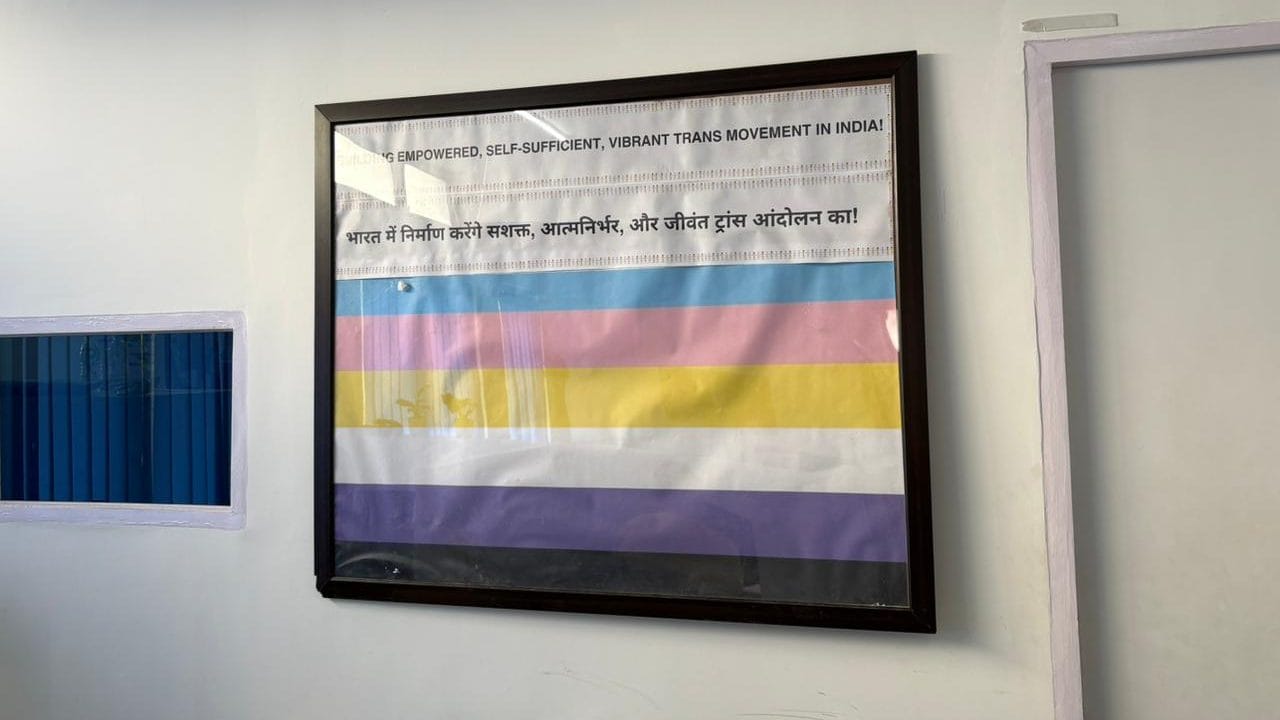
Some officials, however, say the process can work when implemented correctly.
A Sub-Divisional Magistrate in Delhi described his district as one where delays and confusion have largely been addressed.
“It’s been one month since I joined. We now have zero pendency for transgender applications,” he said.
According to him, the process is designed to be straightforward. Applicants are not called in unnecessarily, and clarifications are handled without making the interaction uncomfortable. At the same time, he acknowledged inconsistencies across offices, particularly confusion between Section 6 and Section 7.
He added that while officers are expected to keep themselves updated with laws and amendments, there are no formal training workshops within district offices to ensure consistent implementation.
Recognition on hold
Anika, 22, has been working at the Tweet Foundation for about a year now. Her transition began much earlier, and largely in isolation.
Around four years ago, she started Hormone Replacement Therapy (HRT) without any medical supervision, sourcing medicines directly from chemists, often without a prescription.
“I didn’t consult anyone. I just started on my own. I would show them a photo and say I lost my prescription, and they would give me the medicines. I did this for three years,” she said, adding that this is how it works for many people.
At the time, she was living with her family in Delhi, hiding her transition. As physical changes became visible, her belongings were checked, medicines were found, and after a violent incident with her brother, she left home.
Formal healthcare came much later. She applied for gender-affirming surgery in December 2024, but was given a date in May 2027.
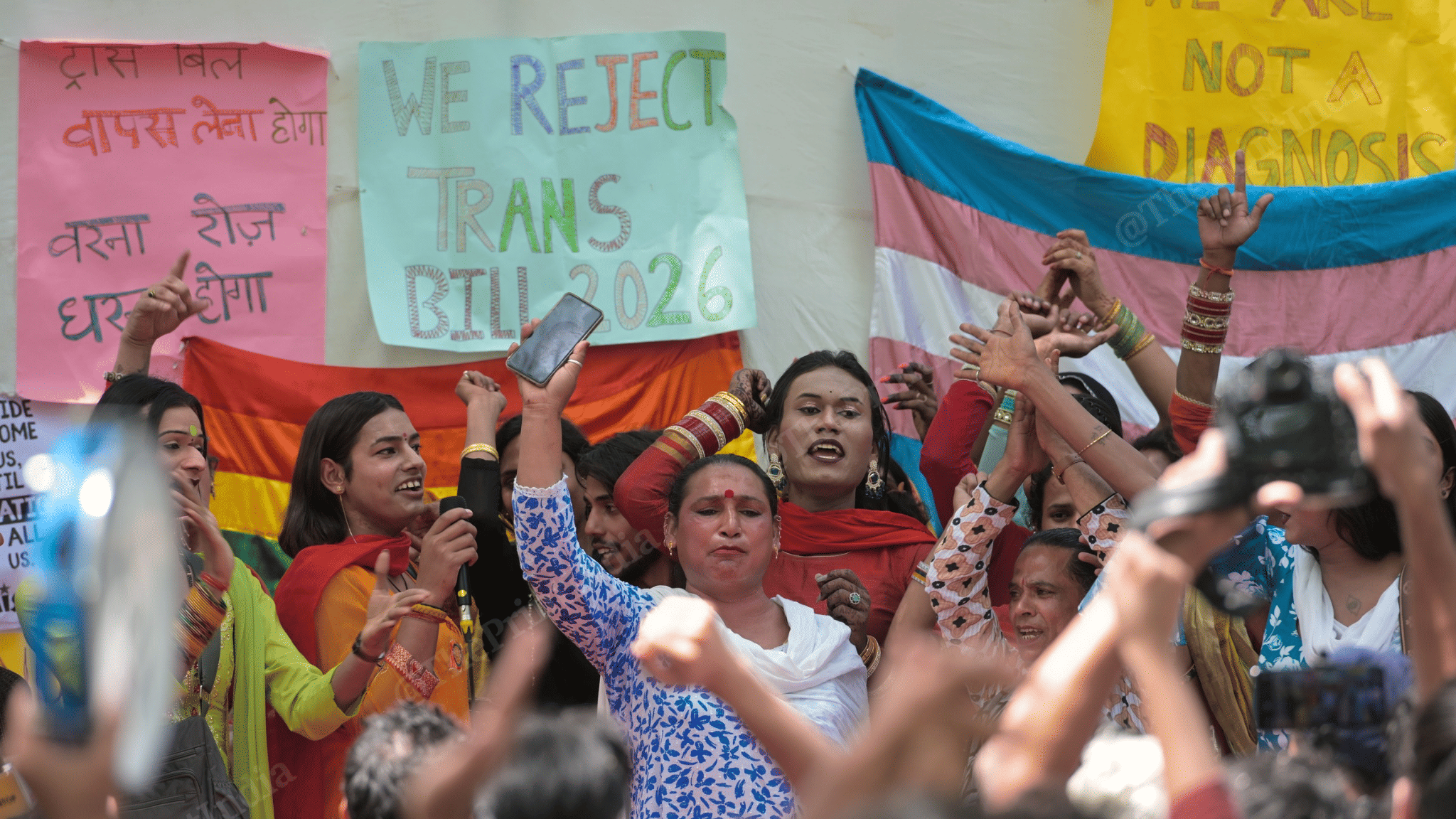
Getting a transgender certificate was also a prolonged process. She applied under Section 6 three to four times and had to visit the District Magistrate’s office herself to check the status.
“I went three or four times, but it didn’t happen. They keep it on pending status and then cancel it,” she said.
Officials told her they wanted to verify applicants in person, as some people apply for TG cards but do not return to collect them. She said this requirement is not part of the official rules, but is often enforced in practice.
Even after receiving her Section 6 TG card, updating her Aadhaar remained difficult. She had to visit the Aadhaar centre multiple times before her card was finally updated to reflect “T” as her gender.
Beyond her own experience, she now works with others facing similar challenges. As part of the Tweet Foundation, she does field outreach, encouraging members of the transgender community to apply for certificates so they can access healthcare and other benefits.
“Many are still unaware of official procedures, while others fall prey to middlemen who inflate costs, charging thousands of rupees for services that are meant to be minimal or free,” she said.
Also read: Transgender cop claims colleagues harassed her. Her reality the norm for India’s queer workforce
A system that doesn’t know itself
Vinshi, 29, described the lack of awareness within government offices about transgender documentation. When she first approached officials, many were unfamiliar with what a transgender certificate even was.
“I explained the entire administrative chain step by step. The file moves first to the tehsil, then to the patwari, followed by the tehsildar, and eventually reaches the SDM and District Magistrate for approval and signatures,” she said.
She also highlighted how complex and costly the process of updating identity documents becomes after transition.
“Updating identity requires multiple documents, including gazette notification, Aadhaar updates, and TG certification. It costs at least Rs 3,000, and if third parties get it made, it could be anywhere between Rs 5,000 and Rs 10,000,” she said.
Her attempts to obtain a Section 7 TG card were repeatedly rejected. She applied four times, but officials said her medical certificates, even though issued by AIIMS, were not valid.
“The DM office told me, ‘Get it signed by the CMO or the medical superintendent,’” she said. She pointed out that her documents already carried an AIIMS doctor’s stamp, but they did not accept it.
“We don’t have time. We can’t sit here dealing with you people all day,” one officer told her.
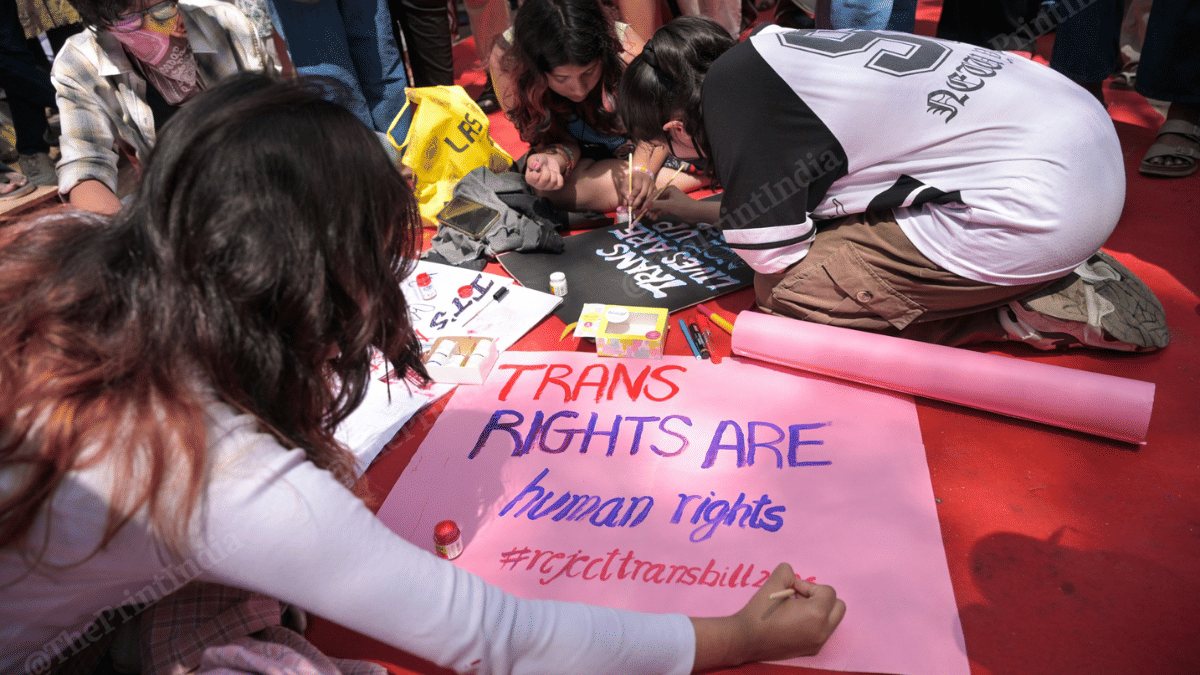
Frustrated, she reworked her application herself, simplifying her medical history statement and resubmitting the documents. Within a month, her application was approved.
Even then, the process did not end there. Her Aadhaar and PAN cards have been updated, but her education certificates remain unchanged. When she approached CBSE, she was asked for a gazette notification and told to update her Aadhaar, despite having already done so.
There is also widespread confusion around documentation rules. Many people assume that a gazette notification is mandatory for all identity updates.
A government employee who has worked closely with the TG portal, speaking on condition of anonymity, said applications are often rejected because they are filed in the wrong district or lack required documents. Even basic procedural errors can lead to delays or rejection.
While the 2020 rules had expanded recognition beyond surgical procedures, accepting hormone therapy and psychiatric evaluation as valid grounds, implementation remained inconsistent, with many officials continuing to follow earlier interpretations of the law. With the amended Act now removing self-identification and introducing medical verification, the framework has shifted again, adding to the confusion on the ground about what qualifies as valid proof and who is eligible for certification.
Also read: ‘Exploited my vulnerability’ — trans dancer accuses Kalakshetra board member of abuse in complaint
Law, medicine and lived realities
For many within the community, gender exists beyond fixed categories.
Abhina Aher, founder and chief executive officer of the Tweet Foundation, said a large number of individuals identify across a spectrum of gender expression, including non-binary identities.
“These distinctions are often misunderstood by the government, which tends to view all transgender-related identities through a narrow binary framework. This creates confusion in policy-making and excludes large sections of the community,” she said.
Referring to the NALSA judgement, she said the principle of self-identification was clearly established. In practice, however, the process has often been intrusive and inconsistent.
“In the initial phase, people were even asked to strip, which we managed to stop. But they still ask intrusive questions about their bodies and even their sex lives,” she said, adding that the 2026 amendment with its requirement of medical verification risks tightening these controls further.
“Why should I tell the world that I have done surgery? Who are you? This is a violation of confidentiality,” she said.
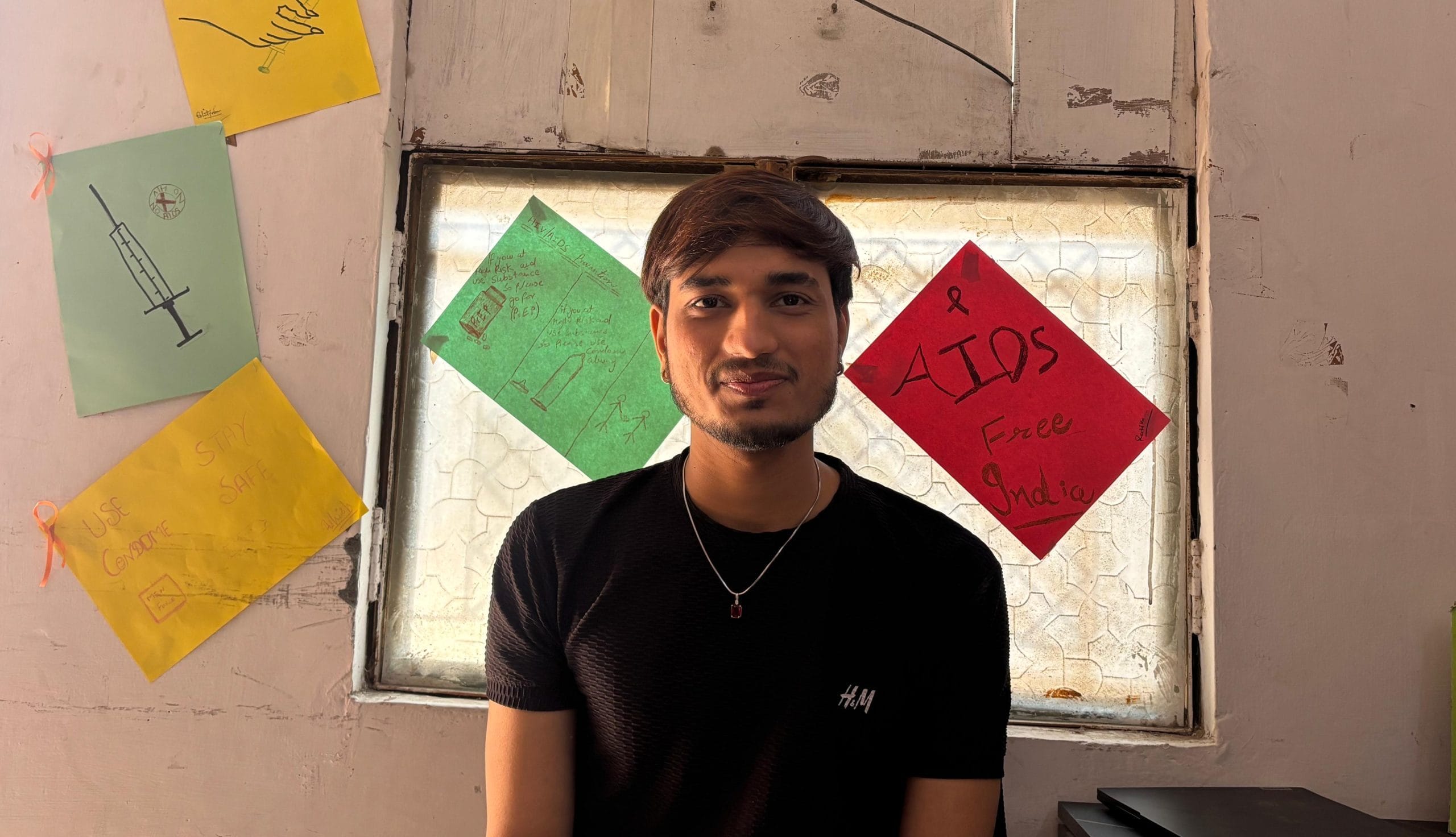
Doctors say the changed framework will also create uncertainty for medical practitioners, who have been following established international protocols.
“Gaps in documentation could now put medical professionals at risk, including the possibility of penalties if the required paperwork isn’t in place,” said Medha Anand Bhave, president of the Indian Association of Aesthetic Plastic Surgeons.
For Anika and others who have not undergone surgery, whether by choice or due to cost, the risk now is being excluded from recognition altogether.
“People will ask for proof now,” she said. “How many times do we have to prove who we are?”
(Edited by Prashant Dixit)