





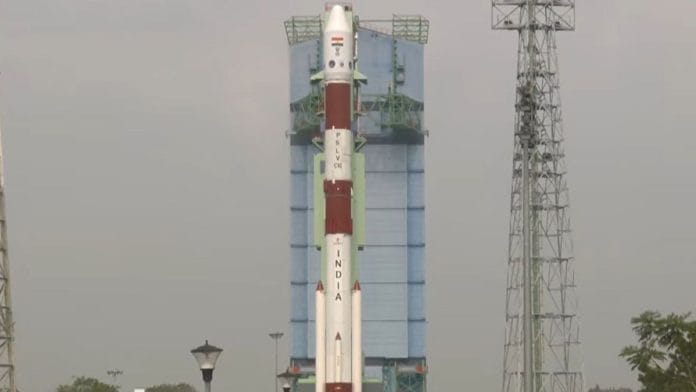



New Delhi: The Indian Space Research Organisation will be reattempting the launch of the PSLV-C62 mission, which failed in January, around June this year, the Union Minister of Science and Technology and Space said on Monday. Jitendra Singh stressed that none of the foreign passengers booked on PSLV-C62 had withdrawn.
“The success rate of our launches is still pretty high compared to any other country around the world. We have been riding high on success, and yes, these failures have come as a disappointment, but we are working to rectify them and be back in the game,” Singh said.
Singh said that the back-to-back failures of ISRO’s workhorse rocket, the PSLV, have in no way impacted its credibility in the global launch market. He said that none of the foreign customers—scheduled to launch with ISRO in the coming months—has withdrawn or shown any lack of confidence in India as a launch partner.
On 12 January, ISRO launched its PSLV-C62 mission carrying the strategic satellite Earth Observation Satellite (EOS-N1), along with 15 other Indian and foreign co-passenger payloads. However, just minutes after launch, the rocket encountered an anomaly and was unable to place the satellites in their intended orbit.
This was the second failure of the PSLV rocket in a row, which raised serious doubts about its image as a reliable commercial satellite carrier. The concerns were even more urgent because this was the first time since 1999, when India launched its first foreign satellite, that the space agency had failed a foreign customer.
Also read: ISRO’s first 2026 mission fails. Workhorse PSLV has a problem
PSLV failures not related
The minister also said that the two PSLV missions that had failed—PSLV-C61 in May 2025 and PSLV-C62 in January this year—were unrelated.
“It wasn’t the same problem. When the first mission failed, there was a detailed assessment, and the problem was fixed. Both the issues were different,” Singh said.
He also added that separate internal and external failure assessment committees have been set up to analyse what went wrong in each of the missions.
(Edited by Theres Sudeep)