








New Delhi: The KID, or Kestrel Initial Demonstration capsule, one of the international payloads on the failed PSLV-C62 mission by ISRO, survived the launch failure and even transmitted data to the ground.
The Spain-based start-up Orbital Paradigm, which developed the 25-kg space capsule, took to X on Tuesday to announce its success. This could be the only surviving payload in the mission, and the only one to have sent back data.
“The KID survived,” read a LinkedIn post by Orbital Paradigm on Monday night, almost 12 hours after the PSLV-C62 mission failed in its third stage of rocket deployment. “We confirmed today that KID survived and transmitted valuable data. Our team is analysing and investigating the trajectory information,” it added.
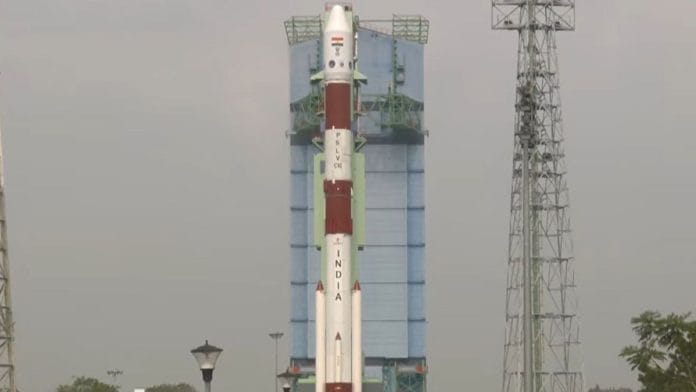
At 10:18 am, the PSLV-C62 mission took off from ISRO’s Sriharikota launch site, with the Earth Observation Satellite (EOS-N1) and 25 other co-passenger satellites from four other countries.
While all the other payloads were going to stay in Low-Earth Orbit, the KID capsule, mounted on PSLV’s PS-4 stage, was expected to re-enter the Earth’s atmosphere. KID was designed by Orbital Paradigm to display a reusable capsule for space missions, and this launch was a technological demonstration for the re-entry part.
Also read: Industry experts call for quality control and accountability with ISRO’s repeat launch failures
Sole survivor
The PSLV mission failed because after an issue was noticed in the third-stage of the rocket, the spacecraft started spinning uncontrollably. According to sources, most of the other payloads are likely to be lost, and were probably never deployed before the rocket went unstable.
However, according to Orbital Paradigm, the KID capsule was unlike other payloads.
“Our KID capsule, against all odds, separated from PSLV C62, switched on, and transmitted data. We’re reconstructing [the] trajectory. Full report will come,” the company said in a post on X on Tuesday.
Apart from Orbital Paradigm, none of the other start-ups or space companies mentioned anything about the survival of their payloads. This includes Indian start-ups Dhruva Space, TakeMe2Space, EON Space Labs, and Brazilian start-up AlltoSpace, as well as a joint UK-Thailand satellite for Earth observation.
The KID capsule was carrying three customer payloads, and the CEO of Orbital Paradigm, Francesco Cacciatore, wrote on his Substack that they had five milestones to consider the mission a success. Based on what the team has shared on social media until now, they could have managed to achieve their minimum level of success.
“Our minimum acceptable level of success — we must establish a connection with KID after separation and transmit system and payload data to the ground until reaching the atmosphere,” he wrote.
Orbital Paradigm also wrote in a comment on LinkedIn that it was a pleasure for them to work with ISRO and NSIL, and that these things happen.
“Space is hard, and it was a shame that the launch was not nominal, but we know that these things happen,” read the comment. “We’ve learned a lot, KID has worked regardless, and we have information to follow.”