





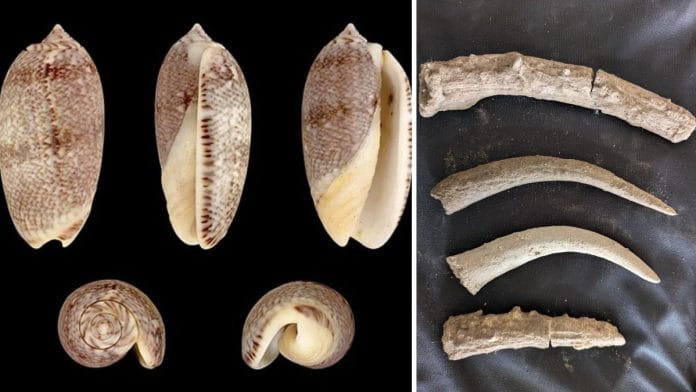



New Delhi: Four leg bones dating back 3,600 years have changed the trajectory of wildlife history in India. Found in an excavated plot in Tamil Nadu, the rare metacarpal and carpal bones belong to the Indian rhinoceros species, firmly establishing the animal’s presence in the southern state during the Neolithic period.
Now a ‘vulnerable’ species according to the IUCN Red List, the Indian rhinoceros once roamed the grasslands of the entire subcontinent. This new discovery by archaeologists from the Tamil University in Thanjavur is one of the first direct pieces of evidence of the one-horned rhino’s habitat extending so far South in history.
Earlier studies have found rhinoceros remains and rhino motifs in Odisha and even in Harappan civilisation sites in Haryana, but not in the Southern Neolithic Zone.
“Particularly noteworthy is the presence of rhinoceros remains, a taxon rarely reported from South Indian archaeological contexts,” the research paper read. “It lies well beyond its present-day zoogeographical range, underscoring the exceptional nature of this find.”
The paper was authored by a group of archaeologists from Tamil Nadu, Kerala, Maharashtra, Gujarat, Bihar, and Madhya Pradesh. Each team excavated and analysed different aspects of the 47,000 archaeological remains found in the Molapalayam area—from animal, human, and plant remains to jewellery and pottery.
The paper was presented during a three-day International Symposium on Archaeological Studies in Tamil Nadu on 26 January.
The Neolithic Age, also known as the last stage of the Stone Age, extends from around 7,000 BCE to 1,700 BCE, marking the beginning of agriculture, masonry, and a somewhat settled lifestyle for humans. Neolithic sites and artefacts have been discovered in Tamil Nadu since the 1800s by colonial officers such as Robert Bruce, but the Molapalayam area, where the rhino bones were found, was discovered only in 2019.
It was excavated in 2021 and 2024 by the same team of archaeologists from Tamil University. The rhino bones were found in the 2024 excavation. Located on the western edge of Tamil Nadu, close to the Palghat Gap, Molapalayam offers an interesting insight into Neolithic cultures and wildlife history.
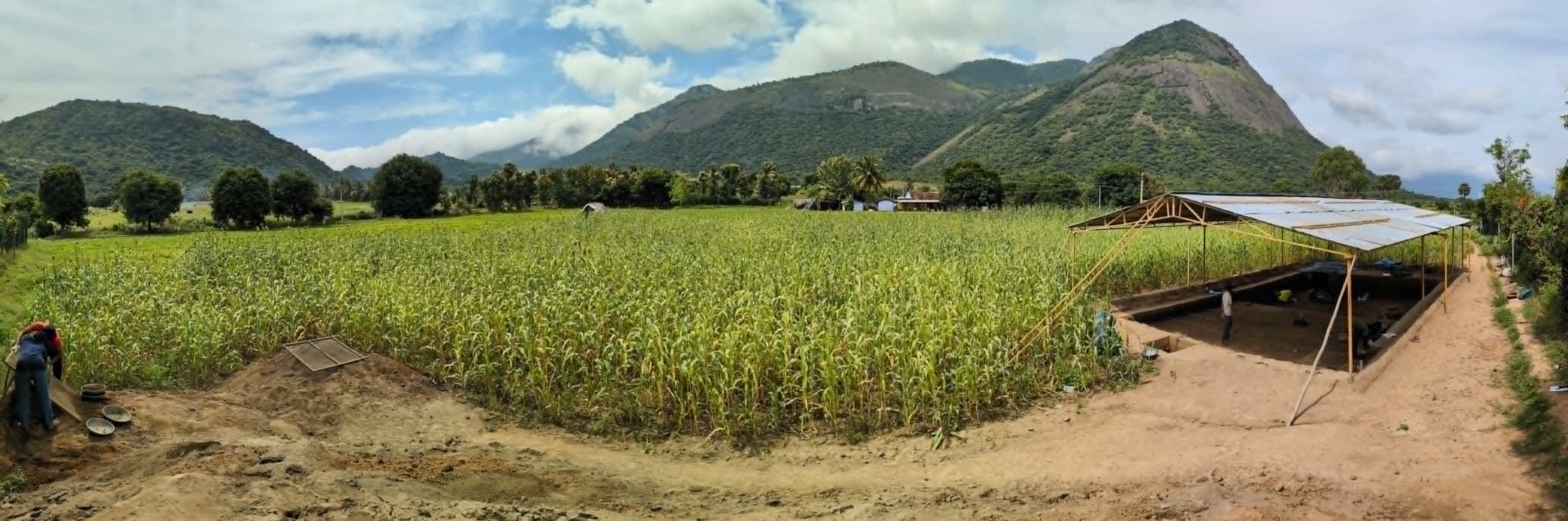
“In the foothills of the Western Ghats, in the Noyyal river basin – we can see why Molapalayam is the perfect place chosen by Neolithic people to establish a settlement,” V Selvakumar, Professor of Maritime History and Marine Archaeology at Tamil University, told ThePrint. He is the first author of the paper.
“Unlike interior Tamil Nadu, this area gets regular monsoon rains, and its right for cultivation too. The forests nearby make it suitable habitat for wild animals.”
Archaeologist GS Abhayan and his student M Ajith, from the University of Kerala, analysed all excavated animal bones against a sample collection in the research laboratory. This helped identify that Molapalayam had fauna such as rhinos, antelopes, leopards, nilgai, blackbuck, monitor lizards, and wild cats.
“The horn and even the skin of the rhino is traded, but the leg bones are usually not used by humans. We were lucky to have found it,” said Selvakumar.
Also read: Big private players showing interest in India’s nuclear sector: Jitendra Singh on SHANTI Act
Neolithic trade significance
Beyond providing insights into the faunal diversity in Tamil Nadu 2,500 years ago, the excavations revealed the trade relations of Neolithic people settled in Molapalayam.
“In the landlocked region of Molapalayam, we found marine shell jewellery and pendants. There was even a pendant made of a freshwater mussel, in the shape of a fish with fins,” said Selvakumar. “This is a strong indication that the Neolithic people engaged in trade and communication with coastal communities, because they could not have made these artefacts themselves.”
Archaeological excavations like the one in Molapalayam often bring together a variety of different fields because of the diversity of artefacts found there. Human settlements provide clues on agriculture, botany, livestock rearing, burial practices, hunting practices, and even the aesthetic sense of the culture.
Selvakumar explained how some deer horns and antlers had been polished, indicating human usage. Global studies have shown that polished deer horns were commonly used as tools for digging.
“It also tells us a little about the ecological characteristics of the grassland near the excavated site, which were suitable habitat for these deer,” said Selvakumar.
The region near Coimbatore, where most of the excavations took place, is no longer the grasslands where deer, leopards, and Indian rhinos once roamed. The cultivation practices started by the Neolithic people 3,500 years ago—featuring kodo millet, black gram, jujubes, and foxtail millet—evolved over millennia, covering the entire area in farmland.
The study is essential for understanding the way of life of the communities that populated the subcontinent millennia ago. It offers surprising similarities between modern humans and those who lived in the Stone Age.
“The Neolithic people chose this place for its geography, and several hundred years later, even now, we have developed this into a civilisation based on the same features,” said Selvakumar. “The people of Molapalayam continue to farm on this land, sow their seeds at the same time every year, and rely on the same rains as the Neolithic people once did.”
(Edited by Prasanna Bachchhav)
This is a welcome news ! Maybe future conservation efforts can try to rehabilitate some from the forests in Assam to ensure we do not lose out on them. In fact, with monsoon floods accounting for lots of rhino deaths in Assam, this approach could help a lot. Not to mention , the immense eco tourism potential it would bring with it to the southern states !