





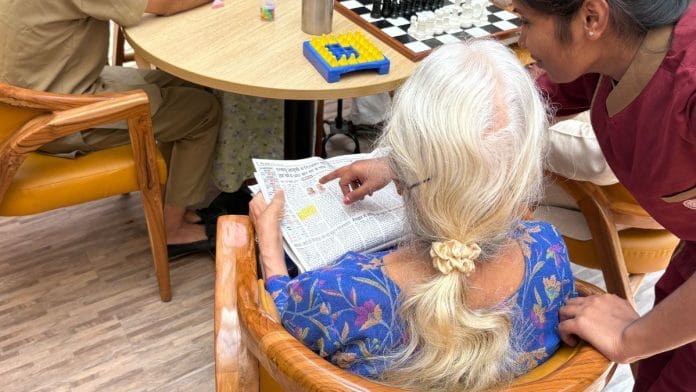



New Delhi: Fears that vaccines can alter DNA or trigger autism and other neurological disorders have persisted for decades, with no evidence for such claims. While misinformation has influenced public debate around vaccines, an emerging body of research points in the opposite direction. Vaccines may do more than prevent infections—they may also help protect the ageing brain.
A recent perspective published in PLOS Biology highlights this added upside, linking vaccination with a reduced risk of age-related neurodegenerative disorders such as dementia. As societies around the world age, authors suggest that these added benefits—if confirmed through long-term studies—could become a potential tool for maintaining long-term brain health.
Scientists are increasingly investigating the connections between viral infections and neurodegeneration. Over the past decade, evidence has accumulated that viral infections contribute to dementia. Some viruses can damage the brain through inflammation and gradual loss of neurons, while others can set off immune responses that target healthy cells.
Evidence of reduced dementia
Herpes viruses are the leading focus of this research. Studies suggest that it can promote processes linked to Alzheimer’s disease, including increased production and aggregation of amyloid-related protein fragments and heightened neuroinflammation. While large-scale clinical and serological studies are still missing, similar links have been established for Epstein-Barr Virus and multiple sclerosis.
The authors suggest that vaccination offers one possible route to prevent neurodegeneration. In addition to blocking initial infection, vaccines reduce the chance that latent viruses will reactivate, as seen with shingles, which occurs when the chickenpox virus resurfaces years after the original infection.
A large observational study published in Nature in 2025 analysed real-world data from Wales following the rollout of the shingles (herpes zoster) vaccine and found that vaccinated individuals showed a significantly lower risk of developing dementia compared with similar unvaccinated individuals. The study leveraged the age-based eligibility cutoff in the vaccination programme in the country.
“What’s so special about our studies is that we take advantage of a very similar scenario to a randomised trial,” Pascal Geldsetzer, Assistant Professor at Stanford University told ThePrint. “In Wales, when they rolled out the shingles vaccine back in 2013, those who had already turned 80 just before the start date were ineligible and remained ineligible for life. This created a vaccine-eligible and a vaccine-ineligible group for which we know that they should be, on average, similar to each other, and therefore were good comparison groups.”
Geldsetzer’s team later replicated the analyses in Canada and Australia and found that herpes zoster vaccination was associated with delayed or reduced dementia occurrence.
Also read: Dementia wave is hitting Indian homes. Families are exhausted, healthcare unprepared
Need for targeted research
Scientists caution that the mechanisms are still unclear. Whether the vaccines help indirectly by preventing viral infections that damage the brain or train the immune system, making it more resilient, requires targeted research. While vaccines may be acting in multiple protective ways, there are currently several limitations to this line of research.
“The critical limitation is that we know that the health behaviours of those who get vaccinated are different from those who do not,” said Geldsetzer. “We have very little, if any, information on these behaviours, like diet or physical activity levels. We, therefore, don’t know if we are merely looking at correlations or actual cause and effect.”
If these vaccines truly keep the brain healthy even in old age, the implications for public health, especially in countries like India, could be significant.
The country’s elderly population is projected to more than double by 2036, and an estimated 7.4 per cent of adults aged 60 and above—nearly nine million people—are already living with dementia.
India has built a robust childhood immunisation programme, but adult vaccination remains fragmented, with low uptake and limited integration into routine public health delivery. Vaccines against influenza, pneumococcal disease, hepatitis, and shingles are available but unevenly used, often depending on private access and awareness rather than systematic policy.
“Adult vaccination is good for prevention of illness, but the added bonus—a reduction in dementia—adds to the benefits that come from vaccination,” said Gagandeep Kang, Director, Enterics, Diagnostics, Genomics and Epidemiology, Global Health, at the Gates Foundation.
Kang explained that these broader benefits are “off-target effects”—beyond a vaccine’s primary intended purpose. Regulatory approvals, however, are based on demonstrated safety and efficacy for the “on-target” outcome—protection against a specific infection.
Regulators must be convinced that the benefits significantly outweigh the risks before granting a licence. However, Kang said, if manufacturers were to conduct large, future studies specifically designed to test whether vaccination reduces dementia risk, and if those trials produced robust results, such evidence could be submitted to regulators for approval.
At the same time, important questions remain. Current research mostly focuses on links between dementia and viral infections. Whether viruses also contribute to movement disorders, if certain viruses are more strongly linked to specific neurological syndromes, or whether vaccines against bacteria or other pathogens confer similar protective effects, are still open areas of investigation.
For India, where both infectious diseases and dementia impose a growing economic and health burden. As evidence accumulates, adult vaccination may be seen not just as protection against seasonal infections, but as part of a broader strategy for healthy ageing.
“As part of a holistic package to promote health and prevent disease, vaccines should be included and would have a role in lowering (not completely preventing) neurodegeneration,” said Kang.
(Edited by Ratan Priya)