





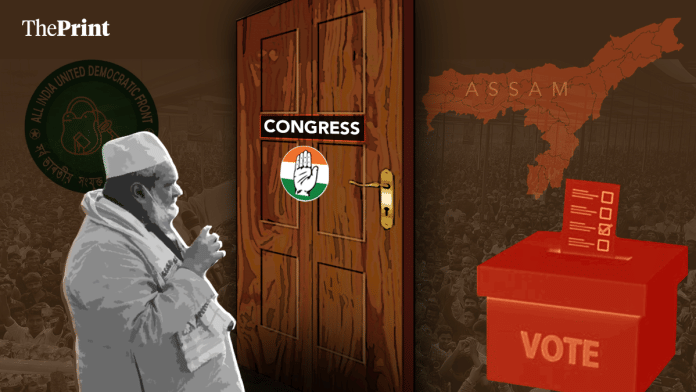



New Delhi: Last November, Badruddin Ajmal, founder of All India United Democratic Front (AIUDF), landed to a warm reception at Guwahati airport in Assam after a nine-month absence. Supporters crowded the arrival area, jostling for selfies and chanting slogans in his praise.
His airport welcome, however, masked a far grimmer political reality.
The AIUDF, once a consequential force in Assam’s Muslim-majority belts and a spoiler in Congress calculations, was wiped out in the 2024 general elections, with Ajmal himself suffering a landslide defeat.
Now, as the Congress prepares for assembly polls in the state this year, it has shut the door on any potential alliance with Ajmal’s party, underscoring a long and uneasy relationship shaped by mutual suspicion, heightened in recent years by the BJP’s rise in Assam.
Ajmal, whose declared assets exceed Rs 155 crore, lost the Dhubri Lok Sabha seat—which he had won in 2009, 2014 and 2019—to the Congress’s Rakibul Hussain in 2024 by a massive margin of over 10 lakh votes.
The AIUDF itself drew a blank in the Lok Sabha polls. It was the first election since the party’s formation in October 2005—when Ajmal, then chief of Jamiat Ulema-e-Hind’s Assam chapter, had brought together several Muslim-led platforms—that it failed to win a single seat in the state.
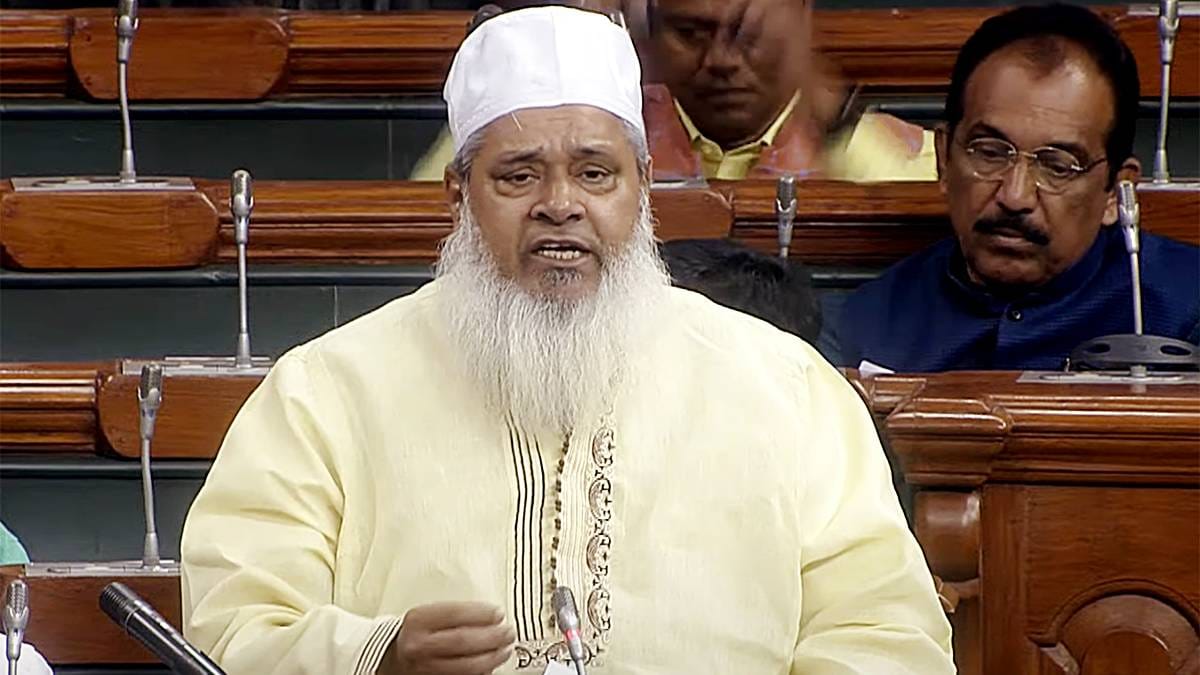
Since then, the Congress has maintained a conscious distance from the AIUDF, loudly rebuffing all its overtures for an alliance ahead of the 2026 polls. Earlier this week, Assam Congress president Gaurav Gogoi ruled out any such possibility.
“After the AIUDF’s complete failure in the last Lok Sabha elections, its political calculation of crossing the electoral hurdle in the 2026 assembly elections by aligning with the Congress is entirely misplaced,” said Gaurav.
The remarks were in response to Ajmal’s statement that “unity” was the only way to defeat the ruling BJP and that he would “100 percent consider” an alliance with the Congress if the party came forward.
In the 2021 Assam polls, the AIUDF was part of the Congress-led opposition alliance that unsuccessfully challenged the BJP. A few months after the elections, the Congress snapped ties with the party, accusing it of working at the behest of the BJP and Assam Chief Minister Himanta Biswa Sarma.
“A dive into Assam’s political past will show you that the Congress, for the most part since the AIUDF’s birth, held Ajmal’s motives as suspect. In that context, the 2021 dalliance was but an exception, which also came under heavy fire from top Congress leaders, including Digvijaya Singh after the election rout,” an office-bearer of the All India Congress Committee (AICC) working in Assam told ThePrint.
Also Read: Lack of development, a need for change — why Assam’s Dhubri voted AIUDF chief Ajmal out
AIUDF-Congress trajectory
The AIUDF was formed in 2005 in the backdrop of the Supreme Court scrapping the Illegal Migrants (Determination by Tribunals) Act, enacted in 1983 when Indira Gandhi was prime minister.
Under the Act, the onus of proving someone an illegal immigrant in Assam lay on the complainant, not the suspect. It was around this time, when apprehensions among Muslims of East Bengal origin were running high, that the Assam United Democratic Front (AUDF)—later rechristened as the AIUDF—came into being.
According to the 2011 Census, Muslims account for 34 percent of Assam’s population.
In the 2006 Assam election, the AIUDF made an impressive debut, winning 10 seats and emerging as a factor behind the Congress’s tally dropping from 71 to 53. The state leadership of the Assam Congress, sensing the threat Ajmal posed to its captive Muslim vote base, felt it necessary not to give him further room to grow.
Tarun Gogoi, then chief minister, conveyed this in no uncertain terms to the Congress high command, which was not averse to embracing Ajmal. However, Gogoi made it clear that he would accept Ajmal only if the AIUDF merged with the Congress.
Gogoi believed that associating with the AIUDF would not only loosen the Congress’s grip over Muslim votes but also alienate majority ethnic groups such as the Ahoms in a state where cultural anxieties over migration and demographic shifts have long animated politics.
The AICC eventually adopted Gogoi’s line as well. “Ajmal was one of us and we have asked him to join the party,” Veerappa Moily, AICC’s then Assam in-charge, told reporters in 2008.
In the 2011 Assam polls, the Congress regained an absolute majority, winning 78 of 126 assembly seats under Gogoi’s leadership. With the Asom Gana Parishad (AGP) depleted, Ajmal’s AIUDF emerged as the principal opposition by virtue of being the second-largest party with 18 seats.
However, it was the AIUDF’s performance in the 2014 Lok Sabha elections—when it won three of Assam’s 14 seats—that once again set the alarm bells ringing for the Congress, already weakened by intense factionalism.
In the 2016 state polls, the BJP ousted the Congress from power after three consecutive Gogoi-led terms. The AIUDF’s tally fell from 18 to 13 assembly seats, while the Congress won 26.
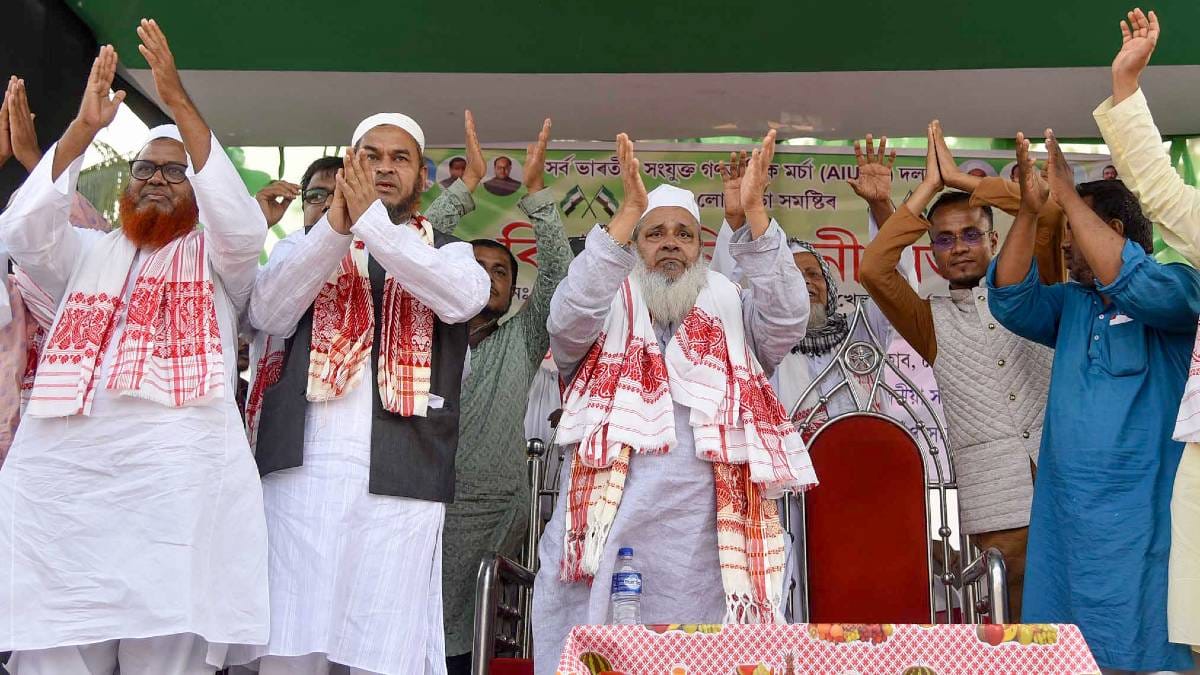
Till the 2019 Lok Sabha polls, when the AIUDF managed to retain only Ajmal’s Dhubri constituency, Gogoi ensured the Congress kept its distance from the party. However, he softened his opposition in his final years, before passing away months ahead of the 2021 elections.
In 2021, the Congress finally inducted the AIUDF into the opposition alliance. The result, however, was underwhelming, with both parties improving their tally by only three seats each as the BJP returned to power.
“We gained nothing out of that alliance. Instead, we suffered losses in Upper Assam, the region with the maximum number of seats in the 126-member assembly. The BJP successfully labelled us a Muslim party. After delimitation, the number of seats where Muslim votes will decide the outcome has come down to around 23. Why will Muslims vote for Ajmal knowing well it won’t make any difference in dislodging the BJP? We will have to convince them that the right choice would be to back the Congress,” said the AICC functionary.
‘BJP’s B-Team’
Branding the AIUDF as the BJP’s “B-Team” is also part of the Congress’s strategy to prevent a split in Muslim votes. The party highlights Ajmal and his family’s “connections with Chief Minister Himanta Biswa Sarma” as part of these efforts, particularly while canvassing in minority-dominated districts.
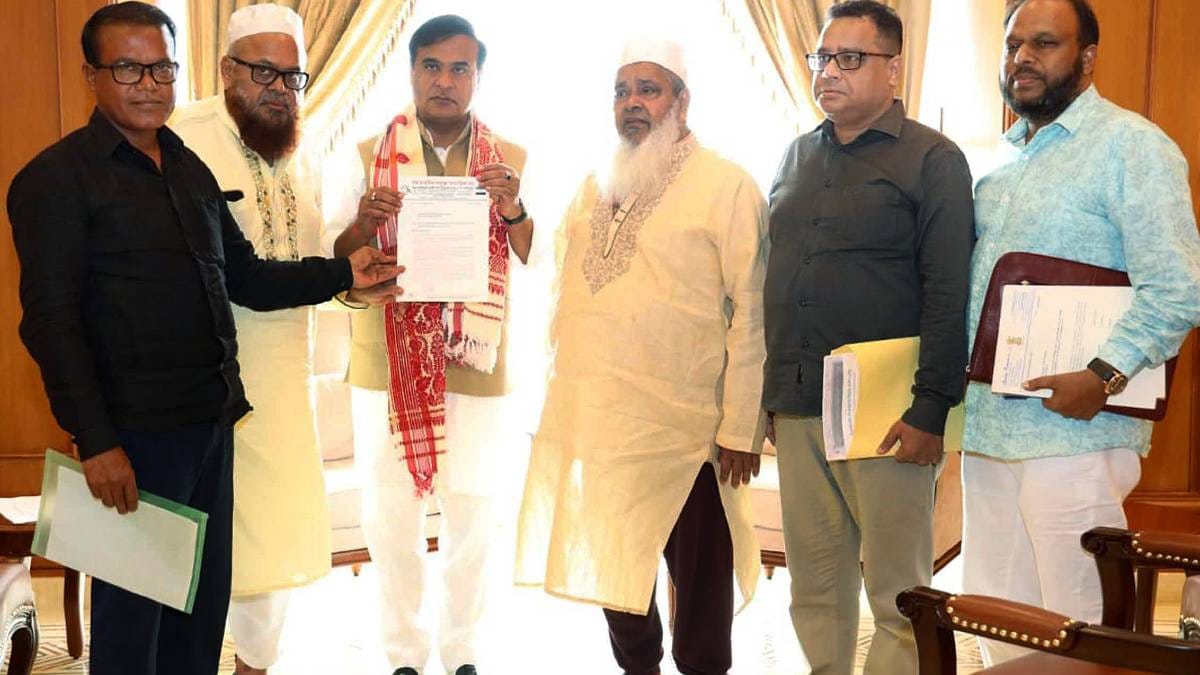
“Ajmal is nothing but a mouthpiece for the BJP like some other parties, including the AIMIM. He has nothing whatsoever to do with the UPA (then Congress-led United Progressive Alliance) as he claims,” AICC general secretary (communications) Jairam Ramesh had said in a statement in 2023.
The Congress, which has already announced that it intends to field candidates on 100 seats, is currently in talks with the Left parties and the Akhil Gogoi-led Raijor Dal for an alliance in the upcoming Assam polls. Akhil Gogoi’s bitter ties with Ajmal are not lost on the Congress leadership.
(Edited by Nida Fatima Siddiqui)
Also Read: From allies to bitter enemies: How Congress-AIUDF relations soured in Assam