







Virudhunagar: Explosions at firecracker units are not unusual in Tamil Nadu’s Virudhunagar district, the hub of India’s firecracker and match industries.
Even so, the intensity and suddenness of the blast at the Vanaja Fireworks manufacturing unit on Sunday were shocking for residents living within a 10-km radius.
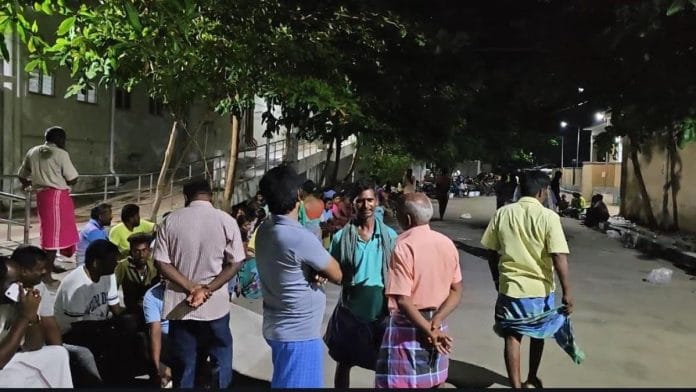
Two days after the explosion that killed at least 23 people, anger and grief are mounting among the victims’ family members, many of whom refused to accept the bodies until late Monday evening, pointing to what they describe as systemic safety lapses at the unit.
Workers and relatives are now demanding fair compensation, strict licensing standards and safety measures at such firecracker units, which they say operate under unsafe conditions.
With Tamil Nadu gearing up for assembly elections on 23 April, the simmering anger in the DMK stronghold of Virudhunagar over what workers describe as repeated safety failures has become a political issue.
But political observers said that while such incidents may have created electoral shifts in some pockets in the past, they have rarely caused major changes in voting in this region.
Chief Minister M.K. Stalin, who has condoled the deaths, has ordered a probe into the accident and deputed ministers to oversee rescue measures.
However, the opposition AIADMK leader Edappadi K. Palaniswami has blamed Stalin for not taking effective measures to prevent firecracker accidents.
“In the past five years under the DMK regime, firecracker factory accidents and loss of lives have become a recurring saga. Despite my consistent pointing this out, the DMK government under MK Stalin has taken no steps whatsoever to ensure the safety of firecracker factories. Instead, they merely conducted a photo-op in a shiny room under the guise of a firecracker factory,” he said in a statement on X.
He said an AIADMK government would enforce safety protocols in firecracker factories.
Tamilaga Vettri Kazhagam chief Vijay also condoled the deaths of the factory workers and said his party would work to prevent such incidents if it came to power.
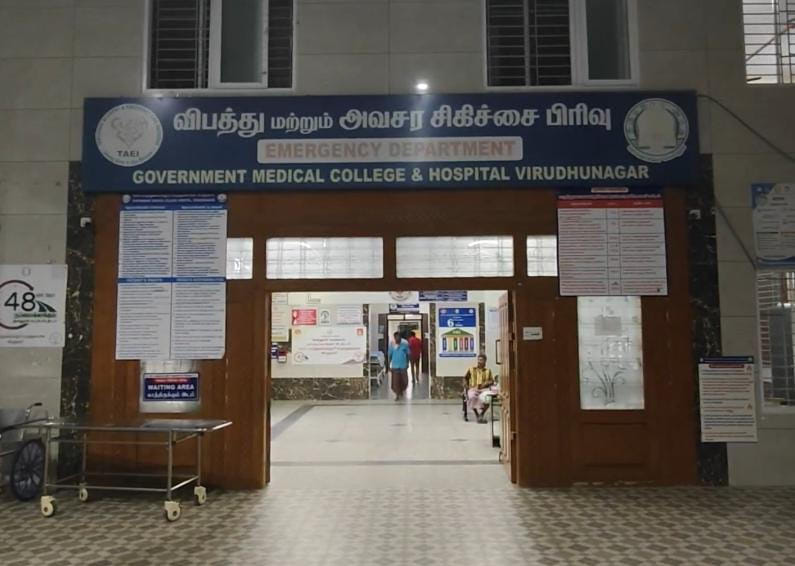
The Virudhunagar Government Medical College Hospital, where bodies were brought for identification, witnessed heated arguments between police officials and members of DMK allies, the CPI (M) and VCK, who were demanding fair compensation for workers.
Also Read: In Tamil Nadu, OPS returns to his AIADMK bastion in a DMK avatar. People say he’s ‘one of their own’
Systemic failures
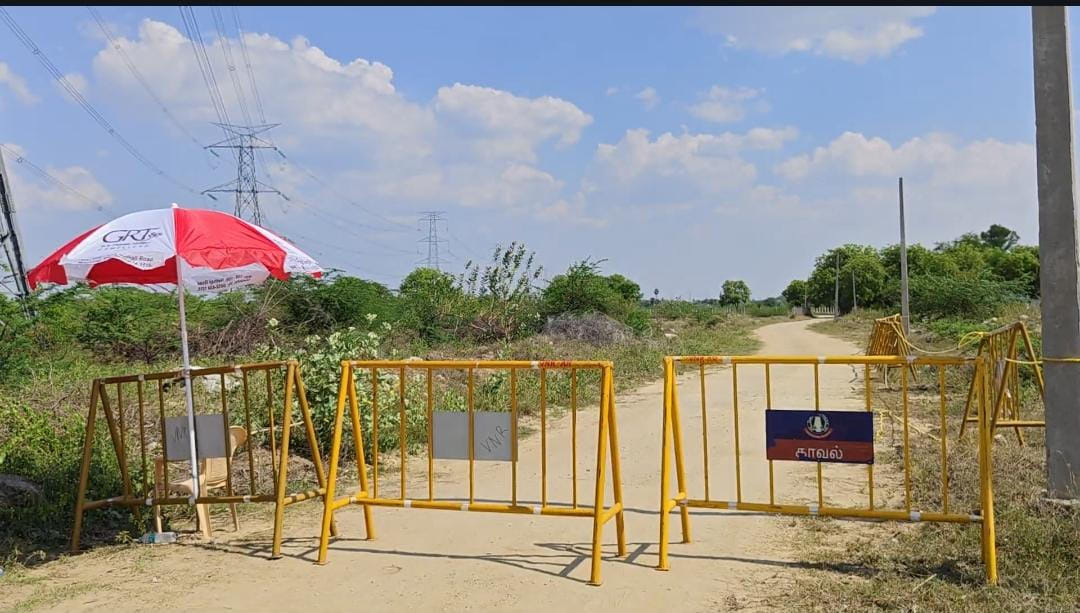
In Kattanarpatti village, where the factory is located, the accident site still smells of chemicals and burnt debris as the forensic department, fire and rescue department, police and others assess the impact.
Many of the bodies were so badly charred that identification remains a challenge for grieving relatives.
“We can only consider earrings, anklets and bangles as the identifying signs because there are only bones left. I never imagined I would see my wife like this,” said Jayanth, as he broke down outside the Virudhunagar Government Medical College Hospital mortuary.
His wife, Ramya, was one of over 20 women threading firecrackers at the factory when the sudden explosion ripped through the factory on Sunday.
While many workers managed to flee, she was among the 23 who lost their lives in the blast. At least six women were injured in the explosion, while 10 members of the fire and rescue teams were injured in a second blast during rescue operations.
The hub of Virudhunagar, Sattur and Sivakasi produces nearly 80 percent of India’s fireworks that are used during festivals and other celebrations.
Such accidents are not uncommon. Workers and families described a pattern of overwork, overcrowding, and alleged regulatory lapses that turns these units into a death trap.
The manufacturing process involves highly sensitive chemicals such as potassium nitrate, sulphur, aluminium, and magnesium powder, where any friction can set off a chain reaction.
Veera, who lost his sister in the accident, alleged that many firecracker manufacturing units were not licensed. He also alleged that leasing or subcontracting these operations resulted in overcrowding for profit.
According to him, proper weekly or monthly inspections and stricter licensing could prevent deaths.
“We have been told that the license of the Vanaja firecracker factory was suspended, but he kept the operations going. Such units are run without any regulatory actions on them with hardly any inspection by officials to keep a check on safety violations,” he said.
He also questioned the conditions at the units.
“One room should not have more than four people, but such units function with almost six to eight people in a room. While the police are saying that only 30 people were present there, we know there were more than 40 people and many of them fled. Why were they working on Sunday when it should be a rest day?” he asked.
However, a government official denied the allegations.
“The unit was licensed, and a detailed investigation is underway to understand the cause of the accident. It is yet to be completed. The main reason and the factors that contributed to this incident will come out after the inquiry,” District Collector N.O. Sukhaputraan told ThePrint.
Under the Explosives Rules, 2008, every unit involved in the manufacture, possession, storage, transport, import, or export of explosives and hazardous substances requires a licence from the Petroleum and Explosives Safety Organisation (PESO).
The rules also mandate minimum distances between sheds, limits on the number of workers and the quantity of explosive material per shed, no work on rest days like Sundays, proper storage, and safety training. District authorities can issue licences only for small quantities.
While family members alleged safety lapses, a lack of regular inspections and insufficient medical facilities, Sukhaputraan said that the administration regularly forms special teams for inspections and suspends factories that violate regulations.
“We are taking measures to prevent such incidents. We are trying to identify the main cause. For the treatment, the special teams have been mobilised from Madurai and Tirunelveli. If needed, we will shift the patients to Madurai also for further treatment,” the collector told ThePrint.
Inadequate compensation and lack of medical facilities
Workers also said the emergency response to Sunday’s blast was delayed.
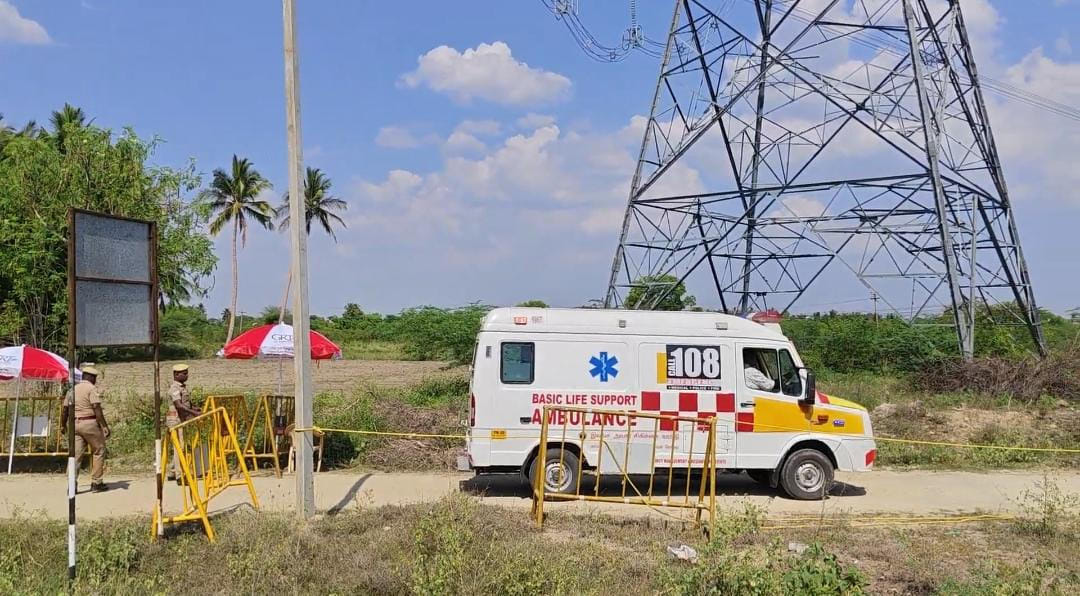
The explosion occurred at 3 p.m., but despite multiple attempts to reach the 108 ambulance service, the ambulances reached the spot only at around 4 p.m. It then took another 20 minutes to transport the injured to the hospital, because the manufacturing unit is located on the outskirts.
“There is no tar road to this firecracker factory manufacturing unit and there is no easy access for an ambulance or rescue facilities. There is no water or first aid facility at these places,” said Murali, who lost his sister-in-law in the accident.
“How are workers supposed to work here? No one even inspects these factors. The hospitals are far away from these manufacturing units; so most often people die by the time they reach the hospital,” he added.
The workers also complained that they were not given fair compensation in case of the death of their loved ones in such accidents, nor were they given any assistance if injured.
The government hospital in Virudhunagar does not have a specialised burns unit with air-conditioning, and medical specialists for burns cases are available only for two days at the Sivakasi Government Hospital.
In response to Sunday’s explosion at the firecracker manufacturing unit in Kattanarpatti, the state government has offered compensation of Rs 4.5 lakh for each deceased worker. The factories association has offered Rs 3.5 lakh for each deceased.
However, many workers said this amount wasn’t enough and are demanding Rs 20 lakh.
“No one goes to work with the intention of dying. We get between Rs 250 and Rs 300 for a day’s work; so people also work overtime,” said Veera, a family member of an accident victim.
“They go to work knowing it can be risky. When people get a compensation of Rs 10 lakh for death from drinking illicit liquor, why can’t we receive a better compensation? Those who go to work and die in the fire are often not even compensated by the companies that employ them,” Veera added.
Virudhunagar’s dependence on firecracker industry
Virudhunagar’s economy depends heavily on the fireworks industry. As the arid landscape offers few employment alternatives, lakhs of people depend on manufacturing, assembling and threading firecrackers at these units.
The workers process the firecrackers through mixing and filling, mostly by hand, during which any form of friction or improper storage can trigger a chain reaction in explosives.
Common triggers include overcrowding in small sheds, long hours, especially during peak festival seasons, inadequate training, and poor safety infrastructure, such as proper exits or fire suppression.
In 2009, a firecracker factory disaster killed over 40 workers in a single unit, with multiple smaller incidents that year claiming dozens more lives.
In a 2012 explosion at the Om Sakthi Fireworks factory in Sivakasi, around 40 people died and over 70 were injured, with the unit reportedly operating without a valid licence at the time.
More recently, in 2021, an accident at a fireworks factory in Achankulam claimed nearly 30 lives.
Many units reportedly operate beyond their licensed limits. And working overtime on Sunday increases the risk as fatigue sets in.
“The excessive heat during the summer months of April, May and June is a major risk. This month itself we saw two such small accidents in our district,” Raghunath, a firecracker factory worker, told ThePrint.
“These chemicals can trigger sudden chain reactions, and there is no certainty of safety. But no matter how many times we raise these issues of lack of safety protocols or overcrowded working spaces, the government does not undertake any stringent measures to ensure our safety,” he added.
Workers allege that smaller blasts occur almost monthly, with workers losing limbs or lives to burns and explosions. Families in villages like Sivakasi have lost multiple members across generations.
Despite this, they say production continues because the industry employs hundreds of thousands directly and indirectly.
However, workers seem to have grown accustomed to these accidents, and many said that they didn’t want to criticise anyone. Instead, they demanded a transparent probe, the arrest of the factory owner and fair compensation.
“I don’t have anything bad to say about the government or make any other political statements. We have seen this happen since our grandfather used to work, and many parties have come and gone,” said Jana, a relative of a deceased.
“Nothing is going to change; people will again go to work, and the fireworks industry won’t be closed. These people will go to other factories because that’s how they will survive,” he added.
(Edited by Sugita Katyal)
I hate the DMK but I have kept myself consistent that it’s mainly fault of the bureaucracy in such instances. Easy to blame the politicians but these lower level bureaucrats are absolutely corrupt.