








Mumbai: Haider Ali Aslam Shaikh, the Congress candidate in Ward no 34, has been breaking a sweat. On the campaign trail, he is promising good roads, reduction in air pollution, a new library and a skill development programme for women in his ward—Malvani Malad in the western suburbs.
Haider is confident that Muslim voters will side with the Congress. “Specifically for minorities, we are always ahead. We help mosques in the area; whenever there are functions, we are always there. So they will support us, even the maulanas are appealing for us,” he tells ThePrint.
With Brihanmumbai Municipal Corporation (BMC) polls just around the corner, candidates from nearly all formations are making a beeline for Mumbai’s Muslim and Dalit voters who, going by the estimates of political parties, make up 18 and 6 percent of the city’s population, respectively.
Largely scattered across the city, Muslim and Dalit votes are concentrated in a few areas: Govandi, Mankhurd, Shivaji Nagar, Mahim, Bandra, Byculla, Dongri, Kalbadevi, Jogeshwari, Malad, Dharavi, Chembur and Kurla.
Of the 227 wards, Muslim voters can impact the outcome in approximately 40 while Dalits hold sway in as many as 15.
Traditionally, pockets of Muslim and Dalit voters in Mumbai have either supported the Congress, the Samajwadi Party or the Republican Party of India (Athawale) led by Union Minister Ramdas Athawale. But in the past decade, two new variables have further complicated the equation: entry of All India Majlis-E-Ittehadul Muslimeen (AIMIM); and emergence of Shiv Sena (UBT) as a potential recipient of Muslim votes.
With all leading political parties contesting the BMC polls as part of largely untested formations, the space for candidates vying for the votes of Mumbai’s Muslims and Dalits is too crowded.
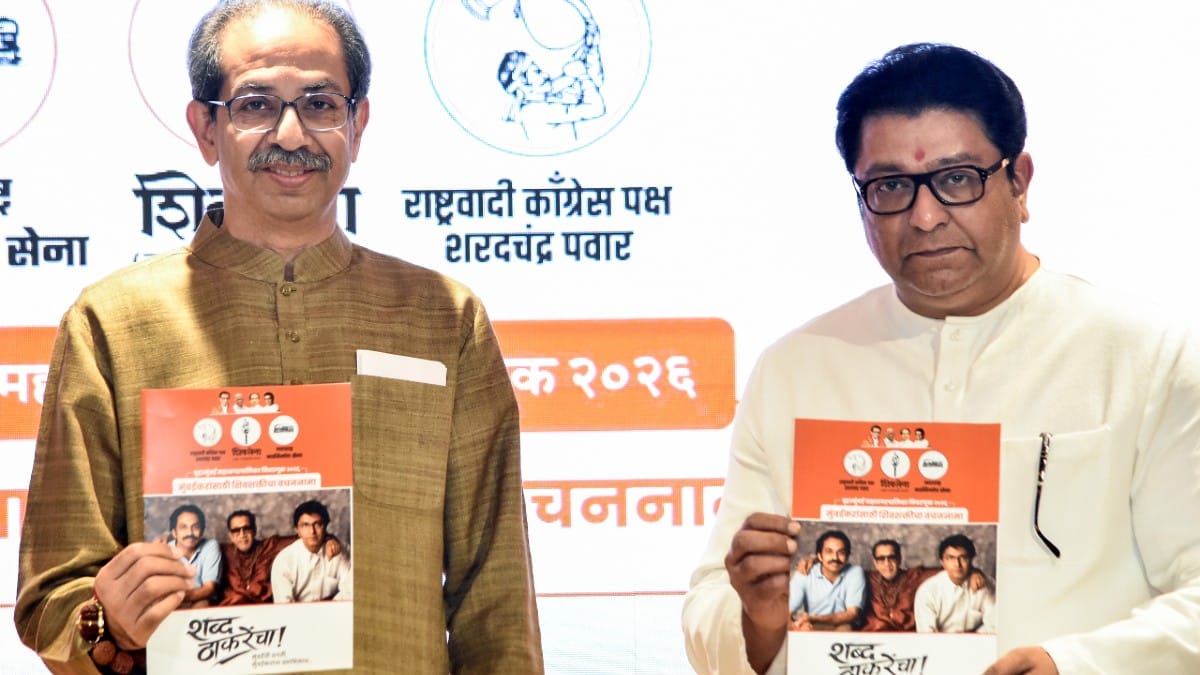
The Uddhav Thackeray-led Sena (UBT) is hoping to ride on momentum it gained among Muslim voters as part of Maha Vikas Aghadi (MVA) in the 2024 Lok Sabha and assembly polls. The party, an offshoot of the Shiv Sena founded by Bal Thackeray which shares a particularly acrimonious past with Mumbai’s Muslim community, is contesting BMC polls as part of an alliance with Raj Thackeray’s Maharashtra Navnirman Sena (MNS) and the Nationalist Congress Party (Sharadchandra Pawar).
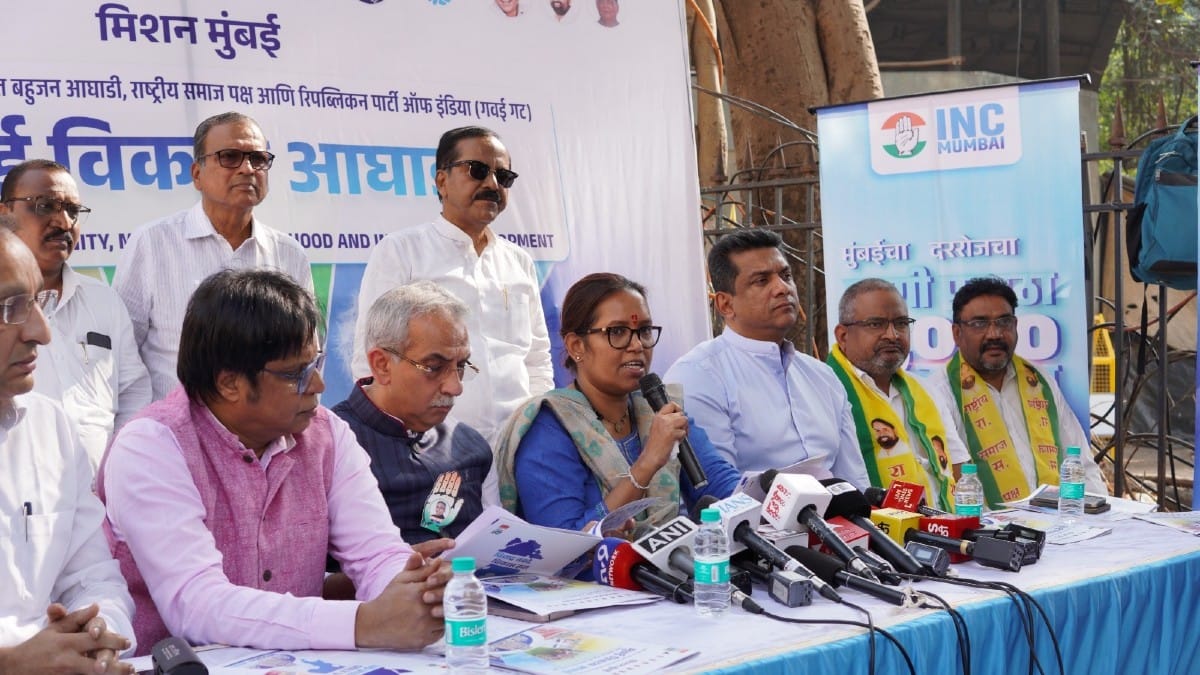
The remaining constituent of the MVA, Congress has allied with Prakash Ambedkar’s Vanchit Bahujan Aghadi (VBA) for the BMC polls. It is hoping that its support base among Mumbai’s Muslims and Dalits is intact despite the party canvassing for MVA ally Sena (UBT)’s mashal (flaming torch) in the 2024 Lok Sabha and assembly elections.
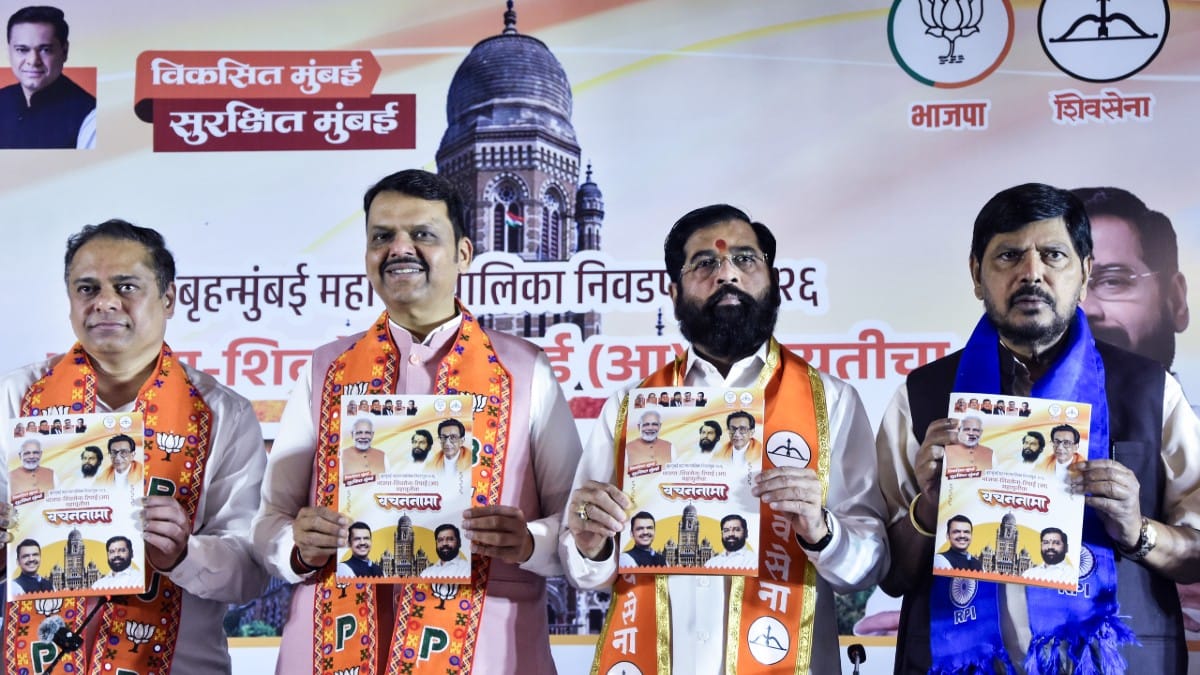
The Ajit Pawar-led NCP, meanwhile, is hoping to make gains in wards with significant Muslim and Dalit populations, with former MLA Nawab Malik as its face in Mumbai. Part of the ruling Mahayuti, NCP had to jump into the fray all by itself on account of its allies’ reservations regarding Malik.
Other claimants to Muslim and Dalit votes include SP and AIMIM.
On the other side, BJP is trying to consolidate Hindu votes with its leaders suggesting that parties like Sena (UBT) are causing “Mamdanisation” of Mumbai—alluding to the possibility of Mumbai having a Muslim mayor.
Explaining how this melee over Muslim votes could play out, Sanjay Patil, a researcher with Mumbai University’s Department of Civics and Politics, tells ThePrint, “Uddhav Thackeray benefited from minority votes as he took a strong anti-BJP line in the 2024 Lok Sabha and assembly elections, and spoke about issues like the Constitution being in danger.”
“Of course, now the issues are different, but it seems his party’s line is diluted. Also, the alliance with Congress and NCP benefited him. But now the Congress is separate; Muslim and Dalit votebanks will be highly fragmented,” Patil says. He adds that the Congress going solo and the MNS-Sena (UBT) joining hands has worked in favour of the BJP since it can “look for consolidation of non-Marathi votes and fragmentation of minority votes”.
Also Read: No desperation in Thackeray reunion, BMC polls a fight to save character of Mumbai, says Aaditya
Uddhav’s bid to retain votebank
Floated as the party of regional pride, the Shiv Sena rebranded itself in the 1980s and 1990s as the protector of Hindutva. In the aftermath of the Bhiwandi riots in neighbouring Thane in May 1984, the Shiv Sena led by its firebrand leader Bal Thackeray adopted the aggressive Hindutva plank. Thackeray made communally charged speeches aimed at Muslims, even referring to them once as “cancer” in a speech at Shivaji Park.
By 1985, the Shiv Sena had taken control of Mumbai’s civic body for the first time by winning 75 seats in the municipal elections.
It was not uncommon for Shiv Sena to target Muslims through the party mouthpiece Saamana. In 2015, an editorial even called for revocation of voting rights of Muslims in India. The party gradually calibrated its move away from communal rhetoric after Uddhav took over the reins.
In the 2024 general election, the Uddhav-led Sena (UBT) won three of the four Lok Sabha seats it contested in Mumbai, out of the total six.
In the assembly elections later the same year, the MVA surged well ahead of the Mahayuti in Dharavi, Mahim, Byculla, Mumbadevi and Versova, all of which are constituencies with concentrated Muslim populations.
However, Mahayuti swept the elections with a resounding majority, winning 235 of the state’s 288 assembly seats. The Sena (UBT) won only 20 of the 90 seats it contested.
Of the 36 assembly constituencies in Mumbai, it won 10.
An analysis by ThePrint of data from the 2024 assembly elections shows Sena (UBT) secured 58 percent of the vote in Byculla, where Muslims are in significant numbers; 37 percent in Mahim and 42 percent in Vandre, both of which have a mix of Marathi and Muslim households; and 43 percent in Jogeshwari East, which has a mix of Muslims and Dalits.
Given these results, some Sena (UBT) insiders are banking on the Marathi-Muslim-Dalit formula to turn the BMC polls into a close contest.
The Uddhav Thackeray-led party has fielded 10 Muslim candidates this time, compared to 5 in the previous BMC polls.
For Sana Mohammed Halim Khan, the Sena (UBT) candidate in ward no 96 (Bandra East), this is her debut election.
She is hoping the work done by her husband Halim Khan, who was earlier the corporator in this ward, will help her electoral prospects. “He was a corporator here from Shiv Sena in 2017 despite a Congress candidate contesting against him. As a corporator he worked and even when his term had expired, he worked for people here in Behrampada,” she says.
Adding, “This is a slum area and densely populated. As I am campaigning, I am understanding that people here need sanitation, water supply, and safety. Through Uddhav ji, I will be able to get them what they want.”
Muslim candidates fielded by Sena (UBT) this time around also include two new acquisitions: Changez Multani, a two-time corporator from Jogeshwari (West); and Rehana Gafoor Shaikh, a retired assistant commissioner of police who joined the party in December.
In 2017, two Muslim corporators were elected on Shiv Sena tickets.
Not just in Mumbai, in Chhatrapati Sambhajinagar too, Uddhav Thackeray inducted Rashid Mamu, a local leader from the Muslim community, despite opposition from a section of local Sena (UBT) leaders. A senior Sena (UBT) leader says the party is confident that Muslims will stick with Uddhav Thackeray just like Lok Sabha and Assembly elections. “Uddhav ji’s face is accepted amongst minorities. So we will be appealing to them that how they voted for us in Vidhan Sabha and Lok Sabha, they should be here too,” says the leader.
Adding, “We have the work we did during COVID where Uddhav ji did not differentiate based on any caste or religion. Also he made sure there were no communal riots in the state during his tenure. When we talk about development, we don’t differentiate. So I feel they will vote for us.”
The Sena (UBT) leader adds that as far as the Ajit Pawar-led NCP is concerned, they have a strong hold on certain pockets. “Those are voters of an individual person and leader, not of the party. Besides, we have fielded minority candidates as well.”
Hinting at the party’s strategy for the BMC polls, another Sena (UBT) functionary adds, “As far as Muslims are concerned, we have seen that they vote for the candidate who has the best chance of defeating the BJP. It doesn’t matter whether the candidate is Muslim or not. He or she just needs to be strong enough to beat the BJP. We have taken care of that.”
The voter list for BMC polls is the same as that of 2024 assembly elections.
But given the wafer-thin margins of victory in municipal elections and the Congress and Sena (UBT) contesting separately, the BMC polls could throw up vastly different outcomes.
Congress leaders say a section of the Muslims voted for the Sena (UBT) because it was allied with the Congress. With Uddhav and estranged cousin Raj joining hands, Muslims could now turn their back on the Sena (UBT), says a Congress leader who did not wish to be named.
When Raj Thackeray floated the MNS in 2006, the party’s flag had representation of Dalits. But the party took a hard-Right turn to embrace Hindutva after 2019, even changing the colour of the party flag to saffron. Between 2019 and 2024, Raj brandished his Hindutva credentials time and again. In 2022, he called for removal of loudspeakers and warned that MNS workers would play Hanuman Chalisa on loudspeakers outside mosques.
Congress tries to regain lost ground
Haider Ali Aslam Shaikh, the Congress candidate in Ward no 34, says Muslims in Mumbai will vote for his party as has been the trend.
Up against many contenders, including the candidate fielded by Sena (UBT), Haider tells ThePrint, “Now that we are separated from Sena (UBT), minorities will go with Congress only. This is my opinion and reading.” Haider, who says he has been working in the ward for the past six years, is the son of Congress MLA Aslam Shaikh and nephew of Kamarjahan Siddiqui—Congress corporator from this ward from 2017 till 2022.
In the 2024 assembly elections, Congress secured 63 percent and 54 percent of the vote in Mumbadevi and Dharavi, respectively, which are Muslim-concentrated areas. In Malad West, where its candidate Aslam Sheikh defeated BJP’s Vinod Shelar, the party secured 50 percent of the total votes polled.
Though it’s difficult to ascertain the Congress’s vote-share among Muslims in municipal elections, 11 of the party’s 31 Muslim candidates had won in their wards in the 2017 BMC polls. The party secured a total vote-share of 16 percent at the time.
But the Congress, which held its first session in Mumbai (then Bombay) in 1885, has seen its electoral fortunes decline steadily over the years.
From 52 wards in 2012, its tally dropped to 31 in the 2017 BMC polls. Its vote share also declined from 21.7 percent to 16 percent.
“If we have to get a good number in the BMC polls, we need our traditional votebank to come back to us. We have seen in the [municipal] council polls, how our voters stuck to us and we performed well when we went solo and not as MVA. I believe minorities will vote for us,” a Congress leader from Mumbai tells ThePrint on condition of anonymity.
Patil explains this further. “Muslim votes got divided post the 1992-93 riots. They felt that despite a Congress government, Muslims were not protected and so they started looking at options like Samajwadi Party in the 1997 BMC polls, which helped Sena and BJP in those elections.”
With mounting anti-incumbency, the Congress’s Dalit vote bank also weakened. Against this backdrop, the alliance with BJP and RPI (Athawale) in 2011 helped the Shiv Sena make inroads among Mumbai’s Dalit voters.
Prakash Ambedkar’s VBA, the Congress’s ally this time around, has not been able to do the same. It has limited presence in pockets like Mankhurd Shivaji Nagar where it secured more than 5 percent of the votes in the 2024 assembly elections.
Maharashtra Congress leader Sachin Sawant says, “There is no particular strategy. We will be campaigning across the city. Also, not going with MNS itself is a message to the minorities.” Sawant had in a social media post condemned Maharashtra CM Devendra Fadnavis’s remark that “Mumbai’s Mayor will be a Marathi, Hindu.”
फडणवीस साहेब, मुंबईचा महापौर दलित वंचित का होऊ शकत नाही? दलित महिला का होऊ शकत नाही?बौध्द, जैन, शीख व अल्पसंख्याक का होऊ शकत नाहीत? डॉ बाबासाहेब आंबेडकर यांच्या संविधानाने समानतेचा मार्ग दाखविला. आज त्याच संविधानाची शपथ घेऊन संविधानिक पदावर बसलेले मुख्यमंत्री त्याच संविधानावर… pic.twitter.com/9R0ldFuEPn
— Sachin Sawant सचिन सावंत (@sachin_inc) January 5, 2026
“Why can’t a Dalit or a minority become a Mayor of Mumbai? Why can’t a woman become a Mayor? His statement is an insult to the Constitution given to us by Babasaheb. I condemn this remark,” Sawant wrote.
On how Mumbai’s Muslims could vote, Suhail Khandwani, managing trustee of Mahim Dargah and Haji Ali, tells ThePrint that the community will first look at the candidate, and then the party. “In the civic elections, voters should not be misled by identity politics. They must judge candidates by their capabilities, experience, and knowledge of civic governance. A candidate should also be a resident of the same ward, so they genuinely understand local issues and can serve the people with accountability and commitment.”
(Edited by Amrtansh Arora)
Also Read: Mumbai’s elite host Cocktails Pe Charcha before BMC polls. Netas & their wives are invited