








Thiruvananthapuram: Something’s brewing between the Communist Party of India-Marxist (CPI-M) and the Social Democratic Party of India (SDPI) in Kerala. For the uninitiated, the SDPI is the political wing of the Popular Front of India (PFI) which was banned by the Union government under the Unlawful Activities (Prevention) Act in 2022.
The SDPI has remained untouchable for mainstream political parties in Kerala ever since the Sharia-inspired assault on Professor T.J. Joseph in 2010. Meanwhile, in Tamil Nadu, it exited the All-India Anna Dravida Munnetra Kazhagam (AIADMK) alliance to join the coalition headed by the Dravida Munnetra Kazhagam (DMK), which includes the Congress, the CPI-M, the Communist Party of India (CPI), the Indian Union Muslim League (IUML) among its allies.
The SDPI has been allotted the Nannilam seat from Tiruvarur district, where its state president Muhammed Mubarak will be on the ticket, albeit on the ‘rising sun’ symbol of the DMK. In West Bengal, too, the SDPI is part of the Left alliance, contesting the seat of Sagardighi.
However, the situation remains markedly different in Kerala. The CPI-M has been raising the bogey of Jamaat-e-Islami and its backing of the Congress-led United Democratic Front (UDF) in the run-up to the Assembly polls in Kerala.
Back in the Palakkad bypoll held in 2024, the SDPI pledging its support for the UDF candidate was also a talking point for the Left. So, the CPI-M’s courting of the SDPI isn’t a straightforward choice.
Also Read: On eve of Kerala polls, a ‘cash-for-votes’ row latches itself to BJP’s Sobha Surendran in Palakkad
Early signs
There were early signs of bonhomie when the SDPI publicly called on the CPI-M to field Shanavas Padhoor as its candidate in Manjeshwaram, and promising support. Padhoor, a Congress turncoat, had won as a Left-backed candidate in the local body polls held in December.
However, the CPI-M had already fixed KR Jayananda as its candidate in Manjeshwaram, but it heeded the SDPI call and fielded Padhoor from the adjacent Kasaragod seat.
Both these constituencies–originally part of South Kanara–see a communal pattern of voting unlike the rest of the Kerala, where the primary contest is between the IUML, representing the UDF, and the Bhartiya Janata Party (BJP).
Meanwhile, the SDPI went on to announce Ashraf KM as its candidate in Manjeshwaram. That the SDPI candidate’s name had an uncanny resemblance to the IUML’s sitting MLA Ashraf AKM did not go unnoticed, and there were calls from many quarters to the SDPI to withdraw its candidate in favour of the UDF.
In the 2016 and 2021 Assembly polls, K Surendran of the BJP had come agonizingly close to a victory in Manjeshwaram.
In fact, for nearly four decades, the BJP has been regularly finishing runners-up in these constituencies, which come under the Mangaluru Vibhaga (division) of the Rashtriya Swayamsevak Sangh (RSS) organisational structure, part of the Karnataka Pranth (region).
The Manjeshwaram equation
The Mangaluru belt is also a stronghold of the SDPI, which has significant cadre strength in the region, with untapped potential according to its own estimation. The beleaguered SDPI assumes that it can shed its pariah status in Kerala only by displaying its electoral relevance and reckons it has most potential for growth in Manjeshwaram and Kasaragod.
This theory put forward by its local leadership isn’t denied by SDPI national president M.K. Faizy, speaking to ThePrint over the phone from West Bengal where he was campaigning in Sagardighi.
The Muslim community which outnumbers Hindus in these constituencies is split between the IUML, the Congress and the CPI-M, but the SDPI believes that it can be a gamechanger in the region if it plays its cards right, as per its Kerala state president CPA Latheef.
The SDPI’s announcement to put up a candidate in Manjeshwaram saw calls even from within the party to for a reconsideration, given how it stayed out of the contest in 2021 to avoid splitting the vote.
Muvattupuzha Ashraf Moulavi, a cleric and a former state president of the SDPI, shared a post critical of the decision on Facebook, which he eventually withdrew. Tulasidharan Pallickal, general secretary of the SDPI, who came out publicly against the decision, went on to quit the party and join the IUML in its wake. Pallickal questioned the SDPI’s commitment to “defeating fascism” (read BJP) which he claimed was being sacrificed at the altar of political expediency.
Eventually, the SDPI withdrew its candidate from Manjeshwaram, citing “pressure” from Muslim organisations. However, the SDPI leaders in the Kasaragod region publicly pledged support to the Left candidate in the constituency.
Also Read: BJP’s new ally in Kerala started out as Kitex CSR drive. It’s going back to basics to woo voters
The IUML factor
The SDPI announcing its candidature in Manjeshwaram in the first place was also a reflection of the party recalibrating its approach on identifying its primary adversary in Kerala.
There is an underlying reason for the SDPI to field a candidate in Manjeshwaram beyond its growth strategy in Kerala. The SDPI and the IUML had been engaged in a turf war across Kerala, from Kasaragod to Erattupetta in Central Travancore.
The SDPI was specifically targeted by the IUML in Manjeshwaram where it had a block panchayat member, and in Erattupetta where it was eyeing a victory in the municipality, having won six wards in 2020.
Not only was the SDPI divested of its block member in Manjeshwaram, but the SDPI was reduced to three seats in Erattupetta, ceding its stronghold of Thevarupara ward to the IUML in the process. The SDPI has traditionally grown outside the IUML stronghold of Malabar and retains pockets of influence in Central Travancore and south Kerala.
Speaking to ThePrint, MK Faizy did not deny the turf war with the IUML in Kerala, even as he questioned the double-standards of the ‘secular’ parties for not practicing untouchability outside Kerala.
An IUML leader in Thodupuzha who did not want to be identified told ThePrint that the party was engaged in checkmating SDPI in these regions not only for its own survival, but also “to preserve communal harmony”.
SDPI’s brand of ‘Positive Politics’
Muslim organisations, with the Jamaat-e-Islami taking the lead, have accused the SDPI of going “soft” on the BJP, even after the withdrawal of its candidate in Manjeshwaram. This must be read in the context of the SDPI entering a tactical coalition with the CPI-M at a time when there is visible Muslim consolidation against the Left Democratic Front (LDF) in Malabar.
Speaking to ThePrint, Muvattupuzha Ashraf Moulavi protested the labelling, “It is not our responsibility alone to prevent the BJP’s growth in Kerala. We are a small party with limited resources,” he said.
“The founding documents of our party in 2009 and our manifesto had always spoken of espousing ‘positive politics’. However, with the ascent of the BJP in the Centre, we revisited our strategy, which ultimately resulted in stifling our growth,” he added.
According to Pallickal, it was at the SDPI conclave held in Bengaluru after the 2024 Lok Sabha polls that the organisation took stock of its strategy and went for an overhaul. He reserved his comment when specifically asked if it had anything to do with the PFI ban in 2022.
Iftar politics
The SDPI held an iftar party in Thiruvananthapuram on 14 March, a day ahead of the notification of the election.
The event was graced by minister V.Sivankutty, whose chances of retaining Nemom in 2026 also rest on the SDPI’s backing. The event also saw participation from multiple Congress leaders in the state capital.
It’s one thing to espouse ‘positive politics’ but how did the SDPI come around to supporting the CPI-M?
“We have not and will not announce our public support for any political party,” said CPA Latheef.
That may be a conscious choice, given how SDPI’s public avowal of the CPI-M can backfire and result in the erosion of its secular and Hindu votebank. But he provided a clue when he admitted that the SDPI would support the same coalition across Kerala, which was also reiterated by Muvattupuzha Ashraf Moulavi.
But how would the SDPI cadres know whom to vote for in the absence of a clear direction? MK Faizy stated that the “SDPI has its own channels to communicate its decision to the cadres”.
NP Chekkutty, veteran journalist and former editor of Thejas, the defunct PFI organ in Kerala, stated, “It’s strange that the SDPI did not hold an iftar in Kozhikode this time around, as they usually do, or else I would have got wind of it,” thus making light of the SDPI reaching an understanding with the CPI-M.
Who would have approached whom in that case? Chekkutty, who started his journalism career as an activist of the CPI-M student wing Students Federation of India (SFI) in the party organ Deshabhimani post the Emergency, made an educated guess. “From the understanding I have gained by working with both organisations, the CPI-M would have made the overture. The SDPI wouldn’t have the gumption to initiate such a conversation with the CPI-M.”
Also Read: BJP is blocking UDF from a landslide. How did Hindutva gain ground in Kerala?
CPI-M’s hide & seek
The CPI-M leaders have been beating around the bush while fielding questions on the party’s tacit understanding with the SDPI. General Secretary MA Baby’s persistent denial in the initial phase to finally coming around to the view that SDPI votes do not have to be denied was reminiscent of biblical ‘denial of Peter’.
Pinarayi Vijayan made a one-line statement denying any association with the SDPI but would not reply to the same question after that, losing his cool instead. MV Govindan adopted the tactic of not revealing his cards until the Congress cleared the air on Jamaat-e-Islami votes.
Politburo member A Vijayaraghavan was more welcoming of the SDPI vote, while veteran AK Balan went to the extent of claiming that the CPI-M sought to refine and reform SDPI by seeking its vote.
The strange thing about the CPI-M’s leaders going in circles on the SDPI is that none of these leaders would clarify if the SDPI was a communal or fundamentalist outfit.
What’s funny is that just months ago CPI-M leaders generally bracketed the SDPI with the Jamaat-e-Islami while attacking the UDF. In fact, that’s just the CPI-M opinion of SDPI as recorded in the party’s official website as well as political resolutions adopted at the Party Congress.
The response of CPI state secretary Binoy Vishwam was even more curious. He initially stated that the SDPI need not vote for the Left, only to change his position the very next day, in conjunction with the CPI-M leaders, without further explanations.
All of this suggests there is more to the CPI-M’s ‘deal’ with the SDPI than meets the eye.
The strategy
The SDPI had initially named 45 candidates, which was later whittled down to 36. A cursory glance at the SDPI candidate list suggests that most of them could do to the UDF in Kerala what the All India Majlis-e-Ittehadul Muslimeen (AIMIM) does to the Congress-led Opposition outside the state. Several of these candidates are fielded in constituencies where there are tight contests between the LDF and UDF.
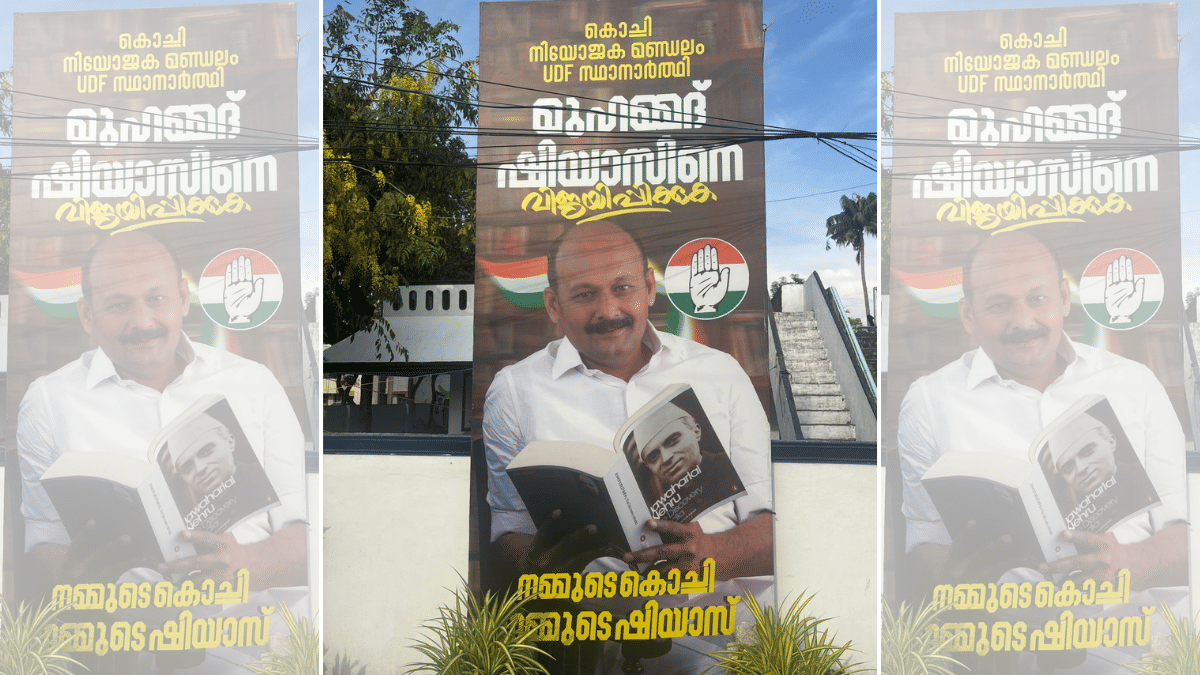
It would make for an interesting post-poll analysis if the SDPI candidates in such constituencies cause the defeat of the UDF candidate. Take for instance, Aneesh Mattancherry, the SDPI candidate in Kochi, where the UDF and LDF are locked in a contest too close to call.
Here the SDPI’s campaign is centred around the allegation that the UDF candidate and Ernakulam District Congress Committee president Mohammed Shiyas acted against the interest of the Muslim community on the Palluruthy school hijab row.
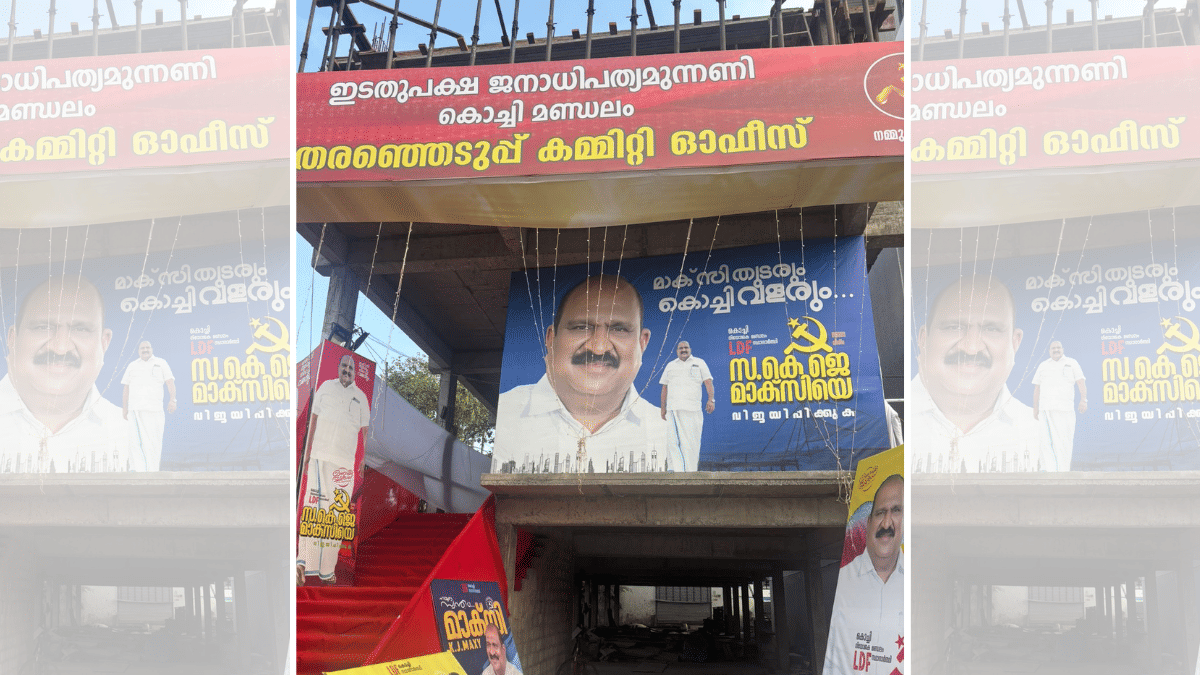
Meanwhile, the LDF campaign is borderline communal here, invoking the fielding of a Muslim candidate in a constituency where Latin Christian votes are in a majority of their own.
There is another strange coincidence in the IUML stronghold of Vengara, in Malappuram. Here the CPI-M candidate Muhammad Sabah Kundukuzhikkal was the SDPI candidate in the same constituency in 2021. With the SDPI not fielding a candidate in a constituency where it polled the maximum votes in the previous Assembly election, he is effectively a joint candidate.
The SDPI’s decision to not field candidates in constituencies like Amabalapuzha where it has considerable strength based on representation in panchayat wards has also been deemed suspicious, given how CPI’s sitting MLA H Salam is alleged to have the blessings of the Islamist outfit.
Karayi Rajan in Thalassery
The SDPI’s cold reaction to the CPI-M fielding Karayi Rajan in Thalassery is even more suspicious, given how he is eighth-accused in the case of the political murder of National Democratic Front (NDF) cadre Muhammed Fazal. The NDF had metamorphosed into the PFI that year.
According to Chekkutty, Fazal was a CPI-M member who shifted allegiance to the NDF in 2006, and this resulted in the Marxist party nursing a grudge against him for ‘apostasy’. The case is still ongoing even after two decades after the Central Bureau of Investigation (CBI) took over the case.
On 7 April, CPA Latheef addressed the press in Palakkad and stated that the case is water under the bridge and SDPI would not take it up anymore since Fazal was a PFI cadre, even if the widow of the victim is still pursuing the case.
Mariyu, the widow, was formerly put up by the SDPI as a candidate in the local body polls. Faizy had a different take on the issue: “We have put up a candidate in Thalassery. The matter should end there”.
The trade-off
Why would the CPI-M go for a tactical alliance with the SDPI and discredit its own talking points on the Jamaat-e-Islami?
According to Chekkutty, it’s a mutually beneficial situation, given how there is a narrative of Muslim consolidation behind the UDF. With the Abdul Nasar Madani-led People’s Democratic Party (PDP) backing the LDF publicly and the SDPI tacitly, this perception is being sought to be averted by the CPI-M.
However, the trouble with such a strategy for the CPI-M is the possibility of the loss of secular and Hindu votes, according to other political observers.
For the SDPI, though, it’s a win-win situation. Not only does this arrangement give SDPI increased visibility, it also yields media traction for the first time since the PFI ban in 2022.
But the SDPI has bigger goals. “We hope to partner with the LDF or the UDF in the future as an ally in Kerala as in West Bengal or Tamil Nadu”, stated Faizy.
Abhimanyu’s blood
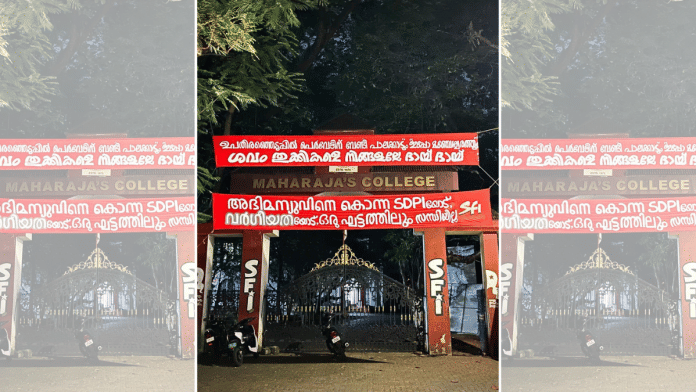
There are some minor irritants. The murder of SFI activist and Ernakulam Maharaja’s College student Abhimanyu, by the Campus Front, the PFI student affiliate, is still fresh in people’s memory.
The CPI-M had sought to take political capital out of the murder by embarking on a collection drive and constructing a house for the family of the tribal student hailing from Idukki.
During the Easter weekend a banner raised in front of the SFI-dominated Maharaja’s College, proclaimed: “No compromise with the fundamentalists who killed Abhimanyu, no compromise with the SDPI.”
(Edited by Nardeep Singh Dahiya)