





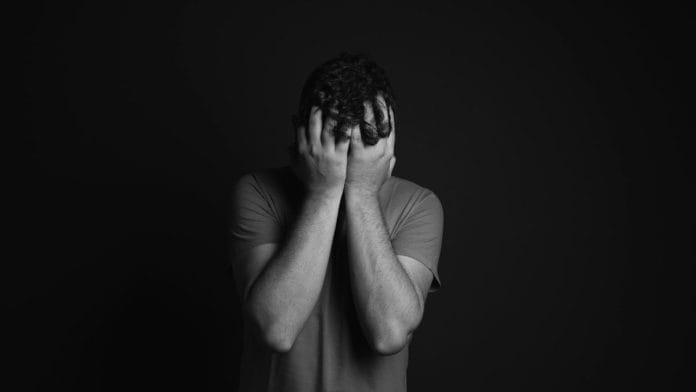



IT IS NOT EASY BEING a man in today’s world. That is certainly what a lot of men believe. The rules are new, the landscape is full of invisible potholes, and nothing that they do seems to be good enough. There is a sense of emerging victimhood, felt strongly by a section of men, resulting in a complex set of often contradictory behaviours, from alpha-male strutting to anxious self-doubt.
Beyond today’s gender reckonings lies a historical context – men grew up torn between the unconditional love without accountability they received from mothers while simultaneously facing limited affirmation but consistent judgement from fathers. This fostered a combination of emotional dependency and chronic inadequacy, resulting in what psychoanalyst Sudhir Kakar called ‘the maternal paradise and paternal tribunal dynamic’. At one level, the man could do no wrong, such was the unquestioning affirmation he received, and on the other, nothing he did was good enough. The mother forgave everything, and the father approved of nothing, leaving the man forever dangling in an emotional no-man’s land.
The lethal mix of entitled narcissism and crippling self-doubt created a fractured sense of self, which the man tried to overcome all his life. As long as masculinity was expressed through external roles – provider, protector, wielder of authority – this inner inadequacy could be masked, but in today’s time, the demands from masculinity are more complex and the old codes aren’t sufficient.
There exists a paradox at the heart of this masculinity. The patriarchal order, which is frequently held responsible for trapping women in its structural folds, does the same to men. While they are the beneficiaries wielding asymmetrical power, they, too, are trapped within its rigid confines. This puts them in a peculiar bind – they can hardly complain that being assigned vastly greater power is unfair even though that power comes with strings attached in terms of the roles they are expected to play.
As women become more expressive and exercise greater agency, for men it seems as if the world is moving in the opposite direction. They continue to feel the burden of traditional expectations while having a whole lot of new ones to navigate. It doesn’t help that for the first time in our cultural history, men find themselves being actively judged by women and often found wanting. This represents a seismic shift in the power dynamic, one for which most Indian men possess neither emotional tools nor vocabulary to deal with. Having never had to consider women’s assessment as consequential, they now face the destabilizing reality of external judgement from those who were expected to obey.
Also read: Indian intellectuals still can’t decode Narendra Modi
As women claim greater freedom in articulating their needs, desires, and identities, men frequently misread these signals through a distorted lens. They interpret signs of female autonomy as sexual availability, something that popular culture encourages, and find it frustrating when the apparent promise does not materialize. The resulting frustration can curdle into resentment or violence.
The emerging decoupling of marriage from sex creates a new set of anxieties. The traditional arranged marriage system virtually ensured that every man had access to companionship regardless of their individual attributes. Today, as women exercise more choice, men with lower social capital feel relegated to the fringes. This produces genuine anxiety, particularly among men who recognize they may not possess the attributes that women freely choose.
Because there is a historic correction taking place in gender power relations, many men feel that the world is arrayed unfairly against them. They perceive institutional structures tilting towards female advantage, their concerns dismissed while women’s complaints receive immediate legitimacy.
This sense of injury breeds a new set of reactions – the rise of men’s rights activism and anti-feminist rhetoric offering both community and explanatory frameworks for men who feel displaced by changing norms. A term such as ‘feminazis’ reflects this perspective, equating efforts towards equality with oppression because any reduction in historical privilege feels like discrimination to those men accustomed to advantage. The structural advantages they enjoy are invisible to them; what seems real is the incremental privilege they see women enjoying. Individual instances of women taking undue advantage of this new gender narrative help legitimize this sense of grievance.
Even the communication between genders has become a minefield. The male defensive refrain of ‘not all men’ collides with female frustration at having systemic critique derailed by individual exceptions. From a woman’s perspective, continually acknowledging exceptions feels like being asked to comfort those with more power rather than addressing urgent concerns. From men’s view, the refusal to make this concession appears as unreasonable rigidity.
We find ourselves at an impasse of understanding. Men experience genuine disorientation as traditional certainties evaporate, yet their interpretation often fails to recognize both historical context and the continuing advantages they hold. Women pursue necessary freedoms while sometimes underestimating the identity crisis this creates for men raised with different expectations.
The path forward requires a delicate balance – acknowledging men’s genuine confusion without legitimizing harmful reactions and recognizing women’s rightful autonomy without dismissing the disruptive social consequences of rapid change. Until we develop frameworks that allow both genders to navigate this evolving landscape with greater understanding, we remain caught in a dialogue of bewilderment – two worlds in transition, speaking different languages, each struggling to comprehend the other’s reality amidst the ruins of an old order and the uncertain foundations of a new one.
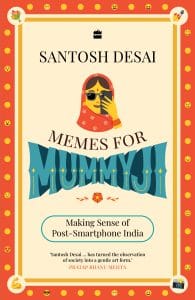 This excerpt from ‘Memes for Mummyji’ by Santosh Desai has been published with permission from HarperCollins Publishers India.