








Once the initial hiccups were over, Satish Gujral met Octavio Paz and a long friendship flourished based on mutual admiration. Gujral started getting invitations to diplomatic parties in New Delhi where his talents were glowingly extolled by Paz. He quickly developed a confidence that he never had. More than sixty years later, he told me, ‘In India, I did not find my way in art. Mexico made me what I am and gave me a reason to live.’
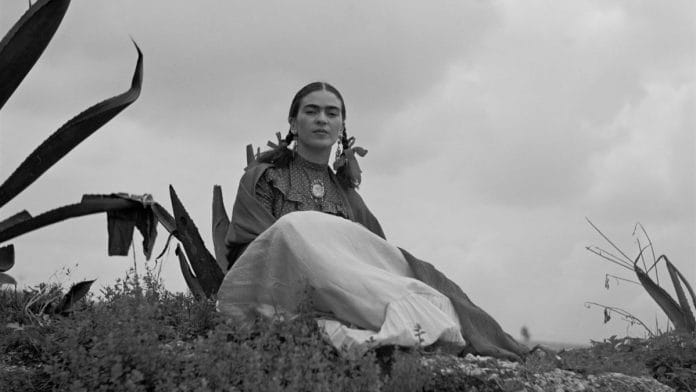
Once he reached Mexico, Gujral found himself in a sea of trouble for not speaking Spanish in addition to his deafness and speech defect. There was no Indian consulate and the scholarship was not paid for three months. Though Octavio was posted in Tokyo at that time, he came to the rescue, resolving his problems through letters to his ministry. Soon, Gujral became an apprentice to the legendary muralist painter David Alfaro Siqueiros and developed a friendship with Frida Kahlo through a common Argentine friend. For a while, he also stayed at the house in Coyoacán where Rivera lived with Frida Kahlo. This was also the house that Leon Trotsky frequented a decade ago while he was on the run from Stalin’s assassins but visited Frida with whom he was having a secret affair, details of which she shared with Gujral.
He quickly developed a close bond with Frida, based partly on their common disabilities and partly on her keen interest in Hindu ‘spirituality’, despite her Marxist convictions. Frida was particularly moved by the Upanishads and had been reading J. Krishnamurti, which helped her alleviate her suffering, both physical and emotional. They had met through a common friend, an Argentine woman, who had been interviewing Frida when she mentioned Gujral. Frida expressed a desire to meet him. Gujral had only seen her from a distance during the inauguration of her famous 1953 exhibition when she had arrived in an ambulance against the doctors’ advice. The Chair she sat in, like a burnished throne, glowed on the marble, Cleopatra-like, surrounded by her paintings. As their friendship developed, Frida showered Gujral with gifts that comprised art materials and books, fruits and other Mexican delicacies.
The cause of Frida’s physical suffering was a terrifying street accident that happened at the age of eighteen when she rushed to catch a tram-car. It left her with a fractured pelvic bone, punctured abdomen and uterus; her spine was broken in three places, her right foot was crushed, collarbone dislocated and her right leg was broken in eleven places. It was a miracle that she had survived, but she was destined to live in ‘centuries of torment’, with thirty-two surgeries on her spine. In her thirties, she underwent an appendectomy, two abortions and the amputation of gangrenous toes. When Gujral met her, she used to paint while sleeping on her stomach. The year before, Kahlo had to wear twenty-eight different supportive corsets at different points of time.
Also read: Keeladi excavation—Tamil Nadu’s ancient city and a long trail of clues
Despite her physical condition, Frida Kahlo had several passionate extramarital affairs, with both men and women, while Rivera too had his. With an acutely heightened awareness of her own body, it is not difficult to see why she always did self-portraits, depicting herself as an allegorical female, not as a victimized or an ill-fated person, never asking for the viewer’s sympathy, but as one with an assertive presence, affirming the triumph of life over death. Some critics have characterized her oeuvre as a theatre of the self. André Breton, the high priest of surrealism, called her work ‘a ribbon around a bomb’. Gujral was surprised that despite Kahlo’s lifelong obsession with Rivera, her art did not bear the remotest influence of her husband’s style.
While admiring the authenticity of Frida’s self-portraits, Octavio Paz was also critical about them. He referred to the display of surgical and psychological wounds in her paintings as ‘self-gratification in bathos. . . . I feel that I am before a complaint, not a work of art.’
Some feminist critics, for whom Frida Kahlo’s works are a major rallying point, and increasingly so across the decades, have often defended her against Octavio Paz’s comments, characterizing them as representing the ‘complaints’ of the men of his generation.
One day Kahlo told Gujral that she did not want to be buried, but wished she would be cremated in the Hindu way, and then she would like to reincarnate in India in some form. He spoke to her about India’s freedom struggle and Gandhi’s sway over the masses. They also talked about the maladies that they both suffered. And they talked about Pandurang Khankhoje, the Indian scientist who commanded great respect and at whose home in Mexico City, Gujral often dropped in for a meal.
Gujral showed me a delightful 1947 photo of Frida at her childhood home, La Casa Azul, posing in a sari with two Indian women, the future writer Nayantara Sahgal and her sister Rita Dar, who accompanied their mother Vijay Lakshmi Pandit (Nehru’s younger sister) to Mexico, at that time the ambassador of India to the US and Mexico (1949–51). Frida’s photo testifies to her attraction to Indian culture six years before Satish Gujral met her.
 This excerpt from ‘The Tree Within’ has been published with permission from Penguin Random House India.
Strange. The ever rabid Indian Marxist ecosystem coild.learn a lesson or many from her then instead of importing Karl Marx who never set foot in Bharat.