








Amir Hasan has recorded that his long-term servant, a former slave named Malih, had brought some sugar candy (nabaat) for Hazrat Nizamuddin, as one of his four daughters was married off (‘aqdi shudeh bood). When the khwaja was offered sugar candy, he inquired what the occasion was (algharaz chun nabaat bedid, farmud ke chist).
Amir Hasan submitted that Malih’s daughter had gotten married. The khwaja turned to him (Malih) and said the birth of a daughter creates a hijab or veil between the father and hell. Malih was four times protected from hell as he had as many as four daughters (har ke ra yak dukhtar baashad u ra hijabi baashad az dozakh, tura khud chahaar ast)!
The khwaja then remarked: abul-banaat marzuq; pedare dukhtaraan ra wus’ati baashad dar rizq (fathers of daughters are provided with an increased sustenance and livelihood). In other words, God provides daily bread and subsistence for girls; they are not supposed to be a burden on anyone, they do not need to be killed and should be respected for what they are. This kind attitude of Sufis is different from the general patriarchal treatment of women in Muslim societies at the time. Sufis spoke in gender-neutral terms and maintained ambiguity on homoerotic attractions. They may not have been feminists and considered Sufi practices as acts of mardanagi, or masculine prowess.
In conclusion, hundreds of such anecdotes continually reaffirm Sufi emphasis on humanism, mercy and tolerance of difference. Reiterating this, the khwaja recited this couplet:
Har ke ma ra yaar nabud izad u ra yaar baad Wa aanke ma ra ranjeh daarad raahatash bisyaar baad
Someone who can’t be friends with me, let God be his friend
And the one who annoys me, should be at great ease and comfort.
Har ke u khaari nehad dar raahe ma az dushmani Har guli kaz baaghe umarash beshagufad bi khaar baad
If anyone put thorns on my path out of animosity Every flower in the garden of his life remains thornless.
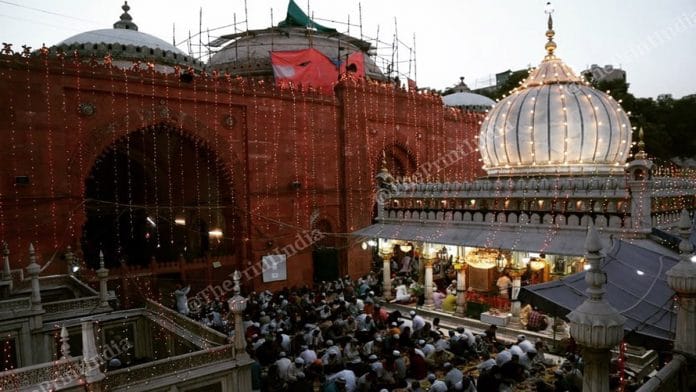
Hazrat Nizamuddin explained that if someone puts thorns in your path and you do the same in retaliation, there will be thorns everywhere. He added that generally people are good with the good and bad with bad, but Sufis are good with good people and good with bad ones also (miyane mardumaan hamchunain ast ke ba-naghzaan naghzi o ba-kuzaan kuzi, amma miyane darweshan hamchunain ast ke ba-naghzaan naghzi o ba kuzaan ham naghzi). As a patron saint of Hindustan, Khwaja Gharib Nawaz Muinuddin Chishti preached that the best form of prayers included: listening to the grievances of suffering people, helping the needy and feeding the hungry. The khwaja had also said that people with the following three characteristics could legitimately be considered as friends of God: river like generosity, affection like that of the sun and modesty and hospitality of the earth. None of them discriminate in what they have to offer. It’s not for nothing that people from all walks of life, rising above narrow religious and political boundaries, have continued to flock to his dargah for 800 years now. Similarly, the dargah of Hazrat Nizamuddin Auliya was thronged by people of all faiths within twenty-five years of his passing. A mid-fourteenth century biography of Hazrat Nizamuddin, Siyar-ul Auliya by Amir Khwurd Kirmani, has quoted a verse anticipating the latter-day pluralistic slogan of unity and brotherhood of communities of people across religious divides:
Muslim, Hindu, Christian and Magi, all of them, make a crown out of the dust of his threshold: They apply the sacred dust like camphor and sandal in their eyes and circumambulate the shrine.
 This excerpt from ‘Hazrat Nizamuddin Auliya’ by Raziuddin Aquil has been published with permission from Pan Macmillan India.