






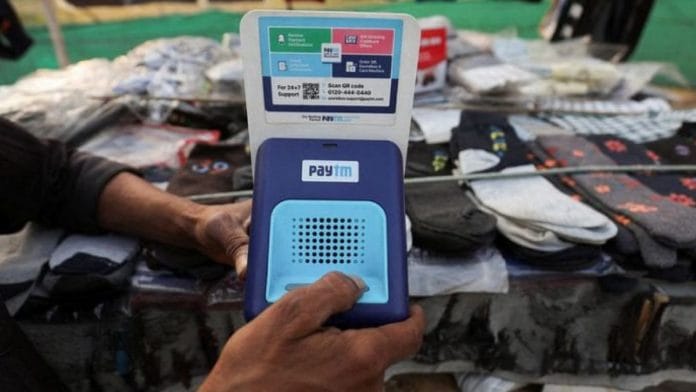


On 6 August, the Lok Sabha passed a bill amending the Payment and Settlement Systems Act, 2007. This amendment removes the statutory ban on imposing the Merchant Discount Rate (MDR) on banks and other payment providers for UPI and other notified electronic payments. However, the government has stated that this will not impact consumers, and both making and receiving UPI payments will remain free of charge for them.
While UPI payments up to Rs 2,000 will continue to be free, the amendment allows for the imposition of MDR on banks and payment providers for transactions exceeding the amount. This cost would be recovered from the payment recipient — the merchant. Although the exact fee structure is not yet finalised, proposals under discussion suggest that the MDR for high-value transactions could range between 0.25 per cent and 0.5 per cent. Nevertheless, the government has reiterated that the UPI facility will remain free for small merchants and consumers.
What is the government’s rationale?
The reason cited by the government for this change in UPI payment regulations is that while UPI has been free until now, the associated costs must be borne by someone. Proponents of imposing fees on UPI argue that banks, the National Payments Corporation of India (NPCI), and payment companies incur significant expenses — not just on servers, but also on cybersecurity and infrastructure expansion — that must be covered. The Reserve Bank of India Governor, Sanjay Malhotra, has also said that someone must bear the cost of keeping UPI secure and reliable.
UPI as a public good
According to economic principles, there are certain services whose consumption is non-rival; that is, one person’s consumption does not diminish others’ ability to consume them, and they are available to everyone without exclusion. These kinds of services are called ‘pure public good’. Sometimes, some services are non-rival, but exclusion is possible. Such goods, though, may also be called public goods, but are not pure public goods. Examples of pure public goods are law and order, defence, parks, streetlights, and roads. UPI comes under the second category, which is non-rival in nature, but by charging a fee, the service becomes excludable.
Generally, public goods and services are such that though they are beneficial to society, they do not attract private sector investment — even when access to them could theoretically be restricted. Had UPI not been developed by the government, no private sector entity would have created such a wonderful product. The government invests in public goods, because they are beneficial to people. UPI is one such public good; which is non-rival in nature, but where exclusion is possible. But does it mean that we should start charging a fee for it? Such decisions should be guided by a cost-benefit analysis. We should understand that if the benefits are enormous relative to the cost, and the cost is not exorbitant, it is best to keep the good or service free of charge.
Logistics costs in India have historically been very high, preventing our products from competing effectively on the global stage. However, over the past decade or so, a significant reduction in logistics costs has been recorded. According to data from NCAER and DPIIT, the logistics cost that stood between 8.8 per cent and 10 per cent of GDP in 2012-13 dropped to 7.8-8.9 per cent in 2021-22. The fact that UPI transactions are free of charge is a major factor that contributed to this decline. It is important to note that India’s UPI currently accounts for 49 per cent of the world’s real-time payment transaction volume, all of which are free so far.
Like roads, parks, streetlights, and law and order facilitate daily life, UPI facilitates business operations. It is the government’s responsibility to ensure the ‘ease of doing business’, and it is taking various measures to achieve this — with UPI playing a significant role. Developments such as the expansion of the road network, improved rail facilities, including dedicated corridors, have not only eased business operations but have also led to a substantial reduction in logistics costs.
Is the government under pressure from the US?
It is worth noting that a recent report by the United States Trade Representative (USTR) raised objections regarding UPI transactions in India. The report suggested that policies such as the zero-MDR regime, the promotion of RuPay cards, the linking of RuPay credit cards with UPI, data localisation norms, and the NPCI’s 30 per cent market share cap for UPI application providers are creating barriers for American companies.
Some experts believe that this bill has been passed under US pressure because UPI has impacted — or rather, disrupted — the business models of American card companies like Visa and Mastercard. These companies charge merchants a hefty fee ranging from 1 per cent to 3.5 per cent of the transaction value, while UPI QR codes cost nothing so far. Competition has further intensified with the introduction of RuPay cards by the NPCI, as there are no Merchant Discount Rates applicable to them. Consequently, merchants now prefer accepting payments via UPI over international cards. The concerns of these international companies have deepened following the recent integration of RuPay credit cards with UPI. Notably, the market share of RuPay credit cards has risen from just 3 per cent in 2023 to about 18 per cent currently, with the volume of payments processed through them reaching 40 per cent.
Is the government incurring a massive loss?
It is worth noting that the Indian government has allocated a budget of only Rs 2,200 crore to operate the UPI ecosystem in FY27. As for banks and other service providers, the expenses they incur on cybersecurity and expansion are part of their own operational requirements; UPI actually facilitates seamless transactions for them. In fact, UPI has significantly reduced costs for banks, leading to a steady rise in their profits. Moreover, banks themselves have never demanded the imposition of MDR.
In 2022, an RBI discussion paper had sought feedback on levying charges on UPI (likely due to foreign influence), but the idea was rejected. Therefore, imposing charges on the UPI ecosystem — a global success story for India — would yield no significant benefit for the government, nor would it substantially boost banks’ profits. The only likely outcome might be foreign card companies regaining foothold, whose businesses have been badly hit. We must also understand that as a result of Visa and Mastercard losing business, a huge amount of foreign exchange outflow has also been stopped.
Also read: Why NSE must not be brought under RTI
Implications of charges on UPI
First, making transactions costlier could harm small businesses, and their revenues coming down by even 0.5 percent (assuming MDR of 0.5 percent) could reduce their profits by nearly 5 per cent or more (assuming 10 per cent margins).
Second, it could hinder the ‘ease of doing business’ and drive up logistics costs in India — costs that are currently on a downward trajectory.
Third, it could also diminish the competitive edge of Indian products, even if slightly.
Fourth, if UPI charges drive people back to using cash, the RBI would have to bear the associated costs. This would reduce the RBI’s profits and, consequently, the dividend transferred to the government, resulting in a loss to the exchequer. Notably, the RBI spent Rs 4,875 crore on printing currency notes in the financial year 2025-26. Additionally, huge sums are spent on replacing torn, soiled, or damaged notes. Thus, from the perspective of the exchequer as well, imposing charges on UPI does not appear to be a prudent move. Prime Minister Narendra Modi has consistently maintained that there is a need to make the economy “less-cash” and eventually “cashless”; but the move will certainly run contrary to this goal.
Ashwani Mahajan is National Co-Convener of Swadeshi Jagran Manch and a former professor at PGDAV College, University of Delhi. He tweets @ashwani_mahajan. Views are personal.
(Edited by Aamaan Alam Khan)