






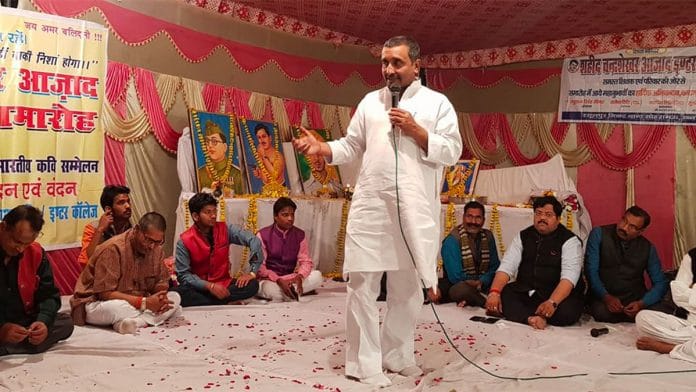



It wasn’t that long ago, so I imagine many of us will remember the 2017 Unnao rape case. After a huge public uproar, the courts finally tried and sentenced a BJP MLA called Kuldeep Sengar to life imprisonment.
Justice done?
Umm, well, sort of. Earlier this week, the Delhi High Court suspended his sentence. Sengar need not stay in jail while his appeal is being heard. He could, if he so desired, live a life of luxury in Delhi until there is progress in the appeal. As appeals can take a very long time, this could mean that Sengar resumes his normal life. Depending on the views of the court, he might eventually be found innocent whenever his appeal is heard.
Fortunately, Sengar can’t actually be released just yet. A second crime also occurred. The father of the minor girl whose rape Sengar was convicted of was killed in custody. The poor man was picked up by the police and framed in an arms case. He died in custody. Sengar was convicted in that case too and sentenced to ten years in prison. Unless the sentence in that case is also suspended, Sengar can’t get out. But, no doubt, his team is hopeful on that score too.
So, if all goes according to plan, we will soon have, living happily in our midst, a powerful politician who was convicted of raping a minor and then of the culpable homicide of her father.
Welcome to justice in India.
Also Read: Custodial murder to conditional bail–a timeline of the Unnao rape case
Open-door jail for some
There was a time, around 50 years ago, when powerful people got away with anything. Then, thanks to judicial interventions, public pressure, and an aggressive media, the authorities began to get tough with VIP murderers and rapists. They were often arrested, convicted, and sent to jail.
Lately, however, the tide has turned. The new rule for powerful persons, or those who serve a particular ideology, is: So what if you have been found guilty and sent to jail? We will get you out in no time at all. And if you have been convicted of rape, oh well, that’s the easiest to fix.
Take the case of Asaram Bapu, the so-called ‘saint’ who was convicted of the rape of a minor and sent to jail. He gets parole so often that instead of spending public money on an extensive prosecution and going through the motions of sentencing him to prison, the government might as well have put him on a private jet and sent him to a waterside villa in the Maldives to enjoy the rest of his days. Because, in effect, that is the kind of privilege and luxury being offered to a man convicted of sexually assaulting children.
And how about Gurmeet Ram Rahim, who has also been convicted of crimes against women and sentenced to 20 years in prison?
I doubt if the so-called baba has much experience of the inside of a jail cell. Not only is he routinely given parole, the furloughs are long term: he can spend 40 days out at a time. Every time there is an election where he might be useful, he is allowed to put on his costume and go out to influence voters.
I don’t think anyone can miss the message from the authorities: if you want to rape women or children, then remember that even if the courts find you guilty, you needn’t worry. We will make you a nice little nest in prison, you can go on vacation as long as you like, and hey, your sentence may be suspended. So enjoy!
Is this Beti Bachao? Or is it Beti Hamare Se Bachao?
Also Read: Akhlaq lynching has changed everything in his village—politics to playgrounds
What hope is there for ordinary Indians?
The trend of pampering and shielding powerful rapists and child molesters has now gone even further.
In 2015, much of India was horrified to learn that Mohammed Akhlaq, a Muslim man, had been lynched to death on suspicion that he had beef in his house. The case made global headlines because it pointed to the direction India was taking. The government said it was horrified, rounded up the men it said were the murderers, and put them on trial. That trial has slowly chugged along. But two months ago, the Uttar Pradesh government sprang a surprise. It told the court that it wanted to withdraw the prosecution. The judge rejected the plea and fast-tracked the trial instead.
But you can ask yourself the obvious question — can a prosecution that wants to withdraw all charges mount an effective case? I think we know which way this case will go.
There are many issues at stake here, from equality before the law, to the nature of justice in today’s India, to the communal agenda, to the protection of minors from sexual assault.
I don’t need to go into all of them. But I will ask two questions. If this is how the law is used, only for the benefit of the politically influential, then what hope is there for the ordinary Indian? Can we really expect justice unless we are politically well connected?
And what about the helpless children of India? Are they just fair game for perverted political predators?
I think you already know the answers to both questions.
Vir Sanghvi is a print and television journalist and talk show host. He tweets @virsanghvi. Views are personal.
(Edited by Asavari Singh)
Extremely poorly researched article which seems to combine multiple cases together to fit a narrative. Misrepresentation of facts, lazy journalism and the same old write the text fill in whatever you can google. Apparently this estmeeed journalist thinks Asaram Bapu gets parole often without realizing that he got his first parole after 12 years in jail pending appeal. The courts denied his bail multiple times even though there was medical evidence to the contrary. The high court justice himself used the words – “a man is languishing in jail so for so long it’s not acceptable”. Irrespective of your feelings you must represent facts clearly.
But can’t remember the last time elite journalists did that. I like The Print for their journalism. Don’t bring disrepute to your organization by hosting such articles. It’s easy to be simple headed and draw conclusions it’s hard to look under the hood and listen to court hearings read details and find something else entirely.
Quite shoddy piece of journalism. And hey Veer fee free to send me an email I would be happy to chat more if still have willingness to correct yourself or invest in journalism vs imagination and narrative fitting.
“Show me the man . . . ” (Something like that)