






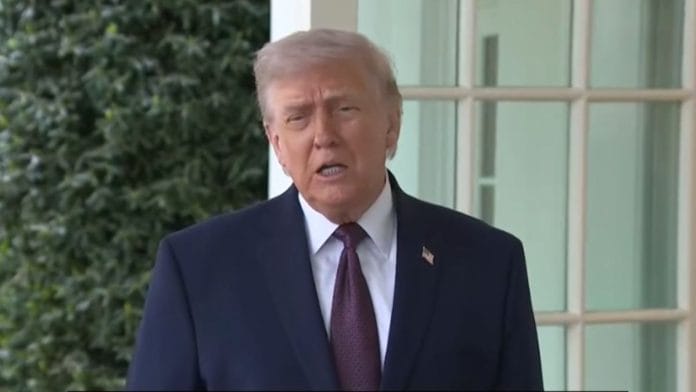


The black market for Iranian oil wouldn’t exist without China. Before the Iran war began, Beijing bought 95% of all the crude Tehran shipped via a network of sanctioned tankers, mysterious traders and shadowy financial links. Hence, President Donald Trump isn’t just targeting Tehran with his blockade of the Strait of Hormuz — he’s aiming at Beijing, too.
On Monday, the US said vessels in Iranian waters would be subject to “interception, diversion and capture.” If its navy enforces a blockade on ships entering and departing Iranian ports and coastal areas east of the Strait of Hormuz in the Gulf of Oman and Arabian Sea, Tehran won’t be able to export a single barrel of oil. The calculus in Washington appears twofold: First, impose an intolerable economic cost on Iran; second, force China to share some of the pain. If Beijing has more at stake, perhaps it will put pressure on Tehran to negotiate, or so the theory goes. The oil math, however, is daunting.
Tehran must surely have assumed its oil exports would be halted during a war with the US, especially if it closed the Strait of Hormuz. But seven weeks into the war, and despite having closed the waterway, Iran has enjoyed a windfall instead of economic pain. During more than 40 days of fighting, Washington has let Tehran load as many oil tankers as it wished, profiting from rising prices. An even bigger gift was the White House temporarily lifting sanctions on Iranian barrels; rather than having to sell crude at a discount, the Islamic Republic was able to charge a premium.
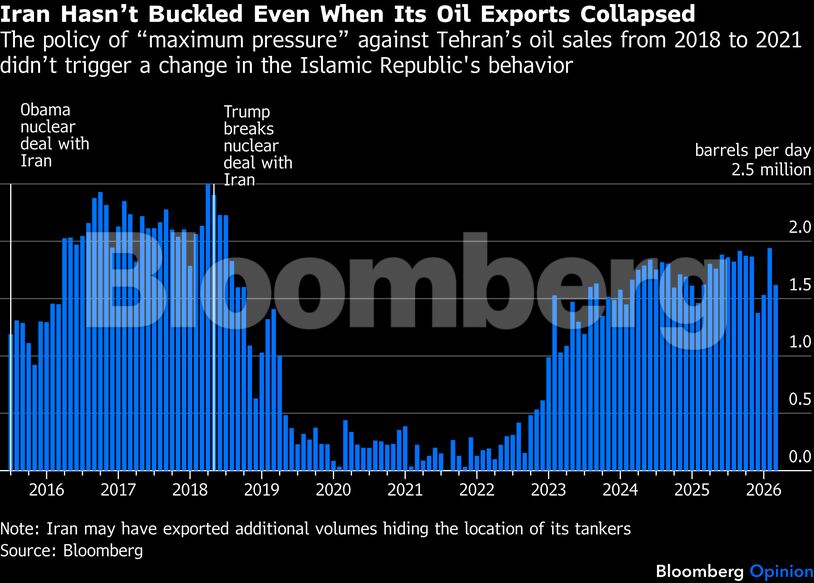
According to my back-of-the-envelope calculations, Iran was making about $100 million a day selling its crude before the war. Since Feb. 27, that’s risen to around $175 million a day. Sure, Iran has struggled to repatriate some of the windfall due to banking sanctions. But the extra cash has been large enough to allow Iran to create a cushion. How large? On my math, the additional funds accumulated during the conflict equal about a month’s worth of pre-war oil revenue.
If the US enforces the blockade, the Iranian economy will suffer an enormous blow on top of the war destruction. Tehran will need to start shuttering oil wells in the next few days and weeks as its storage tanks fill up. But whether that economic hit translates into a softer negotiation approach remains to be seen. Targeting Iranian oil revenue has been tried before — and it failed.
In 2020-2021, when Trump launched a maximum pressure campaign of sanctions, Iranian crude exports dropped to fewer than 250,000 daily barrels for several months just as oil prices were depressed due to the impact of the pandemic. Even allowing for some exports slipping under the radar, Iran was earning no more than $10 million a day selling crude — and it still didn’t buckle.
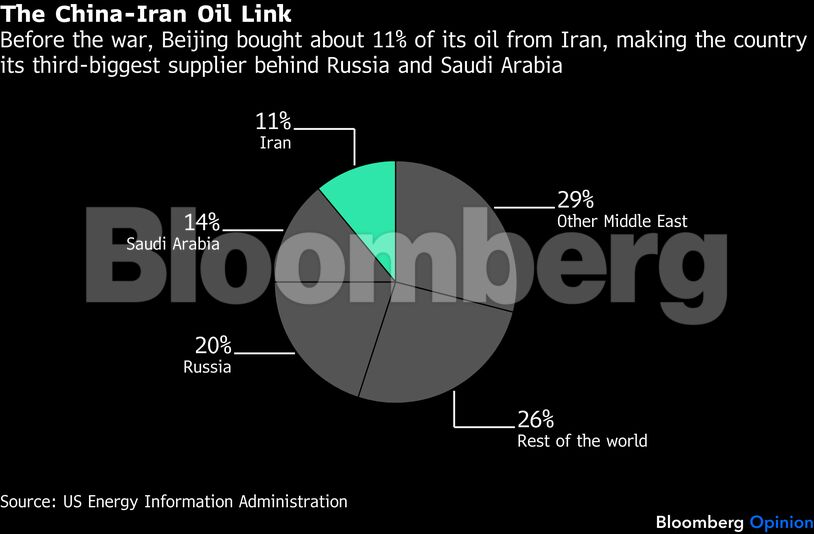
What about China? So far, it’s the Asian nation least affected by the war. Before the conflict started, Beijing imported more than 11% of its oil from Iran, only behind the 20% from Russia and 14% from Saudi Arabia. The Iranian barrels have continued flowing, keeping Beijing relatively well supplied versus its neighbors. The US blockade of the Iranian ports would change that equation. China has already lost at least a fifth of its oil imports, despite the Hormuz bypass measures implemented by Saudi Arabia and the United Arab Emirates.
Soon, Beijing would face a greater shortfall. Its only option would be to tap its strategic petroleum reserve, something it’s avoided so far. Over the past decade, China has built the world’s largest oil emergency stockpile — a multi-layered cache of strategic and commercial reserves with more than a billion barrels.
Washington probably hopes that Beijing will convince Iran to soften its demands at the negotiating table, as it has done previously: In 2023, it brokered a deal between Saudi Arabia and Iran. But most of the leverage Beijing had over Tehran rested on the money it was paying for oil — which will end if the blockade halts exports. “The current ceasefire is highly fragile, with the region at a critical turning point,” China’s Foreign Minister Wang Yi said on Monday. “The immediate priority is to prevent a resumption of hostilities and sustain the hard-won truce.”
Rather than feel compelled to help achieve a lasting ceasefire, the Chinese Communist Party can take a wait-and-see position by relying on its reserves. Considering the amount of crude it has stockpiled — perhaps preparing for a rainy-day crisis around Taiwan — Beijing can afford to go without Iranian supplies for several weeks. Even a two-month embargo would only see China depleting its emergency reserves by about 10%.
In short, the oil math is skewed against the White House. The blockade has a slim chance of working. With apologies to John Maynard Keynes, Iran can remain defiant — and China unconcerned — longer than Trump can remain solvent.